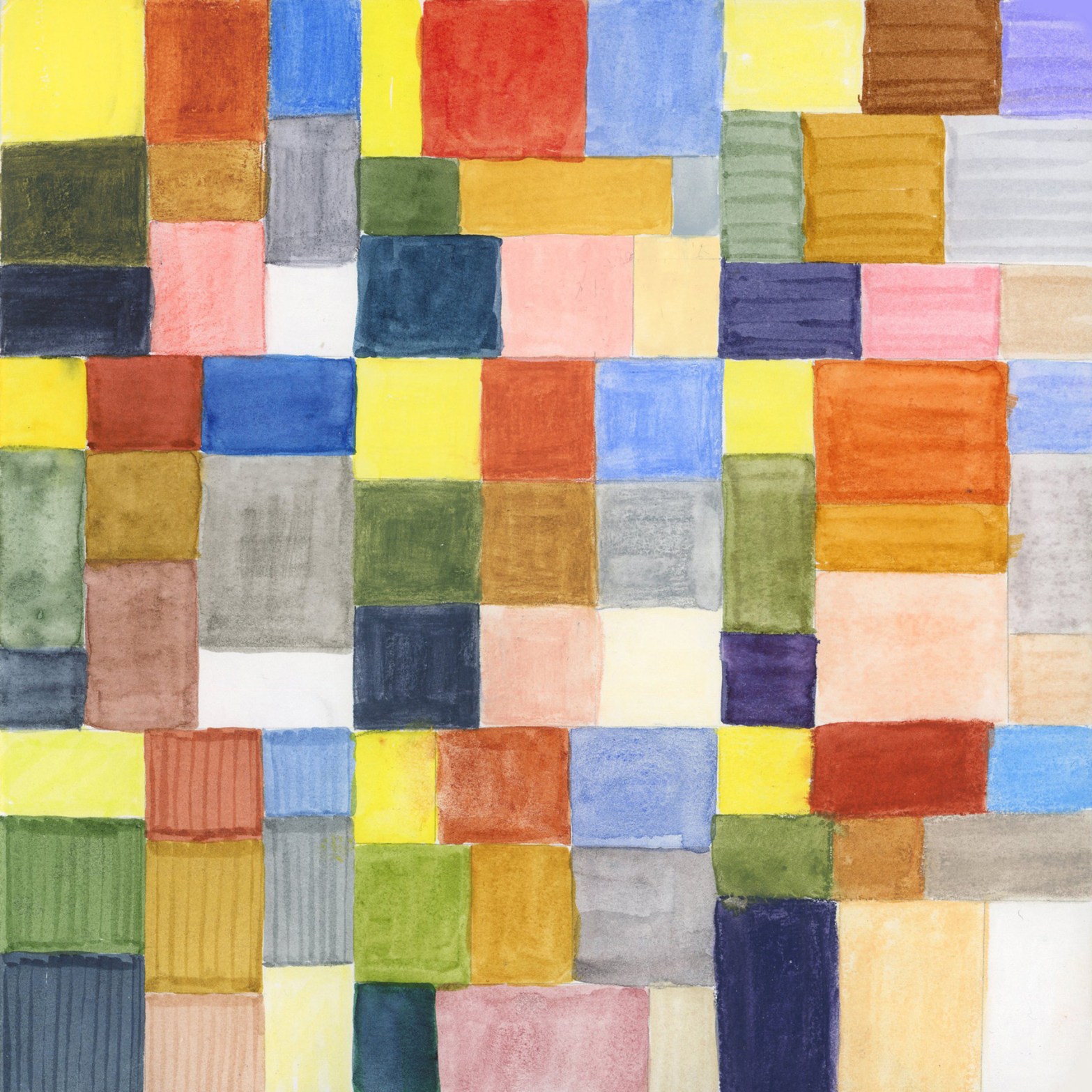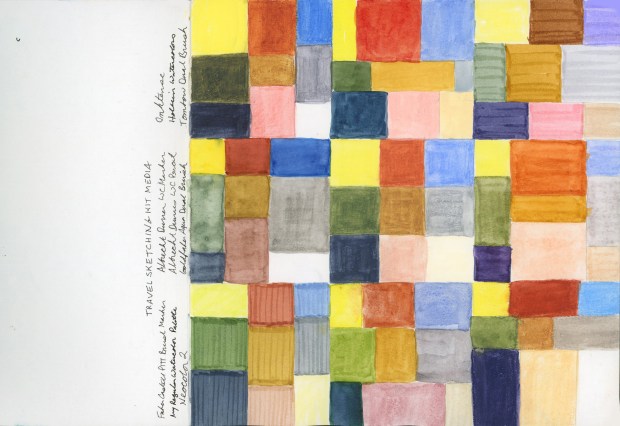
Some Caput Mortuum, please?

The Caput Mortuum watercolors arrived! My infatuation began when I put together the Travel Sketching palette, when the Goldfaber Aqua version caught my attention. Then in the notes page I thought of it immediately for the theme of darks. I knew I’d already ordered Winsor & Newton and Sennelier watercolors. Once they arrived I swiftly color swatched them.
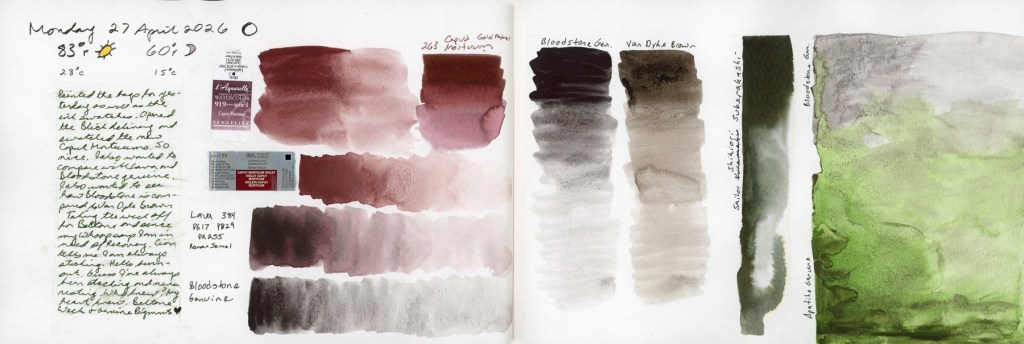
A double page spread in a Stillman and Birn Alpha sketchbook dated Monday 27 April 2026 with weather noted as 83 degrees Fahrenheit and 60 degrees at night. The left page shows a handwritten journal entry alongside Caput Mortuum watercolor comparison swatches with two paint tube labels affixed to the page. The right page shows Bloodstone Genuine and Van Dyke Brown gradient swatches, Sailor Shikiori Subarakishi and Apatite Genuine ink and paint swatches, and the Bloodstone Genuine and Apatite Genuine combined swatch. All pages are dense with color and handwritten labels.
Caput Mortuum, Lava, Bloodstone Genuine, Apatite Genuine, and Sailor Shikiori Subarakishi — Monday 27 April 2026 — Stillman & Birn Alpha

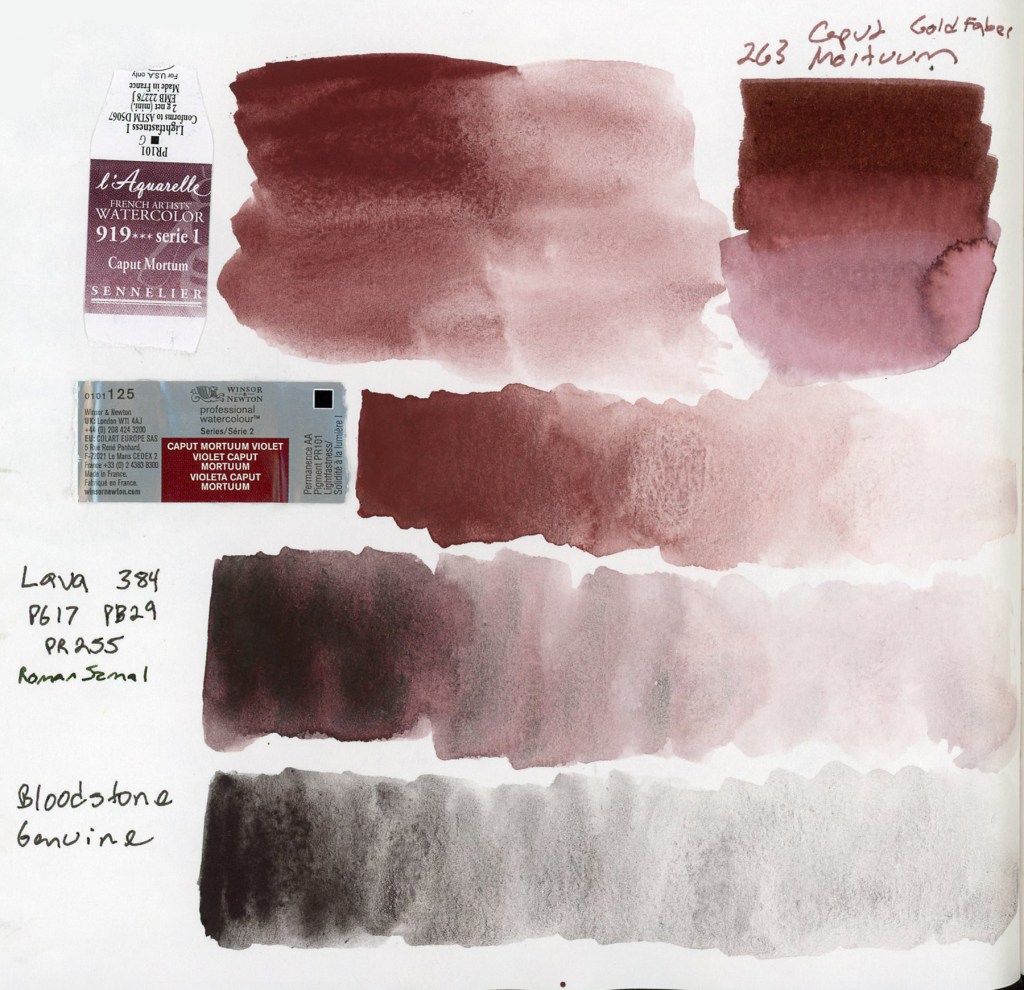
That deep, complex brownish-reddish-purple. Somewhere between burgundy and iron oxide. Caput Mortuum is Latin for “dead head,” an old alchemical term for the residue left after distillation. Macabre and poetic. I love it! Winsor & Newton and Sennelier are single pigment PR101, which is fairly opaque and highly granulating.

A sketchbook page showing Caput Mortuum comparison swatches across multiple media. Four horizontal watercolor wash bands fill the center and left, ranging from deep brownish-purple at full saturation to pale pink at dilution. Two paint tube labels are affixed to the page — Sennelier l'Aquarelle Caput Mortuum and Winsor and Newton Caput Mortuum Violet, both PR101. Handwritten labels identify Roman Szmal Lava 384 and Bloodstone Genuine. In the upper right corner a small swatch labeled 263 Caput Mortuum Goldfaber shows the marker equivalent. Stillman and Birn Alpha sketchbook.
Caput Mortuum watercolor swatches in Sennelier and Winsor Newton. Roman Szmal Lava 384 and Bloodstone Genuine — Stillman & Birn Alpha, 27 April 2026
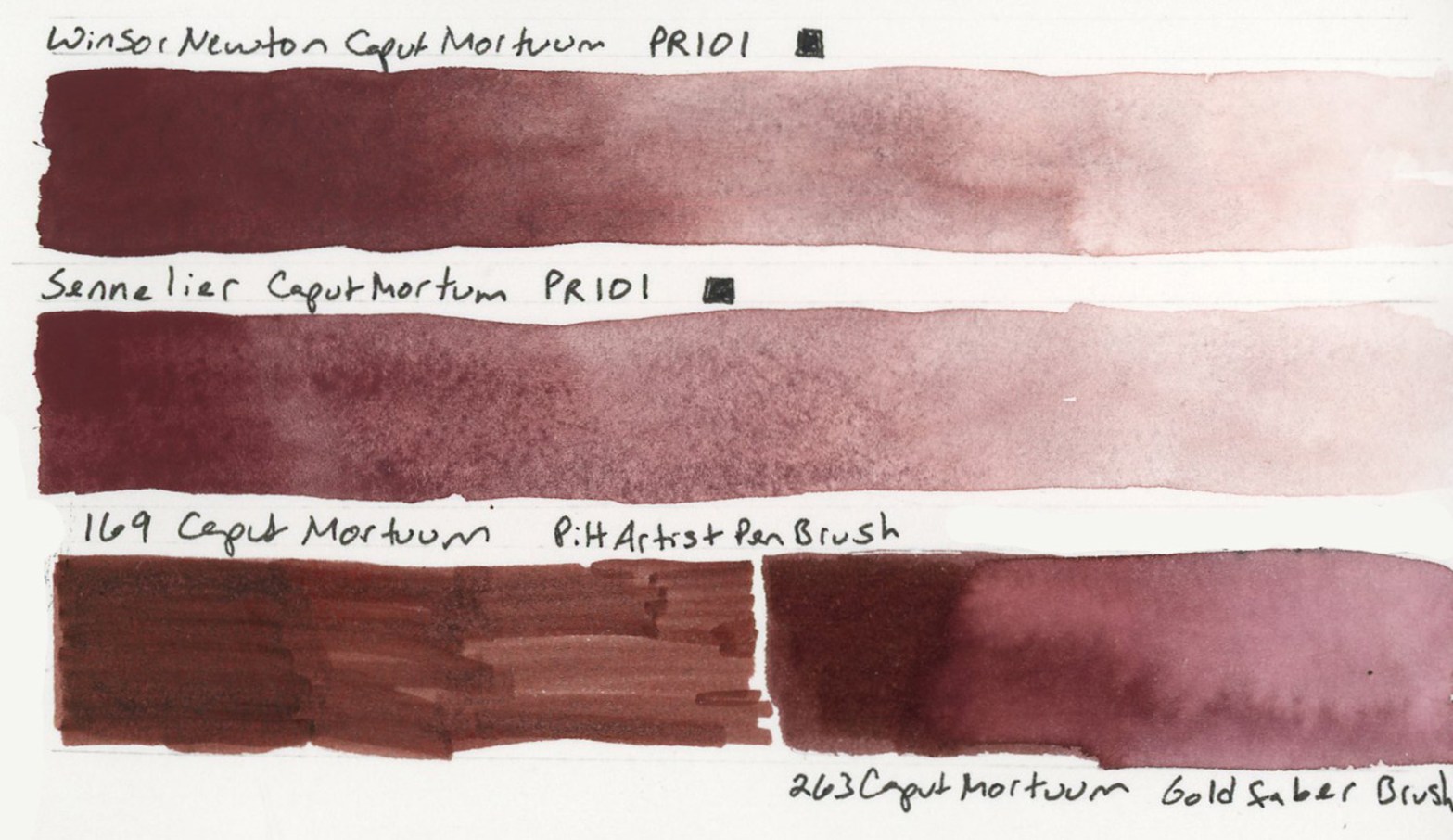
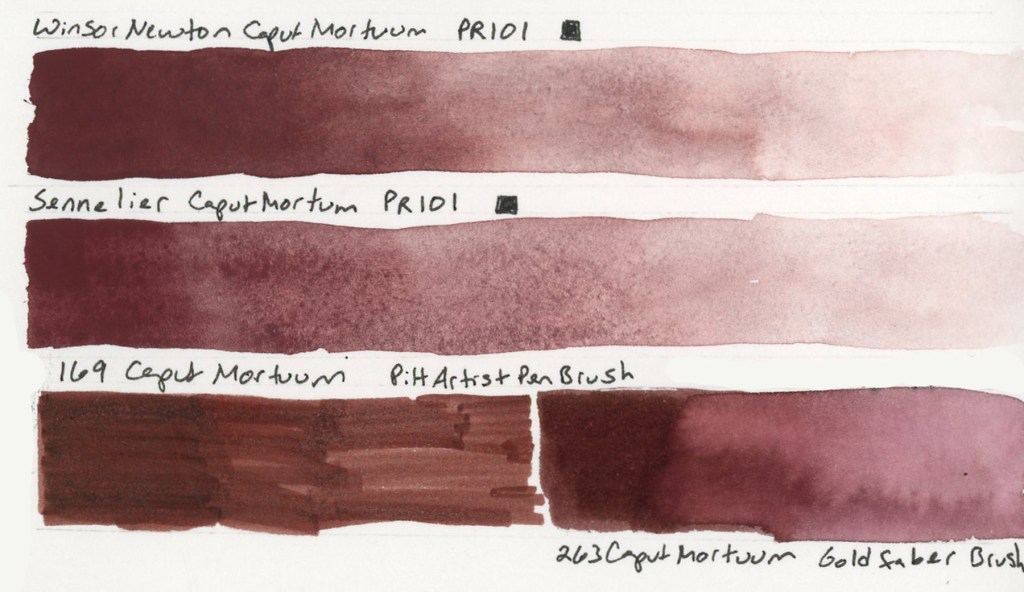
A watercolor swatch comparison page showing four horizontal wash bands on ivory sketchbook paper. From top to bottom: Winsor and Newton Caput Mortuum Violet, Sennelier Caput Mortuum, Pitt Artist Brush Pen Caput Mortuum, and Goldfaber Aqua Dual Brush Caput Mortuum. All are deep brownish-reddish-purple tones with subtle variations in warmth, granulation, and opacity. Stillman and Birn Delta sketchbook.
Winsor & Newton Caput Mortuum Violet, Sennelier Caput Mortuum, 169 Caput Mortuum Pitt Artist Brush Pen, 263 Caput Mortuum Goldfaber Aqua Dual Brush Pen — Stillman & Birn Delta, 27 April 2026

The two watercolors are very similar in hue. The Sennelier is a little smoother, the Winsor & Newton has more granulation. Both are quite opaque. Opacity affects layering and mixing, and these will behave differently from transparent darks. Worth paying attention to, to avoid flat or muddy works.

I also pulled out the Roman Szmal Lava 384, which I’d first swatched back in early March. I still love it so much, and it definitely feels like it belongs in this color club. That PG17 PB29 PR255 triple pigment giving it a depth and richness that the single pigment paints don’t quite replicate. Roman Szmal paints are harder to source here in the States, though.

Naturally I had to include the markers! The Goldfaber Aqua 263 Caput Mortuum and the PITT Artist Pen Brush 169 Caput Mortuum, side by side with the watercolors. The hue match is surprisingly close. Markers are their own medium with their own behavior, but it’s satisfying to know that the color I fell for in the palette swatches is holding its own. My infatuation with this color continues. How will it look if I use it for my darks, for shadows, etc?

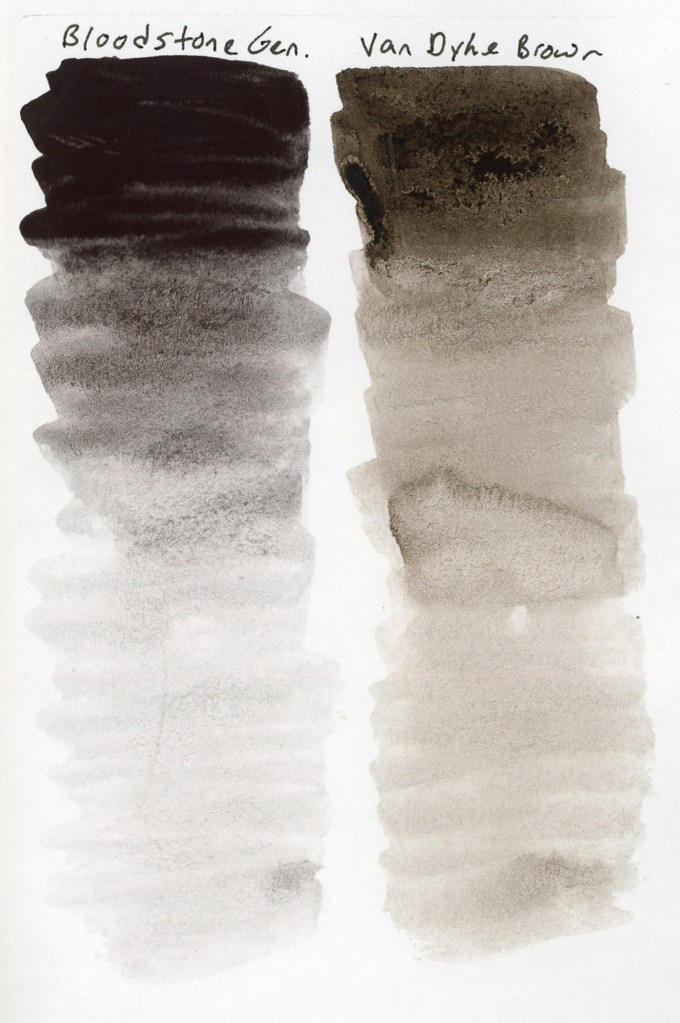
Two tall vertical watercolor gradient swatches side by side on white sketchbook paper, each fading from deep saturation at the top to a near-white wash at the bottom. The left swatch labeled Bloodstone Genuine is a cool dark grey-brown with visible granulation. The right swatch labeled Van Dyke Brown is warmer and earthier with a slightly different granulation texture. The comparison shows Bloodstone as cooler and greyer while Van Dyke Brown reads as warmer and more overtly brown. Stillman and Birn Alpha sketchbook.
Bloodstone Genuine and Van Dyke Brown value gradients — Stillman & Birn Alpha, 27 April 2026

Since I was swatching anyway! I finally did the comparison of Van Dyke Brown versus Bloodstone Genuine. I’ve been curious about this since Liz swapped her Van Dyke Brown out last summer. Side by side in gradient swatches, the difference is clear. Bloodstone is greyer and cooler, less brown than Van Dyke Brown, and with potentially less of a color shift as it dries. Van Dyke Brown leans warmer and earthier. I can see why Liz made the swap, though I’m pretty sure my chocolate sketches need to keep the Van Dyke Brown! Bloodstone will work beautifully in landscapes and urban sketches, though!

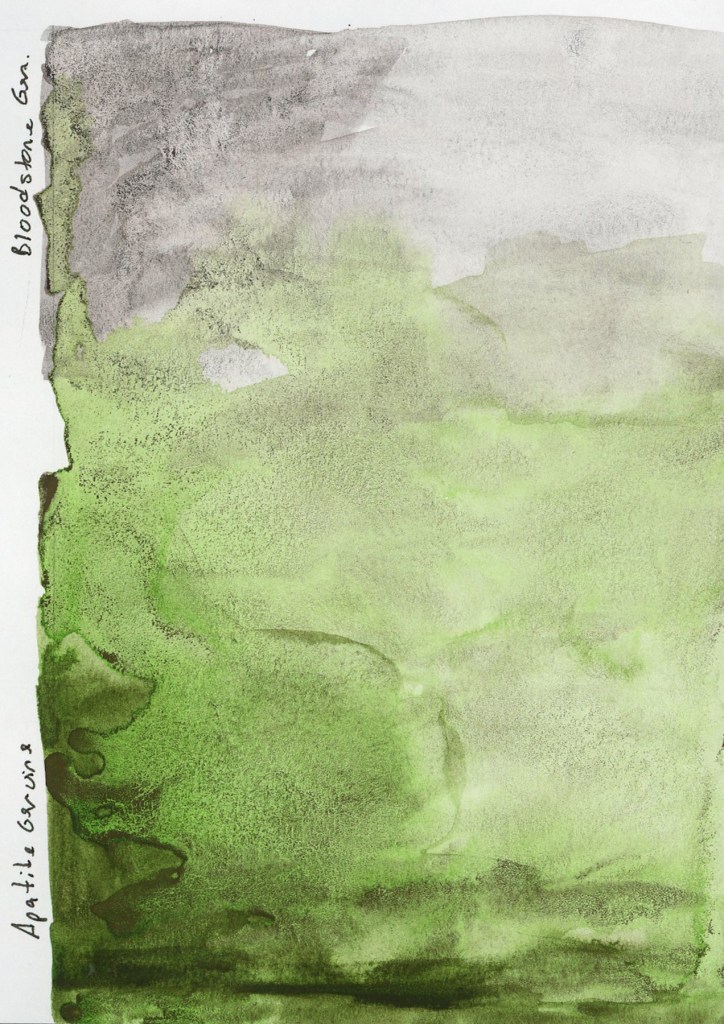
A large vertical watercolor swatch on white sketchbook paper showing two pigments applied together. The upper portion is Bloodstone Genuine in a cool dark granulating grey, labeled at the top left. The lower portion transitions into Apatite Genuine, a luminous granulating grey-green, labeled at the lower left. The granulation of both genuine pigments is visible as the particles settle unevenly into the paper tooth, creating a rich textured surface. Stillman and Birn Alpha sketchbook.
Bloodstone Genuine and Apatite Genuine — Stillman & Birn Alpha, 27 April 2026

Speaking of the landscape potential, both Bloodstone Genuine and Apatite Genuine granulate beautifully. I’m loving this texture of the genuine pigment paints, where the particles settle unevenly into the paper tooth and create something that looks almost geological. The Apatite Genuine is that luminous grey-green, softer and cooler than anything I could mix. Together on the page they look like a landscape seen from a great distance.

May has the Darks theme for the Patreon group, and the Travel Sketching course is running live. I’m excited for both, and hope to really dive in. I also want to get back to sketching the everyday things. It feels good to have more energy, and more enthusiasm again!

A Notes Page

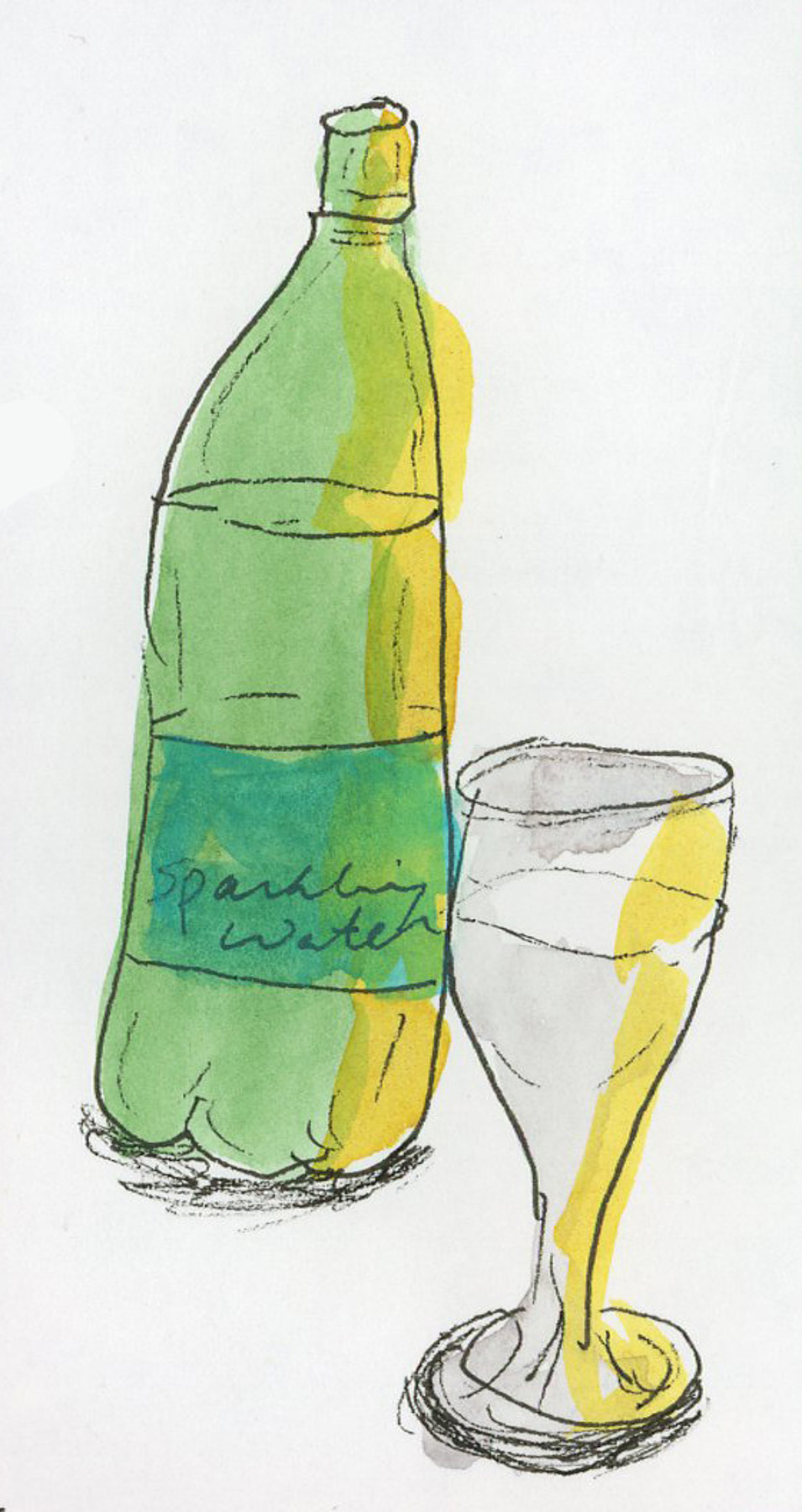
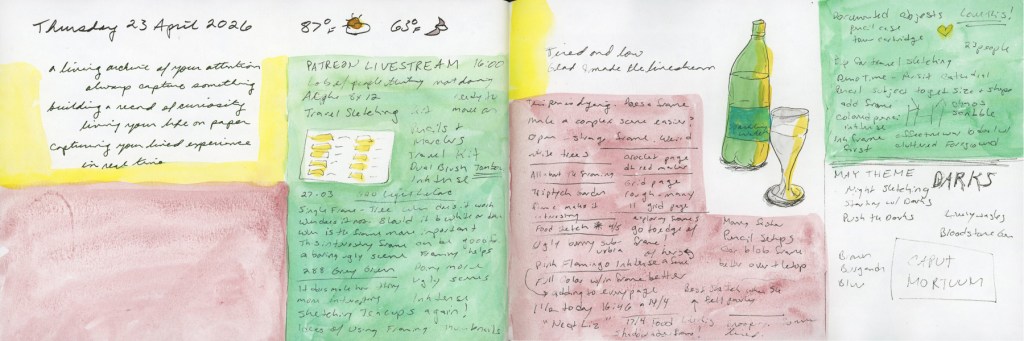
I was watching Liz Steel’s Patreon livestream and taking notes. I like kind of dense note-taking that fills a page and then adding color blocks to give it some life. While I was watching, I sketched my sparkling water that was sitting in front of me. This is my first sketch since April 7th! I’ve only done color charts since then. And I haven’t sketched anything not food since One Week 100 People! Now that seems crazy, but I look over my sketchbook pages, and there it is, in full color!

A double page spread in a Stillman and Birn Alpha sketchbook dated Thursday 23 April 2026. Both pages are densely covered in handwritten Patreon livestream notes on Travel Sketching, with blocks of yellow and pink color wash behind sections of text. A sketch of a sparkling water bottle and stemmed glass appears on the right side of the spread in ink and watercolor. Planning notes in the upper right corner list the May theme as Darks, with Caput Mortuum noted in a box below.
Patreon Livestream notes with sparkling water bottle sketch — Stillman & Birn Alpha, 23 April 2026

I miss the sketching, but I guess it’s been a rough season.

The livestream introduced Liz’s May theme: Darks. Oh, I like this one! She mentioned starting with darks, pushing the darks, and even night sketching! Should I try night sketching? It never occurred to me before.

Starting with darks is a very useful approach, especially with the shapes that I often start with also. Committing to your darkest values early gives a sketch structure and stops it from looking flat and cartoonish. Deepening the darks in a scene, and increasing the value range, is one of the most reliable ways to add depth and presence. It’s the kind of thing that makes a sketch look like a real object or scene. I’m thinking of darks in terms of ink lines, too, not just watercolor.

However, I did immediately think of Caput Mortuum. My new infatuation born from pulling the Travel Sketching Palette together. That deep, complex brownish, reddish, purple that sits somewhere between burgundy and iron oxide. I have the Goldfaber Aqua and PITT Artist Brush pen, and I ordered watercolors Winsor & Newton and Sennelier both. You know, I need both to compare, right? Right? They haven’t arrived yet. But I am fantasizing about the darks it might make for me. How would such a warm, deep dark work in sketches? Seems perfect for the desert, and for summer, when even the deepest shadows are still meltingingly hot.

Obviously there will be Caput Mortuum swatches when the paint arrives! Plus I might finally break open my Bloodstone Genuine and compare it to Van Dyke Brown. Last summer Liz had swapped her Van Dyke Brown for Bloodstone Genuine, and I’ve been curious about the comparison ever since.

It feels good to be getting excited about this coming theme. It feels good to sketch again, after a longer span of time when I didn’t. It feels good to be excited about the upcoming Travel Sketching course, too. May is shaping up to be quite fun in the sketching department!

One Palette, Six Ways. An Obsession.

One Palette, Six Ways. An Obsession.

I will be taking Liz Steel’s Travel Sketching course this May. I’ve taken it before, in September 2024, and I started in April 2025, but did not finish. (See all my posts for Sketching Now Travel Sketching here.)

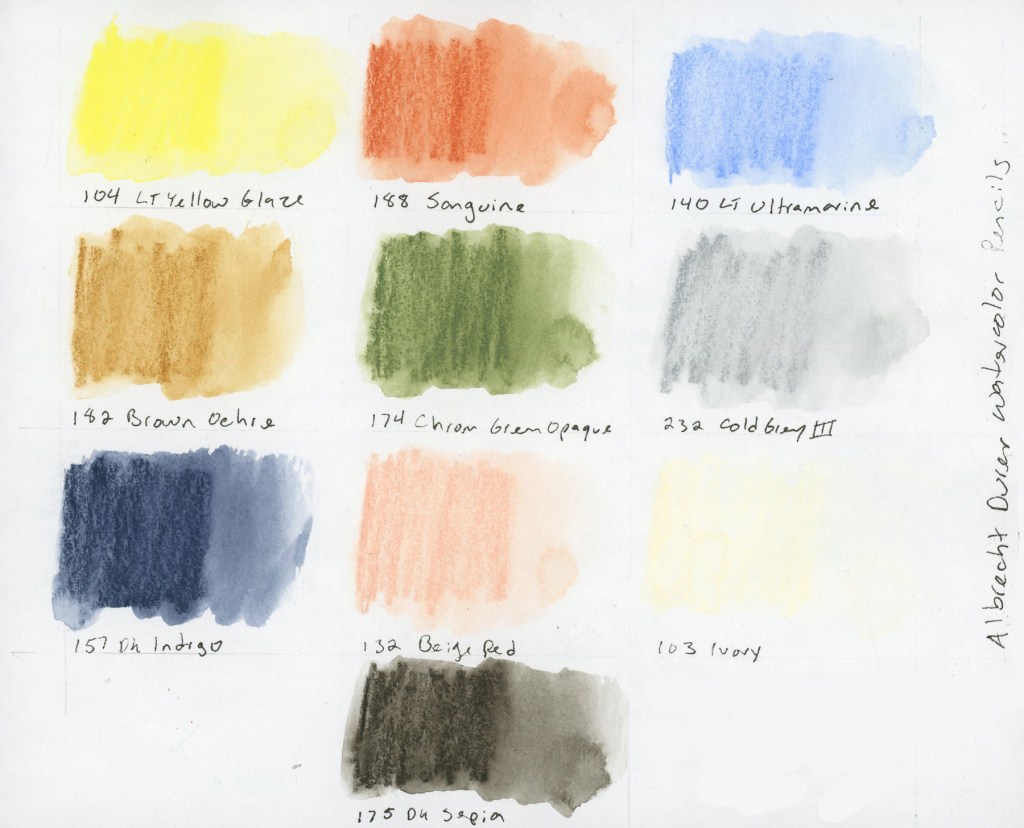
Every time I become a little obsessed with the limited palette for this class. Liz built it using threes: a primary, three earth tones, then a dark and two lights. She kept it fairly pastel, and muted. It really is great for landscapes. Especially Autumn scenes. She used Albrecht Dürer Watercolor Pencils.

Nine watercolor pencil swatches in rectangular wash format on white paper, labeled with color numbers and names. Colors include Lt Yellow Glaze, Sanguine, Lt Ultramarine, Brown Ochre, Chrom Green Opaque, Cold Grey III, Dark Indigo, Beige Red, Ivory, and Dark Sepia. Albrecht Dürer Watercolor Pencils, Travel Sketching palette.
104 Lt Yellow Glaze, 188 Sanguine, 140 Lt Ultramarine, 142 Brown Ochre, 174 Chrom Green Opaque, 232 Cold Grey III, 157 Dark Indigo, 132 Beige Red, 103 Ivory, 175 Dark Sepia — Albrecht Dürer Watercolor Pencils

The first time I took this course, I discovered I really wanted a brown, so here I’ve added the dark sepia. The second time I became very curious about Inktense pencils, wondering how were they different. Since I owned a set, a pulled the same palette colors and I started using Inktense pencils shortly afterward. I also wanted to explore Neocolors II. I was unable to finish the course, so I did not explore those as much as I intended.

This time around, I decided to find out.

The Albrecht Dürer Watercolor Pencils. Activated, they produce soft, luminous washes. There’s a gentleness to them that feels very suited to location sketching, which is rather the point. Dark Sepia is my second dark, which I really craved. Plus I have a love affair with Sepia, so it’s a natural fit. I did consider a warmer brown, like Walnut, but the cooler sepia keeps the balance between warm and cool tones.

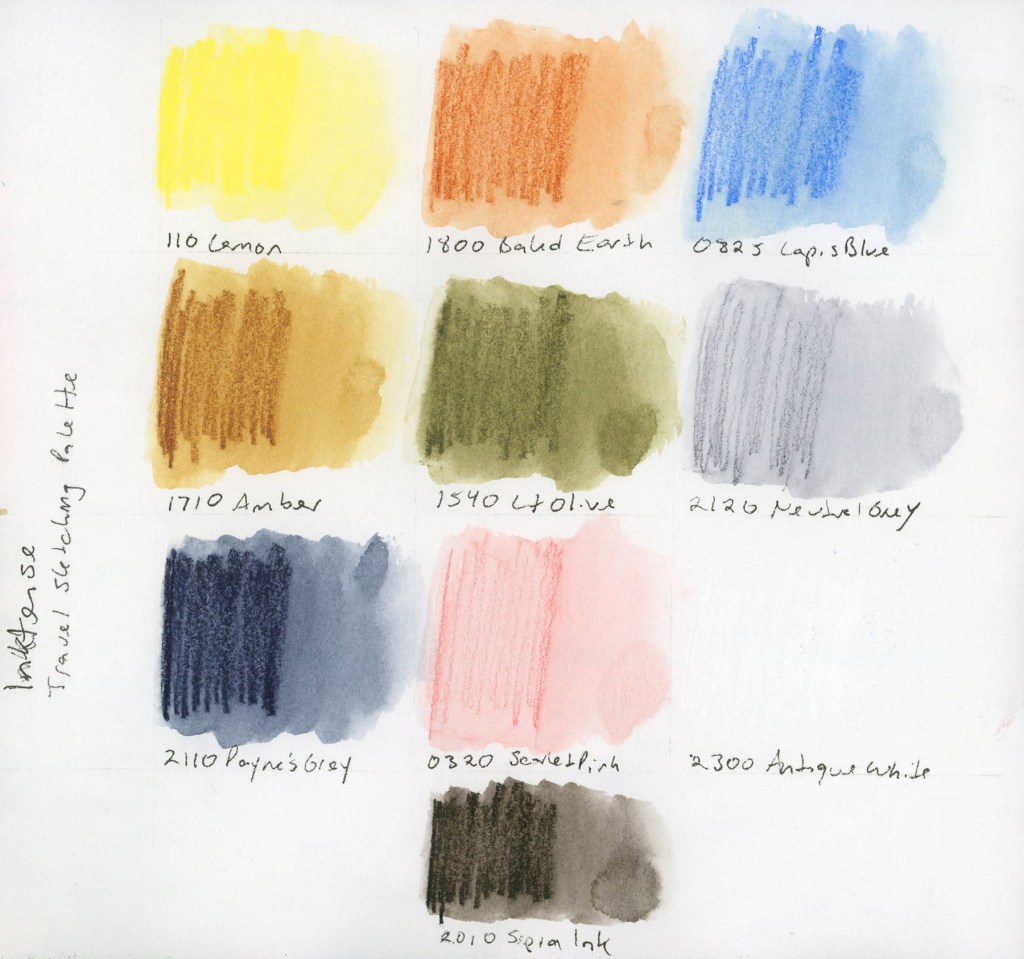
en Inktense pencil swatches in rectangular wash format on white paper, labeled with color numbers and names. Colors include Lemon, Baked Earth, Lapis Blue, Amber, Lt Olive, Neutral Grey, Paynes Grey, Scarlet Pink, Antique White, and Sepia Ink. Inktense Travel Sketching palette.
110 Lemon, 1800 Baked Earth, 0825 Lapis Blue, 1710 Amber, 1540 Lt Olive, 2120 Neutral Grey, 2110 Paynes Grey, 0320 Scarlet Pink, 2300 Antique White, 2010 Sepia Ink — Inktense

I built this Inktense palette to best match the colors of the original palette. Same colors, two media, learn how do they really behave different. The get the more pastel grey and soft pink, you really need a very light touch when applying the pencil, as the colors are darker than the matching shade. They say Inktense becomes permanent once dry, so you can layer over it without lifting. I find they give smoother washes, and they seem more vivid, but this palette is still holding that more muted vibe.

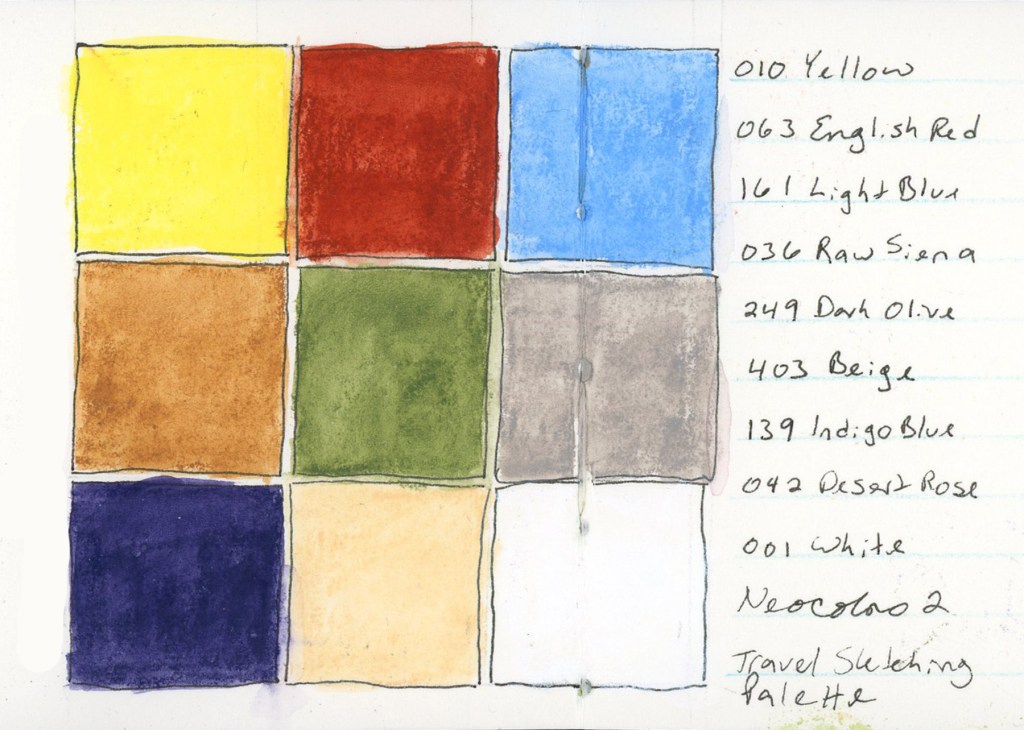
Nine Neocolor II wax pastel swatches in bold saturated squares arranged in a three by three grid on white lined paper. Colors include Yellow, English Red, Light Blue, Raw Sienna, Dark Olive, Beige, Indigo Blue, Desert Rose, and White. Labeled Neocolor II Travel Sketching Palette.
010 Yellow, 063 English Red, 161 Light Blue, 036 Raw Sienna, 249 Dark Olive, 403 Beige, 139 Indigo Blue, 042 Desert Rose, 001 White — Neocolor II — Stillman & Birn Delta, April 2026

I had selected the matching colors in a Neocolor palette for the April course, but never used them. Since I have them, I continue to be very curious to work with them. The swatches are certainly vibrant, and they felt good to lay down. These swatches were Delta book, in ivory paper, so that white shows up a bit better. I wonder how these would look on colored paper? Are they more opaque?

At this point the reasonable thing would have been to stop. I did not stop. Liz mentioned she would be adding markers to the course this time around, and well, I have markers! (Advantage of buying way too many art supplies over many years, I have a lot of stuff just lying around! Whole color sets make great gifts during the holidays!) So I pulled together the same palette in multiple marker types. (I did have to fill in a couple gaps, and order a few, but not too many.)

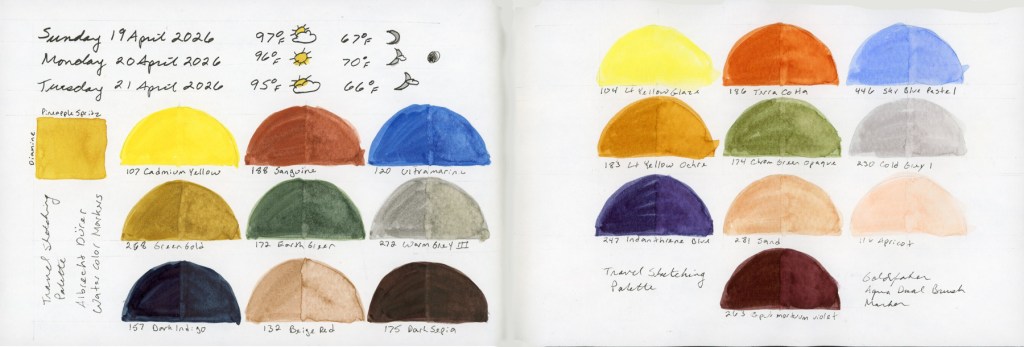
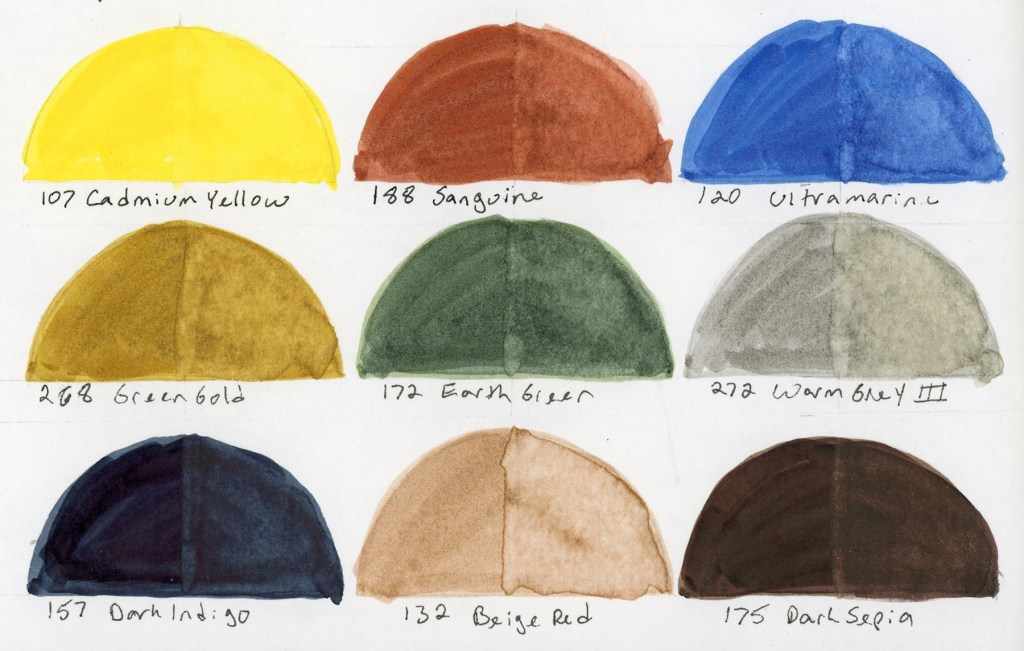
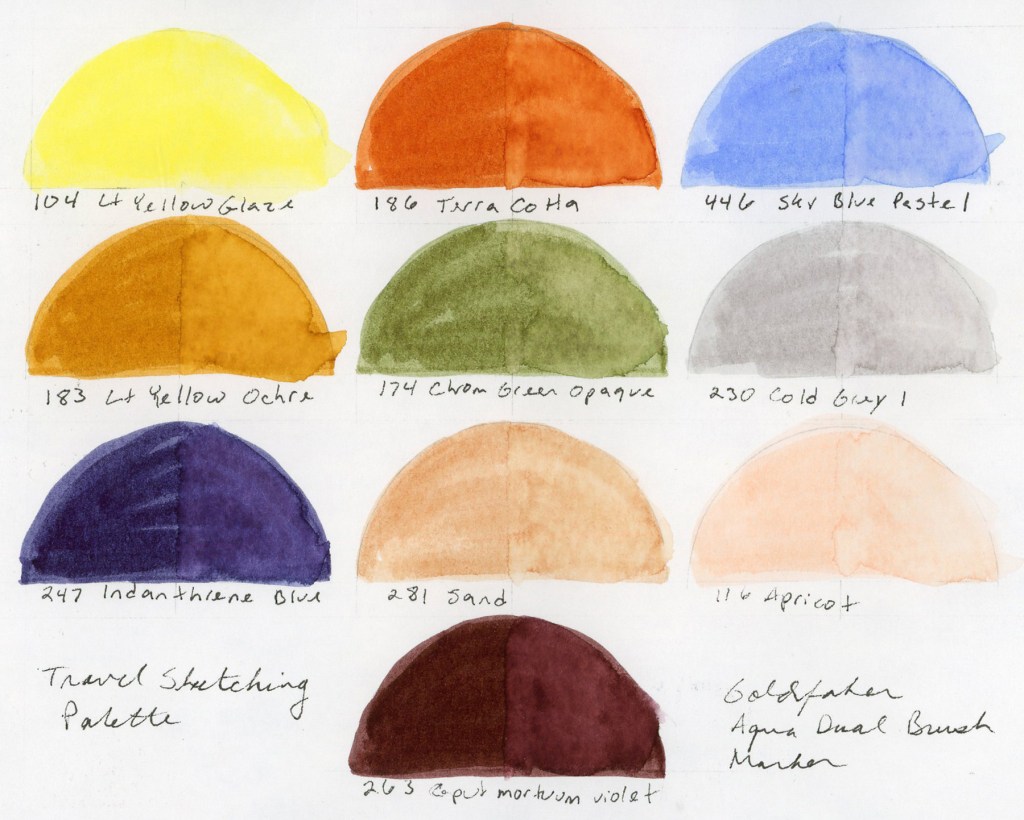
A double page spread in a Stillman and Birn Alpha sketchbook showing Travel Sketching palette swatches in half-dome format. The left page shows Albrecht Dürer Watercolor Markers with weather entries for Sunday through Tuesday April 19–21 2026, and a small Diamine ink square. The right page shows Goldfaber Aqua Dual Brush Markers. Both pages are labeled Travel Sketching Palette.
Travel Sketching palette — Albrecht Dürer Watercolor Markers and Goldfaber Aqua Dual Brush Markers — Stillman & Birn Alpha, April 2026
Nine watercolor marker swatches in half-dome format on white paper, labeled with color numbers and names. Colors are Cadmium Yellow, Sanguine, Ultramarine, Green Gold, Earth Green, Warm Grey III, Dark Indigo, Beige Red, and Dark Sepia. Albrecht Dürer Watercolor Markers, Travel Sketching palette.
107 Cadmium Yellow, 188 Sanguine, 120 Ultramarine, 268 Green Gold, 172 Earth Green, 272 Warm Grey III, 157 Dark Indigo, 132 Beige Red, 175 Dark Sepia — Albrecht Dürer Watercolor Markers
Ten watercolor marker swatches in half-dome format on white paper, labeled with color numbers and names. Colors include Lt Yellow Glaze, Terra Cotta, Sky Blue Pastel, Lt Yellow Ochre, Chrom Green Opaque, Cold Grey I, Indanthrene Blue, Sand, Apricot, and Corpus Mortuum Violet. Goldfaber Aqua Dual Brush Markers, Travel Sketching palette.
104 Lt Yellow Glaze, 186 Terra Cotta, 446 Sky Blue Pastel, 183 Lt Yellow Ochre, 174 Chrom Green Opaque, 230 Cold Grey I, 247 Indanthrene Blue, 281 Sand, 116 Apricot, 263 Caput Mortuum Violet — Goldfaber Aqua Dual Brush Markers

I love how watercolor markers look when activated with water. They bleed and bloom in ways I love. Easy to get complete obliteration of the lines, so it’s a bit like playing a daring game! I also put together the same palette in the pigment Pitt Artist Brush pens, but never swatched those independently. They are only swatched in the big color chart below.

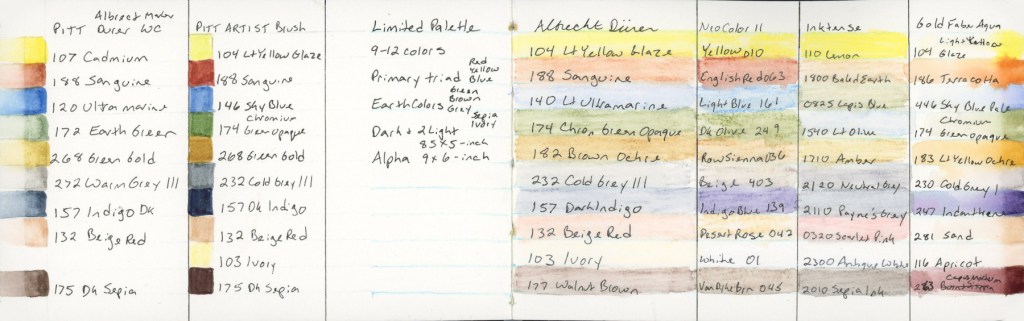
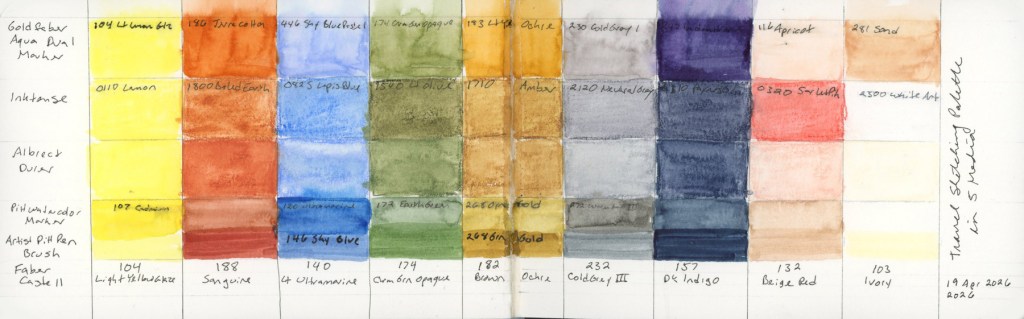
And of course, I had to see everything side by side, right? How well did I match these colors across the mediums?

A handwritten reference chart in a Stillman and Birn Delta sketchbook mapping the Travel Sketching palette across six media: Albrecht Dürer Watercolor Pencils, Albrecht Dürer Watercolor Markers, Goldfaber Aqua Dual Brush Markers, Neocolor II, Inktense, and PITT Artist Brush markers. Color names and numbers are listed in columns with small painted swatches alongside each entry. Dated April 2026.
Travel Sketching palette reference chart — Stillman & Birn Delta, April 2026
A horizontal color comparison chart in a Stillman and Birn Delta sketchbook showing the Travel Sketching palette across six media in stacked rows. Each column represents a color family and each row a different medium, including Goldfaber Aqua Dual Brush Markers, Inktense, Albrecht Dürer Watercolor Pencils, PITT Watercolor Markers, PITT Artist Brush markers, and Faber-Castell. Dated 19 April 2026.
Travel Sketching palette in five media — Stillman & Birn Delta, 19 April 2026

I am really looking forward to using these in actual sketches to learn how the different media behave, and discover what I do and don’t like.

I also may have begun a new obsession. I love that Goldfaber Aqua Dual Brush Caput Mortuum. They didn’t have a brown, so that was the closest. The Pitt Artist Brush pens also have a gorgeous Caput Mortuum. So I may have immediately ordered some Caput Mortuum watercolor paint.

It started with one question about two pencil ranges, how is Inktense different from the Albrect Durer watercolor pencils. It ended with six media, so many color charts and a new obsession or two.

NatureColors Highlighters

April arrived with a delivery from JetPens.

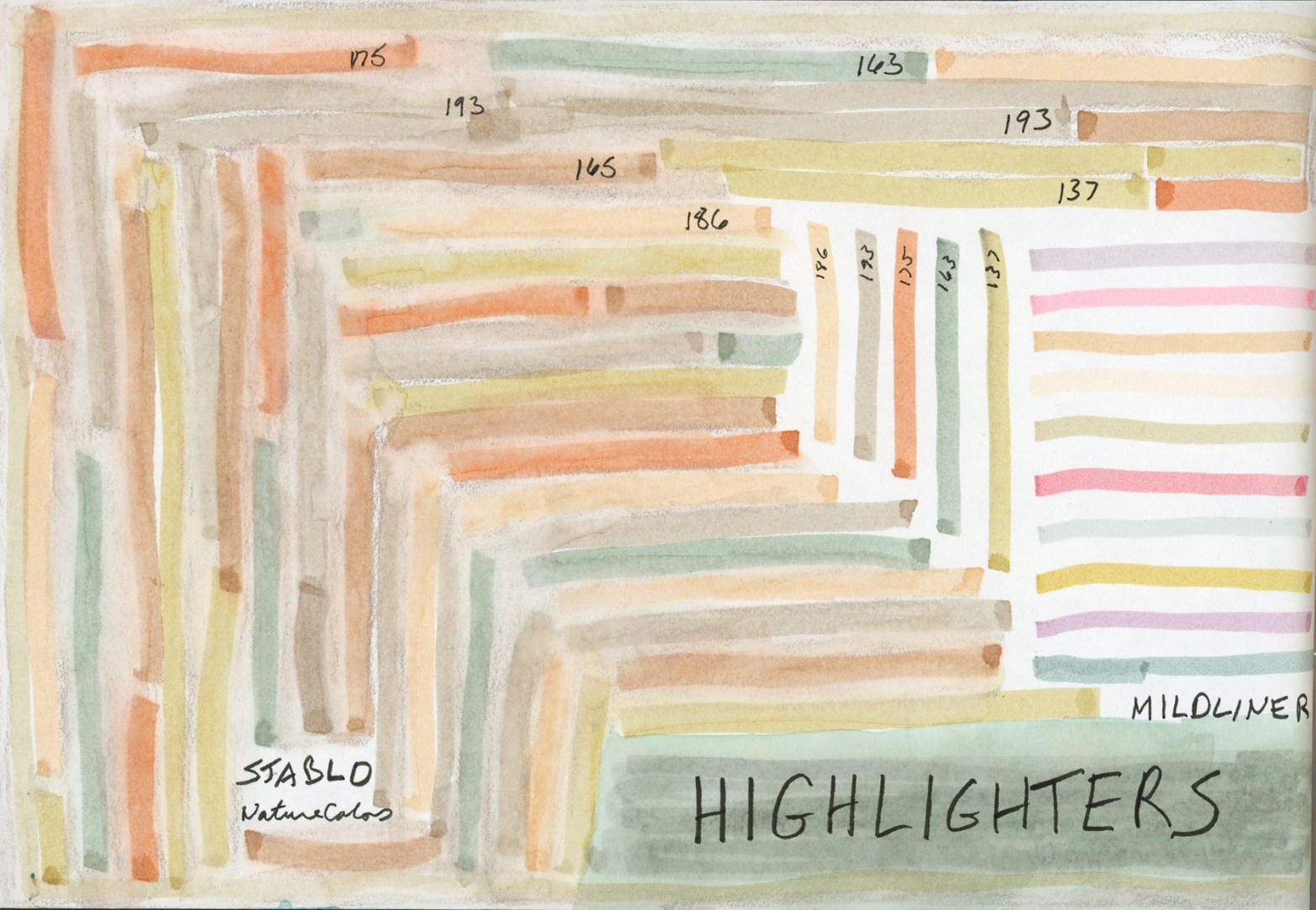
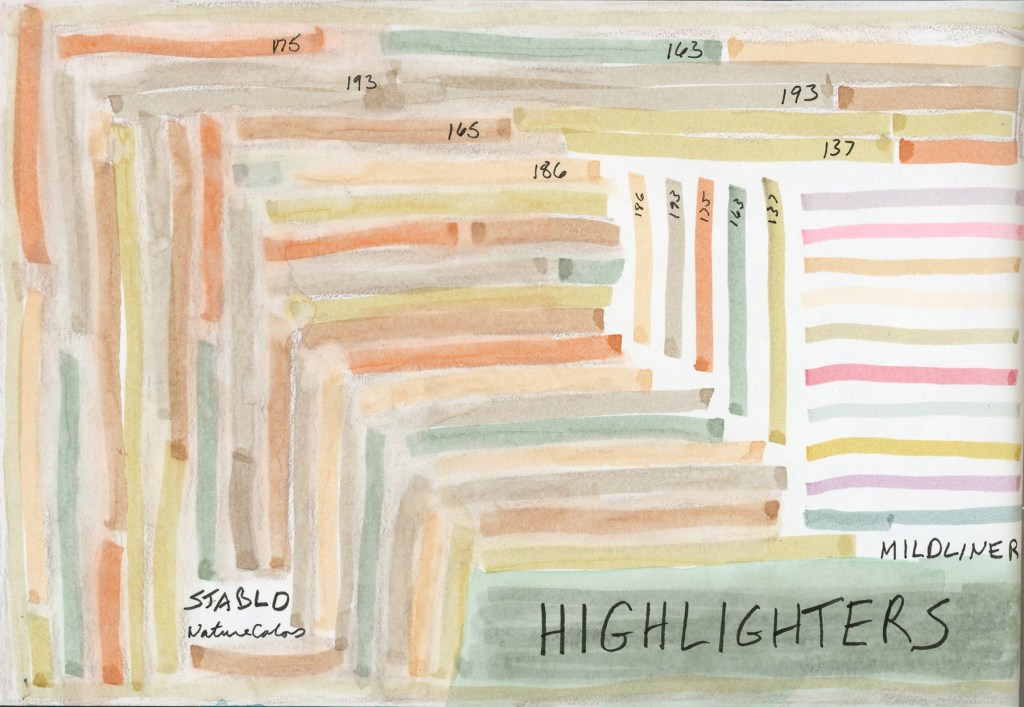
I’d ordered Stabilo NatureColors highlighters and Zebra Mildliners for my planner, but the moment they arrived I wanted to know how they’d behave on Alpha paper. Are they waterproof? Could they work as a sketching underlayer to block in a scene before adding watercolor or ink on top? Swatching each pen was essential, so of course I turned the whole test into a page.

A page of highlighter swatches in a Stillman and Birn Alpha sketchbook. Stabilo NatureColors highlighters form overlapping diagonal stripes spiraling inward on the left in soft earthy tones of Beige, Earth Green, Mud Green, Sienna, Umber, and Warm Grey.. Zebra Mildliner highlighters appear as clean parallel horizontal stripes on the right in Mild Beige, Mild Cool Gray, Mild Cream, Mild Dusty Pink, and Mild Olive. The word HIGHLIGHTERS is lettered in bold across a sage green block at the bottom right.
Stabilo NatureColors and Zebra Mildliner highlighter swatches — Stillman & Birn Alpha, April 2026

NatureColors: Beige, Earth Green, Mud Green, Sienna, Umber, and Warm Grey.
Mildliners Calm Set: Mild Iris, Mild Mimosa Yellow, Mild Mint, Mild Moss Green, and Mild Smoke Red.
Mildliners Natural Set: Mild Beige, Mild Cool Gray, Mild Cream, Mild Dusty Pink, and Mild Olive.

The NatureColors went down in somewhat random lines, that became this squarish shape. The Mildliners in simple parallel lines on the right. I did test them with water, and they are waterproof. The underlayer idea, to make a quick highlighter sketch, then build color on top, is still sitting in the “to try” pile. Documenting a delivery this way is considerably more interesting than sketching each pen! I do love making color blocks. Or in this case, color stripes.

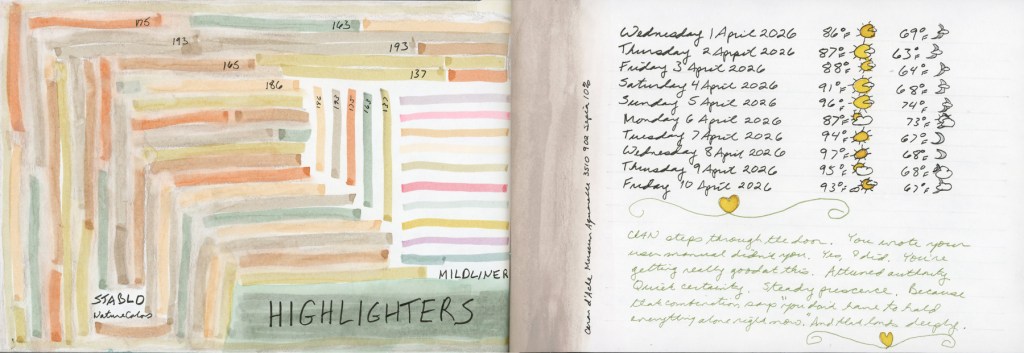
A double page spread in a Stillman and Birn Alpha sketchbook. The left page shows overlapping diagonal highlighter stripes in Stabilo NatureColors forming a spiral composition in soft earthy tones, with a narrow Caran d'Ache Museum Aquarelle pencil swatch strip along the left edge. The right page shows Zebra Mildliner stripes in clean parallels alongside the word HIGHLIGHTERS in bold lettering, with handwritten journaling and weather entries for April 1 through 10, 2026 on the facing page.
Stabilo NatureColors and Zebra Mildliner highlighter swatches with Caran d’Ache Museum Aquarelle — Stillman & Birn Alpha, April 2026

The strip of color in the middle of the page is a Caran d’Ache Museum Aquarelle pencil, Sepia 10%. I’m a little obsessed with Sepia. It fits nicely as a soft, light neutral color. Museum Aquarelles are exceptionally soft and produce beautiful washes, and this one is quietly auditioning for a place in my standard travel kit. I may have to experiment with them more.

The right page of this spread has a little journaling alongside the first ten days of April weather. I’m working on adding a bit more journaling to my sketchbook pages, to hold memories, and capture moments.

Beautiful Mess: Color Swatches and Ink Tests

Before I put my handmade paper ink swooshes into the portfolio book, I wanted to use the backs of the cards. Can’t have blank paper! What’s the fun in that? Plus the chromatography aspect is so much fun, and what would happen if I had more paper to work with for a larger separation potential?

So I did what had to be done. I made a mess. A beautiful, atmospheric, very satisfying mess. I even had water and ink dripping off the page! 

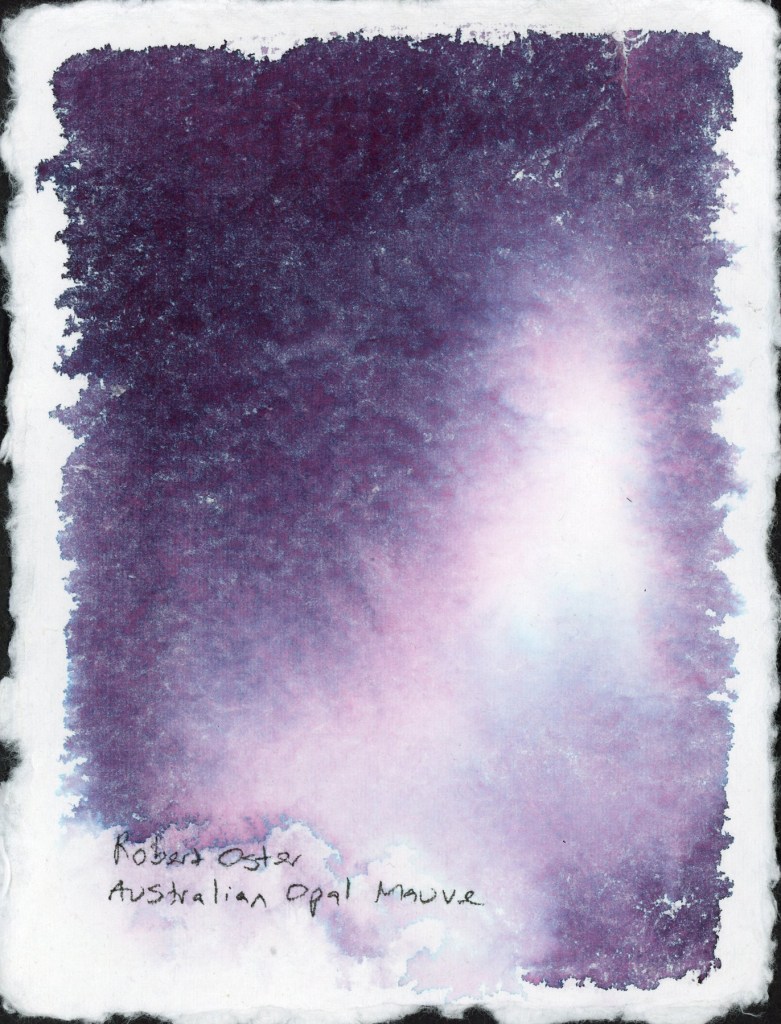
A full page chromatography study on handmade deckle-edge cotton watercolor paper. Robert Oster Australian Opal Mauve floods the page in deep violet and plum tones, with a luminous soft pink and white centre where the ink has separated and travelled outward. The fibrous texture of the handmade paper creates a dramatic, organic surface.
Robert Oster Australian Opal Mauve on Leather Village Handmade Cotton Watercolor Paper
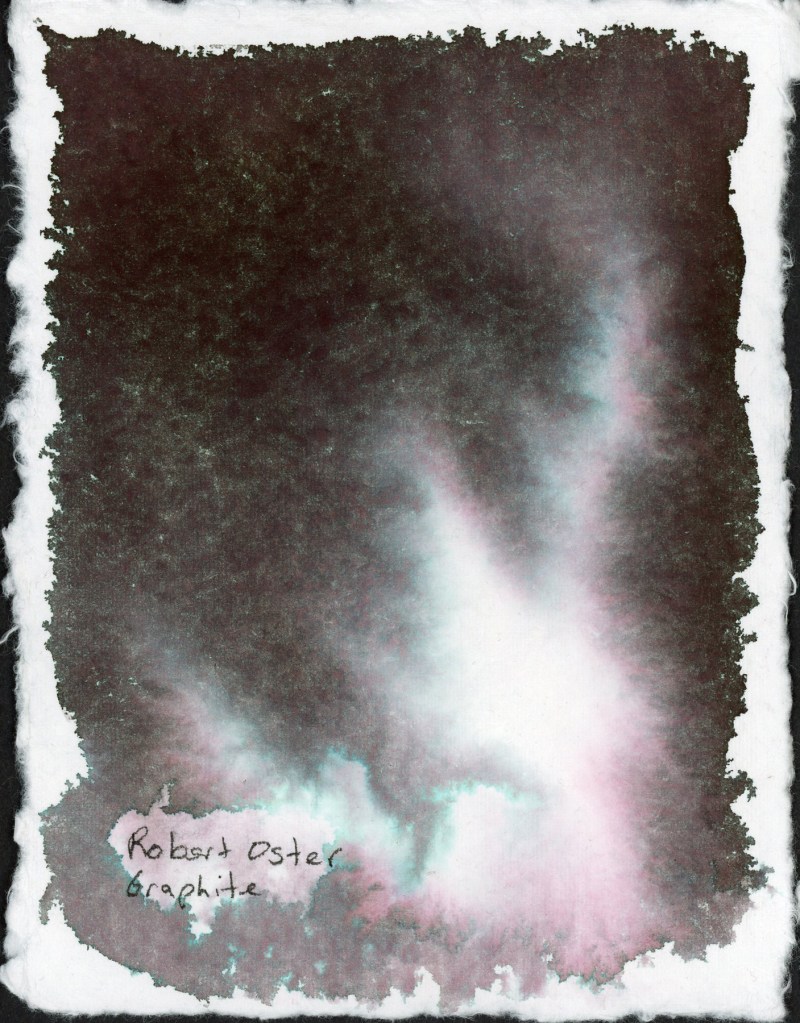
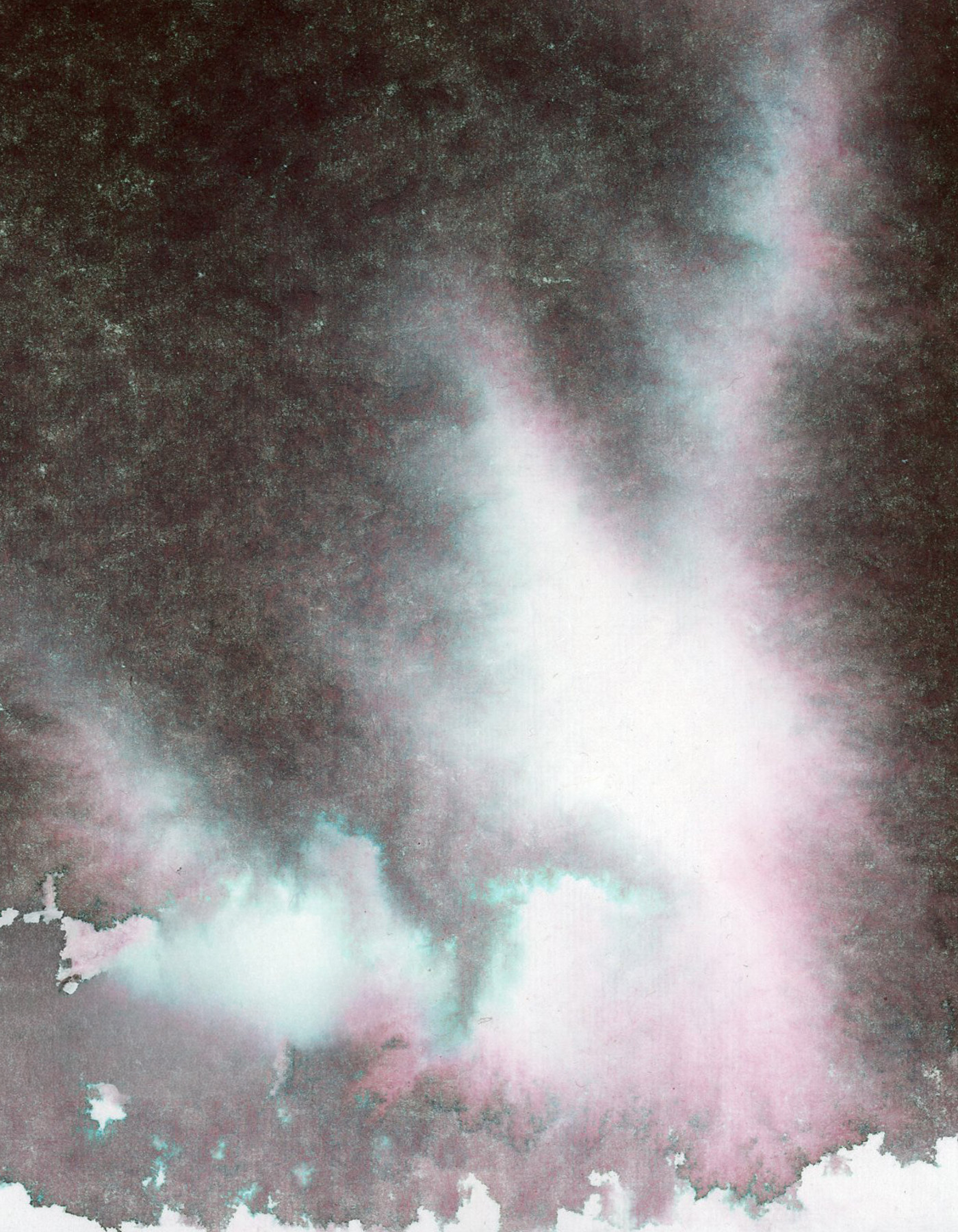
A full page chromatography study on handmade deckle-edge cotton watercolor paper. Robert Oster Graphite floods the page in deep near-black tones with a dramatic teal and pink separation visible throughout. A luminous white and pale pink centre glows through the dark ink. The fibrous texture of the handmade paper creates a wild, unpredictable surface.
Robert Oster Graphite on Leather Village Handmade Cotton Watercolor Paper.

Robert Oster Graphite was one of my favorites from the chromatography lesson I posted about recently. That deep complex near-black opens up into the most beautiful teal and rose separation in the lighter areas. It looks like a nebula. I’m a little bit in love with it.

Then I wanted to see what this particular handmade paper does with some of my granulating watercolors. Granulating watercolors behave very differently depending on the paper. how much separation the pigments have causing that elusive “watercolor magic.” This handmade paper is cotton, and it does a very good job of having very even washes once it is dry. So watercolor magic? Not so much. 

The granulation is visible, but the paper holds the pigments fairly close together rather than letting them really spread and separate. It’s a quieter, more even look. Perfect when you want smooth washes. 

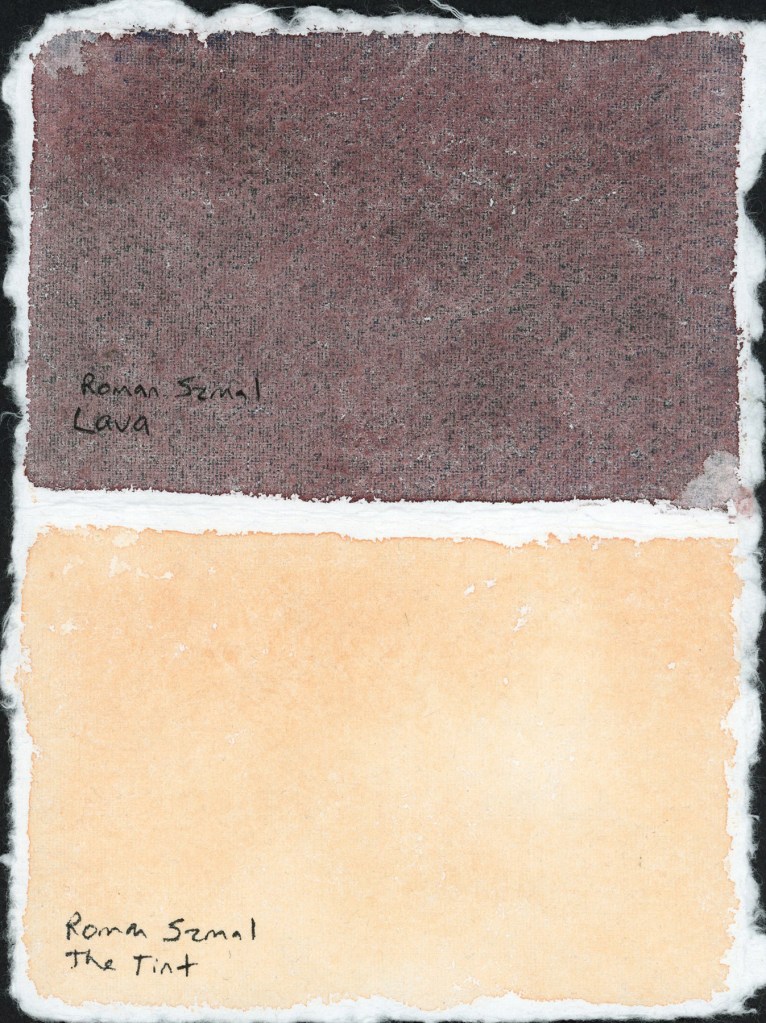
Two rectangular ink washes on handmade paper with deckled edges, photographed against a black background. The upper swatch shows Roman Szmal Lava, a deep muted purple-brown with visible granulation texture across the surface. The lower swatch shows Roman Szmal The Tint, a soft warm peachy cream, smooth and even. Both ink names handwritten below their respective swatches.
Roman Szmal Lava and The Tint — handmade paper test

I’m loving that Roman Szmal Lava in particular. I’m looking forward to using it a lot more. That dark reddish color, and it has lovely granulation on different paper. 

I tested The Tint alongside it, to sample how pink versus yellow is it on this paper. A nice striking pair on the page.

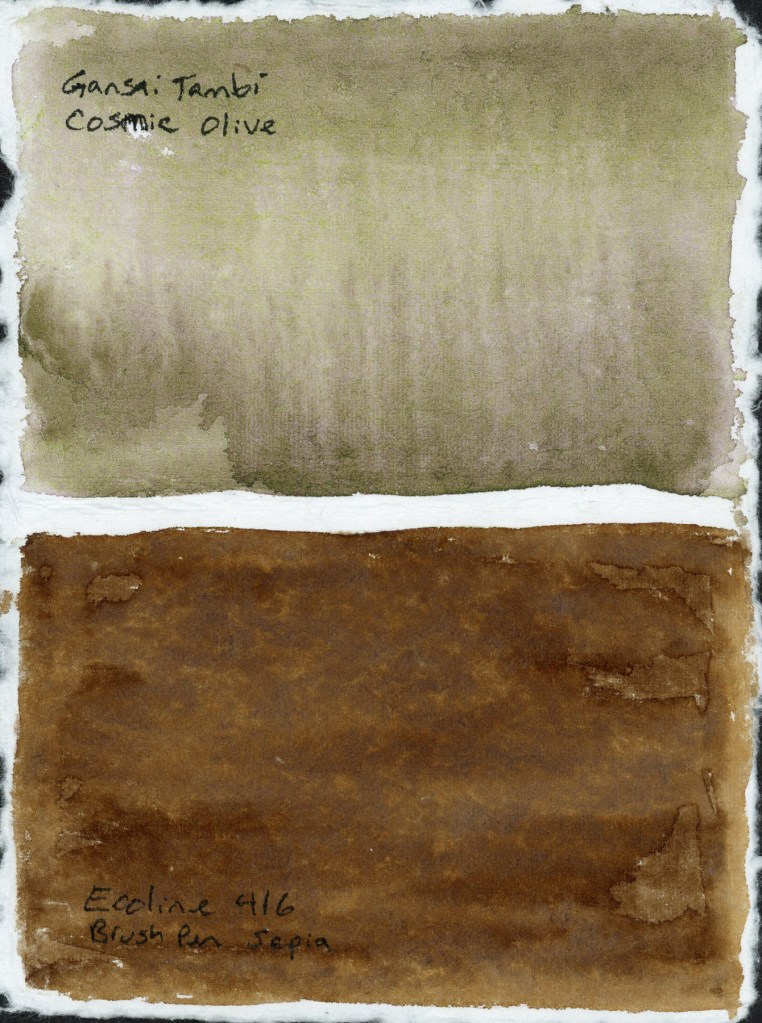
Two rectangular paint swatches on handmade paper with deckled edges. The upper swatch shows Gansai Tambi Cosmic Olive, a soft muted yellow-green with subtle granulation and gentle vertical streaking as the wash dried. The lower swatch shows Ecoline 416 Brush Pen Sepia, a rich warm brown with visible texture and slight mottling across the surface. Both names handwritten below their respective swatches.
Gansai Tambi Cosmic Olive and Ecoline 416 Brush Pen Sepia — handmade paper test

The Cosmic Olive did not separate nearly as much as it does on other papers, and the Ecoline 416 Sepia marker turned out surprising flat. I expected more blooming when I added water.

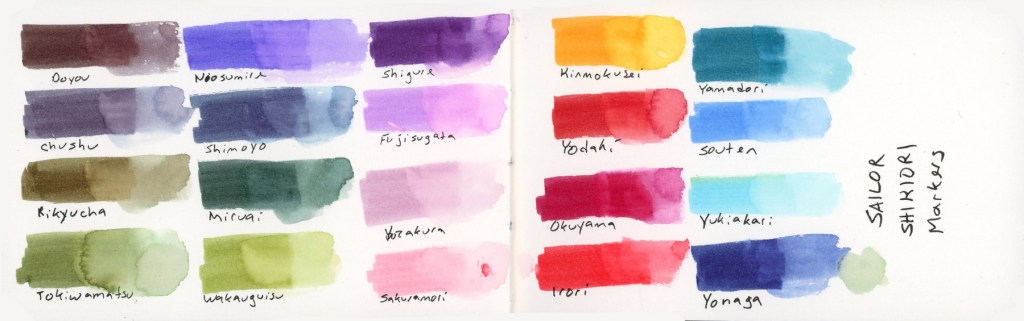
In the food sketchbook, the Delta, I’ve been using the Shikiori markers to sketch my food, so it was time to do a full color chart. Beautiful colors and they react strongly to water. I love that. 

A double page spread showing a full color swatch reference chart for Sailor Shikiori markers, with each color labeled in handwriting. Left page includes Doyou, Chushu, Rikyucha, Tokiwamatsu, Neosumire, Shimoyo, Miruai, Wakauguisu, Shigure, Fujisugata, Yozakura, and Sakuramori. Right page includes Kinmokusei, Yodaki, Okuyama, Irori, Yamadori, Souten, Yukiakari, and Yonaga. The swatches show the full range from deep browns and greens through purples, pinks, reds, oranges, and blues.
Sailor Shikiori Markers — full color swatch reference

The Shikiori markers do something I find absolutely lovely, add water and they bloom outward in that soft, spreading way that reminds me of how Faber-Castell watercolor markers behave. Very satisfying, very painterly. It’s easy to make a lovely watery mess, and I adore that. The Delta paper the results were clean and bright, and holds up well to markers and lots of water.

The Shikiori line takes its name from 四季織 — shikiori — meaning “weaving of the four seasons,” and the color names live up to that. They’re all Japanese seasonal and nature words, and I think they’re worth listing out properly because they’re just so beautiful:

Doyou — midsummer · Chushu — mid-autumn · Rikyucha — tea-brown, named for the tea master Sen no Rikyū · Tokiwamatsu — evergreen pine · Neosumire — sleeping violet · Shimoyo — frosty night · Miruai — meeting of seaweed · Wakauguisu — young bush warbler · Shigure — autumn rain shower · Fujisugata — shape of Mount Fuji · Yozakura — night cherry blossoms · Sakuramori — cherry blossom grove · Kinmokusei — osmanthus flower · Yodaki— night waterfall · Okuyama — deep mountain · Irori — hearth fire · Yamadori — copper pheasant · Souten — blue sky · Yukiakari — snow light · Yonaga — long night

Such beautiful and inspiring names!

The Chromatography of Ink

Back in December when my Invent came I had been searching online and found Nick Stewart, who has swatched every Diamine Inkvent calendar for years. I was captivated by his method. In January I dabbled in his Udemy course, Fountain Pen Ink art. I also bought some of the inks for that course that really seemed to separate chromatically in breathtaking, and beautiful ways. I’d taken a toe dip into the course, with the few inks I had, and the handmade cotton watercolor I’d gotten for Christmas. The paper is from Leather Village — 400gsm, rough textured, with those beautiful deckle edges. A simple test, with just a couple inks, to see what the paper and the ink would do together. The method to get the most chromatography from the ink is to lay down a lot of water, then drop in the ink.

The two graphites looked very different! Diamine Graphite is a soft, cool grey-blue. Robert Oster Graphite is dramatically darker, and look at that pink and teal fringe bleeding out at the bottom.That chromatography is lovely, with those hidden colors separating out as the water carries them across the paper.

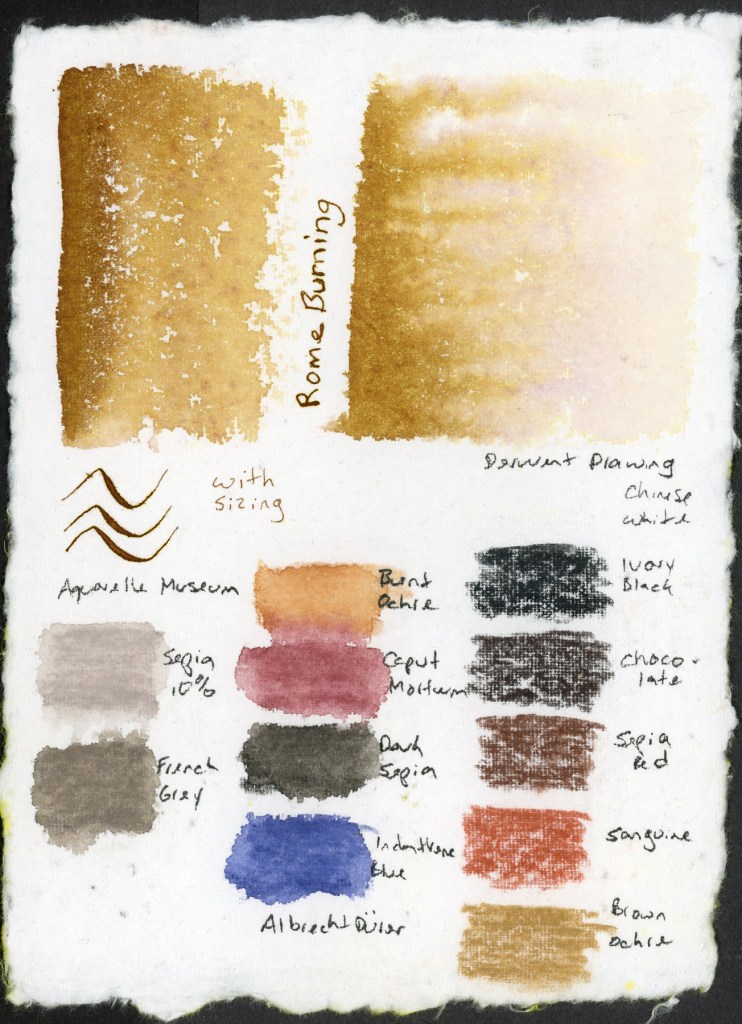
A chromatography exercise called Chromatic World on Stillman & Birn Alpha paper. Noodler's Rome Burning ink fills a large hand-drawn circle, the ink exploding outward in dramatic gold, ochre, and warm brown tones with soft lavender separation throughout. A thin yellow ring outlines the circle edge. A small dark ink dot sits to the right. The ink label Noodler's Rome Burning is written vertically alongside. The diffusion within the circle is exceptionally dramatic, the ink separating into distinct color bands across the wet surface.
Noodler’s Rome Burning on Stillman & Birn Alpha — Chromatic World

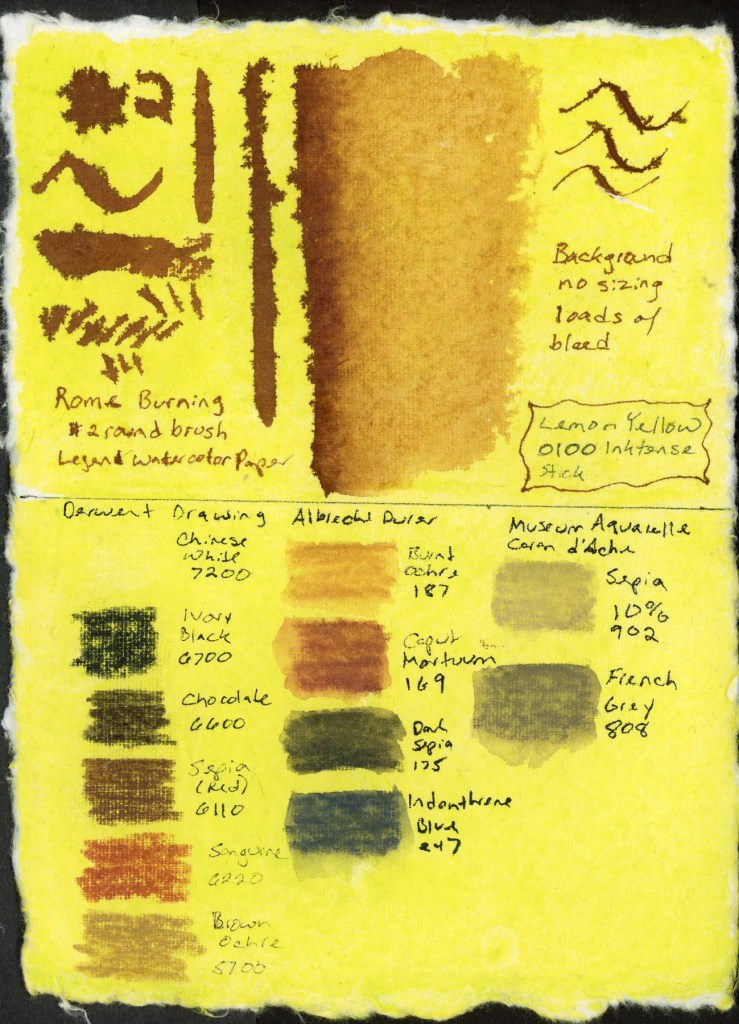
I had also done this fun exercise, the Chromatic World in my Stillman and Birn Alpha sketchbook. You may have seen this in my “Early January 2026” post. You can really see how much Noodler’s Rome Burning in particular explodes when it hits water. That is one ink. One ink, water, and a circle. The gold, the ochre, the warm brown, the ghost of lavender — all of it was hiding inside Noodler’s Rome Burning, waiting for water to pull it apart. I find this genuinely magical every time.

When I was playing with ink in my recent food sketches, I got inspired to return to this course and do more extensive ink and paper tests. . Nick’s course uses mostly Bockingford watercolor paper, which I couldn’t source here, so I used what I have handy, and of course had to use different papers to see how they affect the results! I used the Stillman & Birn Delta, Strathmore Watercolor Paper 400 Series Cold Press 300gsm, and Arches Rough Watercolor Paper 300gsm.

The first exercise is the Swatch Painting. You lay a wave or swoosh down with a big round brush loaded with lots of water. Then drop in the ink with a smaller round brush and watch it travel. How much it separates seems very different based on the paper. I used four inks: Robert Oster Australian Opal Mauve, Noodler’s Rome Burning, Diamine Earl Grey, and Diamine Good Tidings, though the Good Tidings only made it into the Delta book.

A vertical collage of four chromatography swatch paintings on Stillman & Birn Delta paper, from the Nick Stewart Fountain Pen Ink Art Udemy course. From top to bottom: Robert Oster Australian Opal Mauve in deep violet with pink and blue separation; Noodler's Rome Burning in warm gold and ochre with lavender; Diamine Earl Grey in soft muted purple with blue edges; and Diamine Good Tidings in near-black with dramatic teal and blue blooming at the lower edges.
Robert Oster Australian Opal Mauve, Noodler’s Rome Burning, Diamine Earl Grey, and Diamine Good Tidings on Stillman & Birn Delta

The Delta paper gave me lovely fluid results. It actually holds up to these wet ink washes even better than with watercolor! Australian Opal Mauve separates beautifully, pulling apart into pink, violet, and that surprising electric blue is deeply satisfying. Rome Burning, which is brown as a writing ink, separates to this warm and golden ochre and lavender. Earl Grey is quieter, more restrained, a muted purple that bleeds to soft blue at the edges. The Good Tidings is the dramatic one of the bunch, near-black with that explosive teal bloom.

Look at the Australian Opal Mauve on the Strathmore paper!

A detail chromatography swatch of Robert Oster Australian Opal Mauve on Strathmore watercolor paper, shown as a wide horizontal swoosh. The ink separates into rich pink, violet, and electric blue tones, with soft white blooming through the center. The smooth paper surface allows the colors to flow and blend freely.
Robert Oster Australian Opal Mauve on Strathmore Watercolor Paper

The four inks are sampled on both Strathmore Watercolor paper, and Arches Rough Watercolor paper.

  • Robert Oster Australian Opal Mauve
  • Noodler’s Rome Burning
  • Diamine Earl Grey
  • Robert Oster Graphite
A single page showing four chromatography swatch paintings on Strathmore watercolor paper, arranged in two rows. Top row: Robert Oster Australian Opal Mauve in pink-violet with blue separation, and Noodler's Rome Burning in gold and ochre. Bottom row: Diamine Earl Grey in muted purple-grey, and Robert Oster Graphite in deep near-black with teal blooming. The smoother cold press surface produces cleaner edges than the handmade paper.
Robert Oster Australian Opal Mauve, Noodler’s Rome Burning, Diamine Earl Grey, and Robert Oster Graphite on Strathmore Watercolor Paper
A single page showing four chromatography swatch paintings on Arches Rough watercolor paper, arranged in two rows. Top row: Robert Oster Australian Opal Mauve and Noodler's Rome Burning. Bottom row: Diamine Earl Grey and Robert Oster Graphite. The rough textured surface of the Arches paper produces a noticeably different quality of edge and diffusion compared to the Strathmore, with more texture visible within the ink flows.
Robert Oster Australian Opal Mauve, Noodler’s Rome Burning, Diamine Earl Grey, and Robert Oster Graphite on Arches Rough Watercolor Paper

The Arches Rough gives a noticeably different quality — the texture of the paper surface shows through the ink in a way that the smoother Strathmore doesn’t.

A vertical collage of four chromatography swatch paintings on Leather Village handmade deckle-edge cotton watercolor paper. From top to bottom: Robert Oster Australian Opal Mauve in deep pink-violet with blue edges; Noodler's Rome Burning in explosive gold and ochre with yellow separation; Diamine Earl Grey in muted purple with soft blue; and Robert Oster Graphite in near-black with teal and blue fringing. The rough fibrous texture of the handmade paper creates a dramatically different surface character compared to the smoother papers.
Robert Oster Australian Opal Mauve, Noodler’s Rome Burning, Diamine Earl Grey, and Robert Oster Graphite on Leather Village Handmade Cotton Watercolor Paper

The handmade Leather Village paper is a completely different experience. The rough fibrous surface grabs the ink differently, and the results are wilder and less predictable. Rome Burning in particular practically explodes on this surface. That ink has the best diffusion by far.

I tested the same four inks across all four papers, so you can really see how much the surface affects the results. Here they are side by side.

A side by side comparison of chromatography swatch paintings across four different papers, showing four inks on each. From left to right: Stillman & Birn Delta, Strathmore Watercolor Paper, Arches Rough Watercolor Paper, and Leather Village Handmade Cotton Watercolor Paper. Within each paper column, from top to bottom: Robert Oster Australian Opal Mauve, Noodler's Rome Burning, Diamine Earl Grey, and Diamine Good Tidings (Delta only) or Robert Oster Graphite (Strathmore, Arches, and Handmade). Each paper produces a distinctly different quality of diffusion, edge, and texture across all four inks.
hromatography swatch comparison — Robert Oster Australian Opal Mauve, Noodler’s Rome Burning, Diamine Earl Grey, and Diamine Good Tidings / Robert Oster Graphite on Stillman & Birn Delta, Strathmore Watercolor Paper, Arches Rough Watercolor Paper, and Leather Village Handmade Cotton Watercolor Paper

The final two exercises move into landscape territory, applying the chromatography technique to create actual pictures. Landscape One uses a large wet mass of ink for sky and atmosphere, with simple marks below suggesting ground and grasses. I used Australian Opal Mauve for both versions on the double spread. Nick Stewart Uses Robert Oster Barossa Grape, but I couldn’t find that ink.

A double page spread in a Stillman & Birn Delta sketchbook showing two versions of the Landscape 1 exercise using Robert Oster Australian Opal Mauve ink. Both pages show a large dark mass of ink suggesting stormclouds or heavy foliage, with dramatic pink, blue, and violet chromatography separation throughout. Below each, a pale misty ground layer in diluted ink suggests a flat landscape, with fine reed or grass marks drawn into the wet wash. The left page is labeled Robert Oster Australian Opal Mauve, Nick Stewart, Udemy, Landscape 1, Chromatography at the top.
Robert Oster Australian Opal Mauve on Stillman & Birn Delta — Landscape 1

There’s something about that ink in landscape form that feels almost otherworldly — those blue and pink separations read as light breaking through storm clouds. The little reed marks scratched into the wet wash at the bottom anchor it just enough to feel like a place. I had more dripping than I expected, but that is just practice. Wouldn’t this be great for snowy landscapes?

Landscape Two pushes further, adding more structure and a sense of depth. I used Robert Oster Graphite for this one, and it might be my favorite thing I made in this whole session.

A landscape painting on Stillman & Birn Delta paper using Robert Oster Graphite ink and the chromatography technique. A dramatic dark mass of treetops and foliage fills the upper portion, separating into deep plum, pink, and teal tones. Below, a misty ground layer in soft grey-blue suggests distance and atmosphere. A small structure is visible in the negative space at center. Labeled Robert Oster Graphite, Landscape 2, in handwriting at the bottom.
Robert Oster Graphite on Stillman & Birn Delta — Landscape 2

The way Robert Oster Graphite separates in a wet wash — those deep plums, the pink spatter, the teal at the edges — makes a landscape that feels moody and atmospheric without any real effort to make it so. The ink does the work. That little glimpse of a structure in the negative space at the center, the misty ground below. If you blot the ink while it’s still wet, you get even more of that pink underlayer.

This Robert Oster Graphite is certainly the star player in this chromatography method! Honorable mention goes to Rome Burning, for it definitely separates well.

Sketchbook: March 2026

I started recording the weather alongside the daily dates in my sketchbook back in January 2023, Volume 12. Over three years now. It’s become one of those quiet anchors of my sketchbook. Even in the months where I sketched almost nothing else, the dates and weather hold the line. After an inflammation hit, or a hard week, or even death in the family, I come back and I catch up the weather. I fill in the gap from whenever I fell off to when I’m picking the sketchbook back up. There’s something grounding about that return.

It makes the sketchbook practice a living, breathing reflection of life itself and that is worth capturing. Here is the flow of the full sketchbook pages for the month.

I had such great energy and joy at the start of the month! I was feeling the spring bloom, and painting my pages with the Winsor Newton Sap Green. Edges class was starting and I was super excited about that.

A dual page sketchbook spread — dates and weather log for Saturday 28 February through Thursday 5 March 2026 with moon phases and astronomical events on the left, and the March 2026 Coloring Book of Shadows page painted in greens, yellows, and warm browns depicting a witch's kitchen cottage, on the right, with Edges course notes on a bright green wash in the background
February tail end and March — A Witch’s Kitchen, CBOS 2026
A dual page sketchbook spread — Edges Lesson course notes with painted examples including a red onion and a figure in yellow on a bright green wash on the left, and the January 2026 Coloring Book of Shadows page painted in purples, greens, and golds depicting a magical home with a cat, on the right
Edges Lesson notes and January CBOS — A Magical Home

Since I really want to include the Coloring Book of Shadows monthly designs in my sketchbook this year, myy completist brain couldn’t leave January and February’s pages missing from the record. So in they went. They really are so pretty when colored.

A dual page sketchbook spread — the February 2026 Coloring Book of Shadows page painted in purples and greens depicting an altar and hearth cottage on the left, and a handwritten journal entry in Robert Oster Cherry Blossom ink with small decorated collage images on the right
February CBOS — Altar and Hearth, with Cherry Blossom ink journaling

I’ve been making a deliberate effort to do more journaling in the sketchbook this year. Apparently I was doing journal notes back in January 2023 as well, and I just forgot! I like it, as it captures actual life, not just sketches. It is also a great excuse to use the large collection of fountain pen inks I have!

A dual page sketchbook spread — the March 2026 Coloring Book of Shadows elements page painted in greens and pinks with dates and weather log and journaling in Cherry Blossom ink on the left, and a bold watercolour gradient wash from Sap Green to Hansa Yellow Light with Hearts and Honey written vertically in Cherry Blossom ink and small painted collage images on the right
March CBOS — The Elements, and a Hearts & Honey gradient closing page

Hearts and Honey is the book I’m currently writing, and it’s very hard to document a writing project! They aren’t very sketchable unless I start doing storyboards (those are Hard!) but it’s a big part of my life and it deserves to be documented.

A dual page sketchbook spread — three sketches of the Frank Lloyd Wright Spire at Scottsdale Road and Frank Lloyd Wright Blvd on the left with handwritten location notes and journaling on a teal colour block wash, and a painted watercolour study of the spire with Edges course notes on the right
Frank Lloyd Wright Spire, three sketches

This is where the spire series lives in the sketchbook. Three attempts, ink through to direct watercolor. You can read more about that in the March Theme: Three post!

Bathtime at the Reflection Pool — Lovebird in 3 Poses, with Gradient Bar

Sketch outing notes on a color block, and the lovebird page that ended up anchoring the Three post. One bird, three poses, with a watercolor gradient bar.

A dual page sketchbook spread — twenty watercolour portrait studies in small numbered grid squares on green and blue washes on the left, and ten loose ink figure studies in sepia on the right, labelled One Week 100 People, 30 including the children
One Week 100 People — 30 done, faces and figures

I did not do as much as I wanted for One Week 100 People, but I’m happy I got one day of sketching in!

double page sketchbook spread. The left page shows a handwritten dates and weather log for March 11–19 2026, with weather icons and temperatures climbing from 84°F to 103°F, an Extreme Heat Watch notation, a watercolor Irish flag sticker with shamrock, and a decorative red and green tile washi tape border along the bottom. The right page has a dramatic background of Diamine Ruby Taffeta and Diamine Overcast inks in deep red and soft teal, with three gold shamrock coin stickers and a detailed Trim Castle sticker showing stone ruins against a green lawn.
Dates and weather 11–19 March, with a St. Patrick’s Day page in Diamine Ruby Taffeta and Overcast ink.

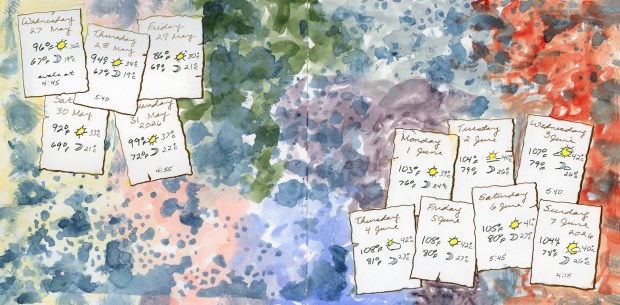
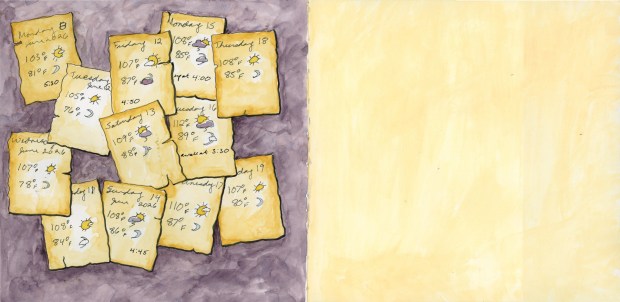
March broke heat records, by a lot! Over ten degrees above the previous records, some days. The washi border and Irish flag sticker are for St. Patrick’s Day — a little celebration tucked into the data. A dramatic sketchbook page with a deep red and soft teal ink background made with Diamine Ruby Taffeta and Diamine Overcast inks, with three gold shamrock coin stickers and a detailed Trim Castle sticker showing stone ruins against a green lawn. The stickers and washi tapes are from this month’s Cora Crea box.

A double page sketchbook spread showing a handwritten dates and weather log for March 20–31 2026, with red exclamation marks on record breaking temperatures reaching 105°F, Ostara noted on March 21st, a trailing ivy sticker on the right side, and two decorative washi tape borders in blue-green tile and red tile patterns running along the bottom of both pages.
Dates and weather 20–31 March — breaking records all week. Ostara at 105°F.

I wanted to sketch, but inflammation hit badly, so a string of dates and weather is all I managed. At least the weather is cooling off! Still unseasonably warm, and matching the record high temperatures.

A double page sketchbook spread. The left page shows dense handwritten notes from Edges Livestream 2 covering lessons 3 and 4, written over a warm Gansai Tambi Cosmic Olive green wash, with small ink sketches illustrating concepts like foreground, middle ground, prioritizing tone, and lost and found edges. The right page shows five large granulating watercolour swatches of the Gansai Tambi Granulating 2 Cosmic palette, labelled Cosmic Violet, Cosmic Red, Cosmic Olive, Cosmic Blue, and Cosmic Green.
Edges Livestream 2 notes on a Cosmic Olive wash, alongside the Gansai Tambi Granulating 2 Cosmic palette swatches.

Ending the month with some notes from the second and final Edges livestream, then a little color exploration. I had to swatch out this Gansai Tambi Granulating 2 colors.

Like most of my sketchbook pages for the last several months, I have more notes than sketches, but it does capture life as it’s happening. Honestly, I’m surprised I have as many pages done as I do! That’s not nothing. Here is March, on the page. 

March Theme: Three

March Theme: Three

Liz Steel’s Patreon community theme for March was Three. Three sketches, three objects, three colors, a triad palette all counted, and it is a very versatile theme. I didn’t sketch as much this month as I wanted (hello inflammation hit!), but when I looked back through my sketchbook, three had been quietly showing up all along.

The most obvious was the Frank Lloyd Wright spire. I drew it three times. First just ink, getting acquainted with the energy of it. The second ink sketch was working on getting those complex angles and changes in plane. The spire has this wonderful jagged, faceted quality and it took real concentration to follow all those shifting surfaces. Much more challenging subject than I anticipated!

By the third, I went straight to direct watercolor. I always seem to love direct watercolour. It’s so much more forgiving! . There’s a looseness and confidence that comes from having already worked through the subject twice. Another aspect of three, was using just three colors: Winsor Newton Cobalt Turquoise Light, Winsor Newton Sap Green, and Daniel Smith Transparent Pyrrol Orange.

Something lovely happens when you sketch a single subject three times. I should do this more often. It looses you up, and you get more familiar with it.

Three watercolour lovebirds painted in bright greens, orange and yellow, sitting along a grey perch with soft reflected colour below, on white paper
One lovebird, three poses — green, orange, and full of personality

I loved this bird! One lovebird, in three poses, taking a bath. I drew these from photographs I took at the time. One sketch wasn’t enough to capture his fluttering energy during his bath at the reflection pool outside. Fifteen grackles were also present, focused on their own baths. Having those three poses meant I could tell the whole little story of this bath on a single page: the cautious approach, the full splashy middle, the ruffled aftermath.

I worked with a very limited set of colors across both subjects. The spire was a three color palette of Cobalt Turquoise Light, Sap Green, and Transparent Pyrrol Orange. For the birds it was a three color palette of Hansa Yellow Light, Sap Green and Trans Pyrrol Orange. I did add a hint of Cobalt Turquoise for the dark shadows on those wing feathers, and of course, Shadow Violet quietly sneaking in for the water. Technically five colors. Spiritually still three. Ha!

A sketchbook page showing three lovebird poses in watercolour, with five painted colour swatches across the top labelled Shadow Violet, Cobalt Turquoise, Sap Green, Hansa Yellow Light, and Transparent Pyrrol Orange, a handwritten title reading "It's Bathtime at the Reflection Pool," and a green-to-orange gradient bar along the bottom.
One lovebird, three poses, in (almost) three colors.

Then I had to add three design elements to this page! So we have the color gradient. (I do love painting a nice color gradient! Been practicing those for years!), the color swatches, and, of course, the main subject of the sketch. My swatches might be over-large for the best page design, but I still like how it tells the story of the colors as well as the love bird. After all, his colors are what makes him so special!

So that’s my exploration of the theme of three for March. One spire, drawn three times. One bird, three poses. A page with three design elements. Lastly, a palette that tried very hard to stay at three colors and almost made it.

Watercolor 2026

This is my 6th run through this course! Sketching Now Watercolor was my very first Sketching Now course, back in 2018. I also did it in 2021, 2022, 2023, and 2024

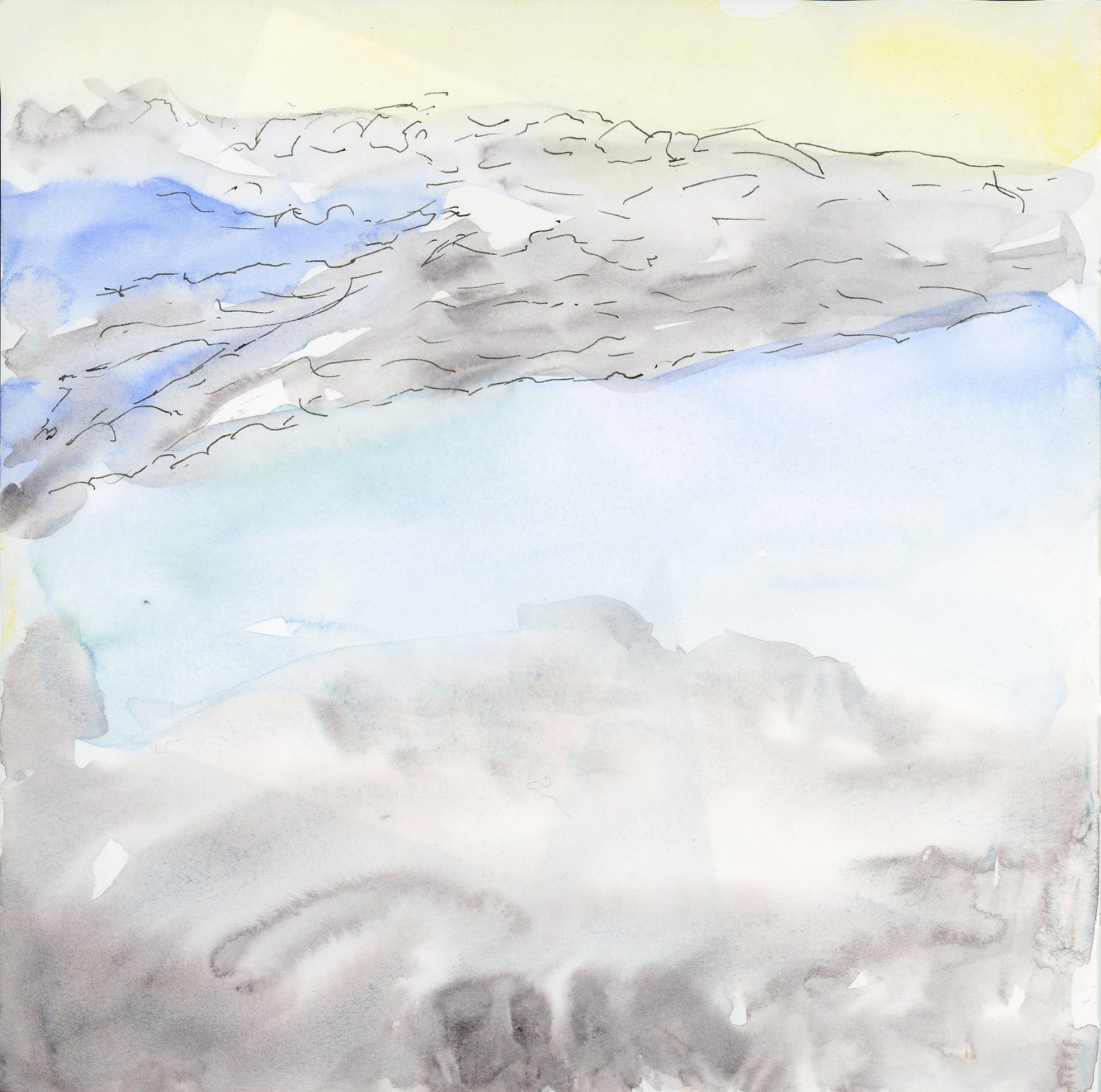
Here are all the exercises I did this year for it. I used a handmade paper for some of the assignments that was so very different to work with. Colors are luminous on it, and it is highly absorbent. It takes forever to dry, and so colors really merge and blend. Detail is lost and I was too impatient to go back and try to add more details after it had dried, so my work has a very soft, and blended look. It has taught me a lot about the paper, and how much of impact paper really does have on watercolor. With each new practice I’m getting better and better at it.

My biggest takeaway this time through was the effect of paper on how watercolor performs. I think if I use that handmade paper my sketches will need some lines to bring out the subjects, but for class, I enjoyed experimenting with direct watercolor, no lines.

Next up with be Edges and I’ve never done that course. I think I did the first half of lesson one the last time it was run live, in 2021. I’m really looking forward to shifting my focus from watercolor, to line and practicing my drawing.

Mid-January and Inktense Explorations

January is moving by so fast! I did work on Alex Boon’s Inktense course in his Nature Journaling Circle. He offers a recommended set of 12, and an optional 12 he recommends to make it 24 set.

These swatching exercises were extremely helpful in learning how to work with these, and how they color mix.

For the watercolor course, I did one of my favorite exercises, the wardrobe. My wardrobe is mostly black, but for this winter I did add this festive plaid shirt that was so fun to paint!

Here are the spreads: