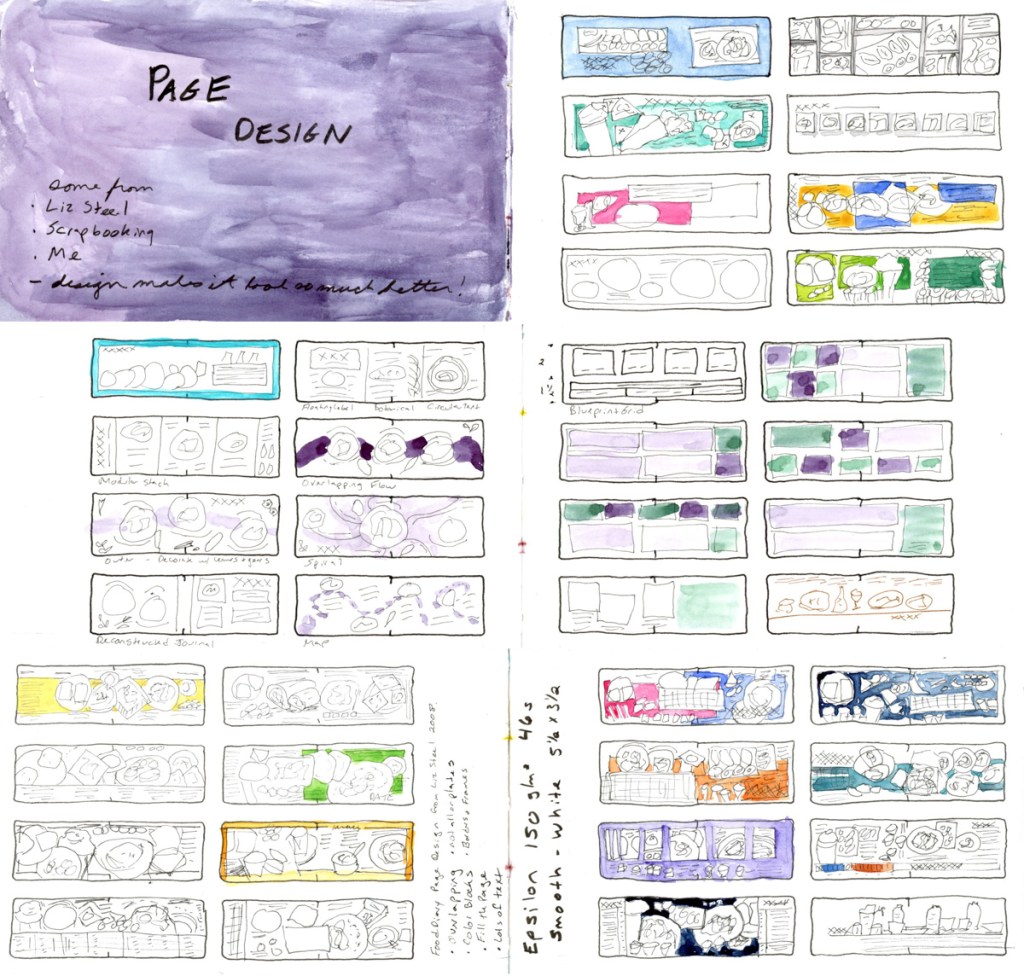
Last year I was filling a 3.5×5.5 inch landscape sketchbook with food photos. The very receptive nature of the subject, meant I got bored quickly and reached for page design to keep it interesting. I began to collect ideas on the pages in the back of that book, as I used them. The small size of the paper, and the long landscape shape offered challenges to design, so I am very happy to have this reference!
3.5 x 5.5 inch Landscape Format Layouts (Food Sketches)
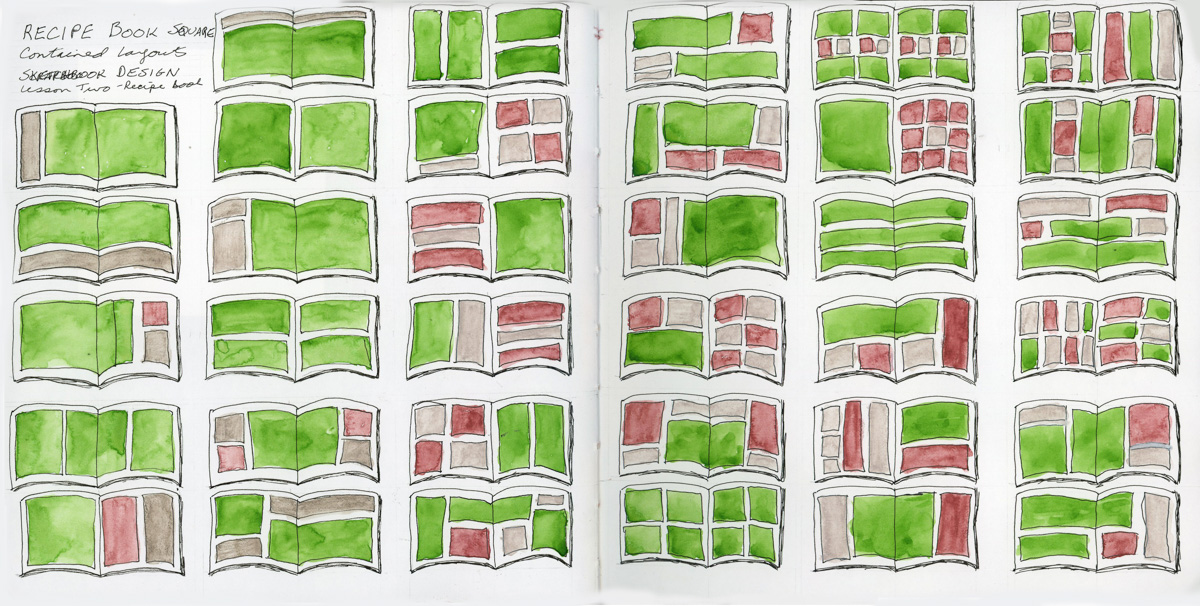
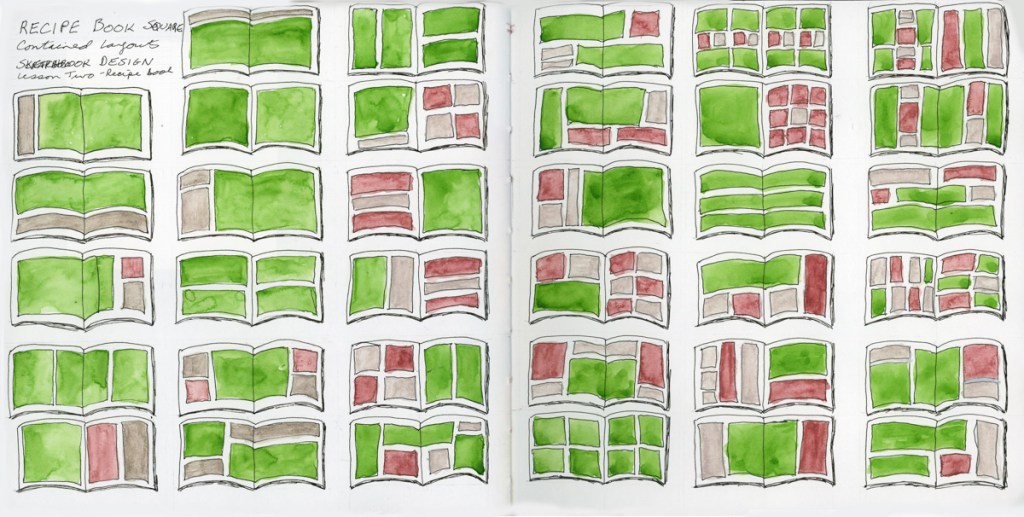
For this exercise in class this year, I did a bunch of layouts for the square format sketchbook.
Continuing my elements that can be part of page design.
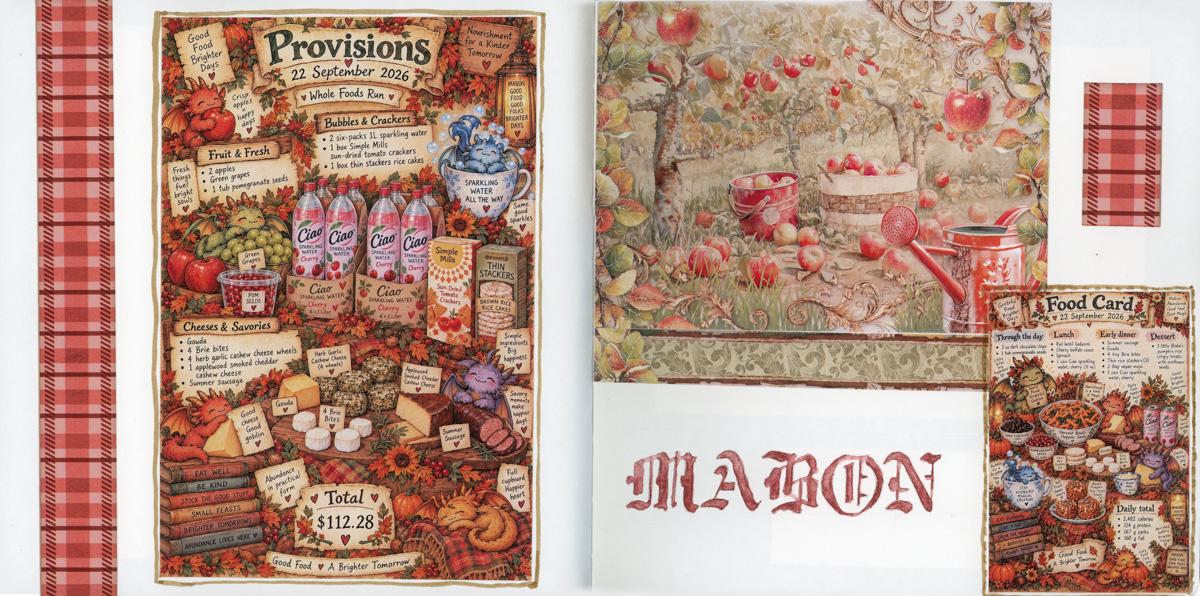
Heading
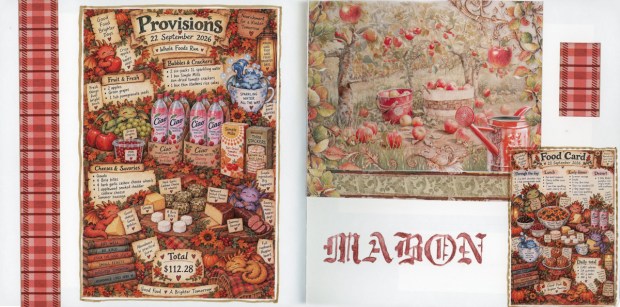
I think the heading here just made this page come together for me. I was very focused on page layout and design. I chose the size to fill the space just so, and I hunted among my stencils for that lettering/font choice. I colored it with that color to match the collage (especially that fun plaid!) and make the page harmonious. something about this particular page is a soothing little rest for the eye among the more complicated pages before and after it, in the sketchbook.
Maps
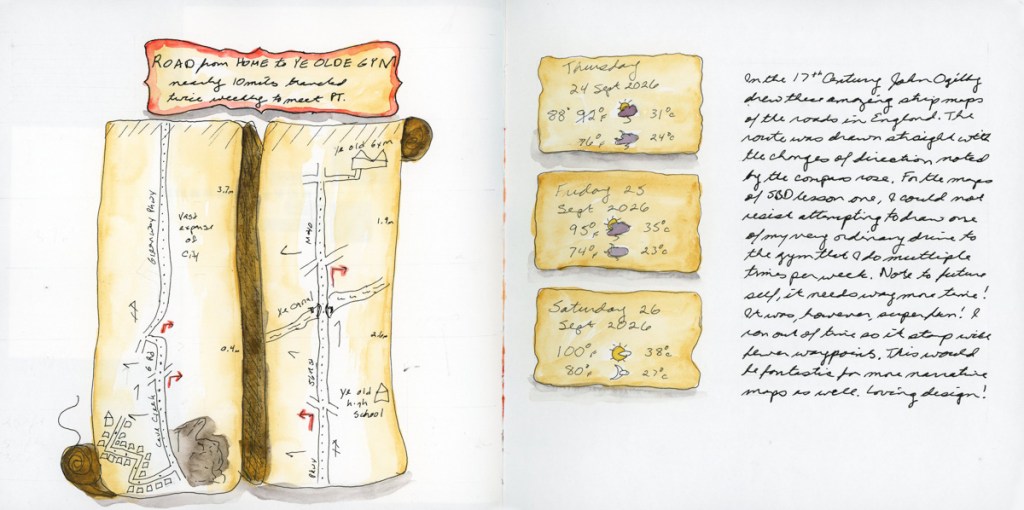
For this exercise I just had to try a John Ogilby style strip map for a very ordinary city trip. I love maps so much, but they are a challenge!
Secondary Sketch
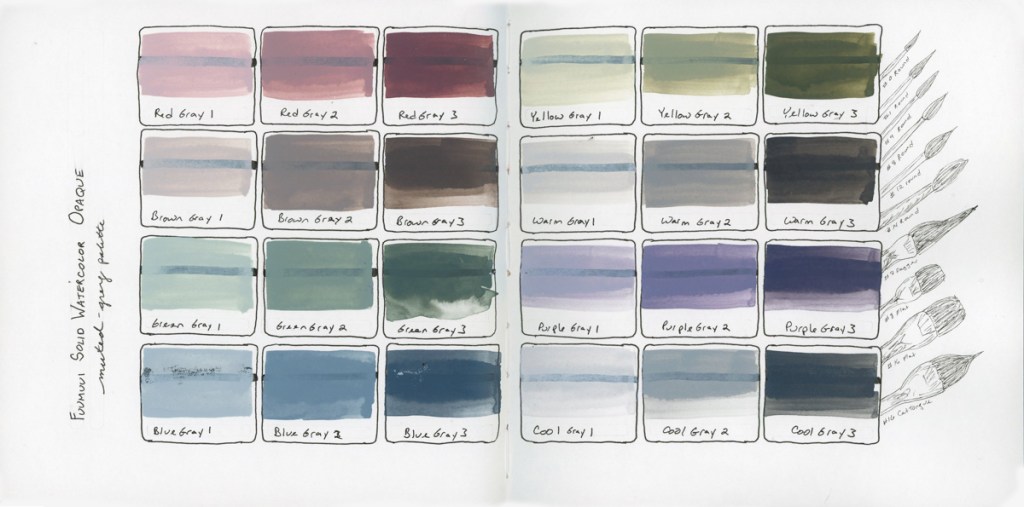
I decided to add the brushes behind this sketch/color chart to make it a more accurate capture of the actual delivery. And to fit in a secondary sketch, because I am not very good at thinking of secondary sketches! I rather love how this page turned out!
Collage
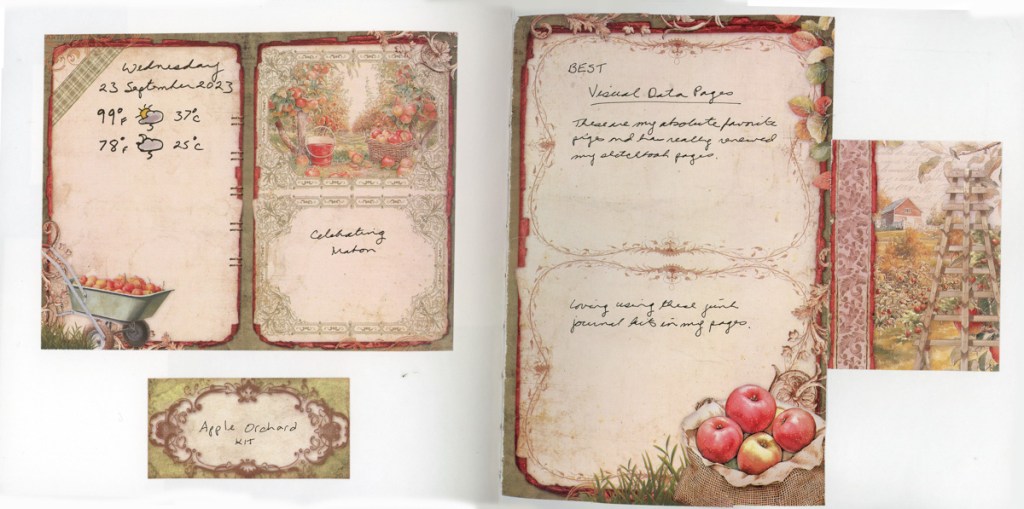
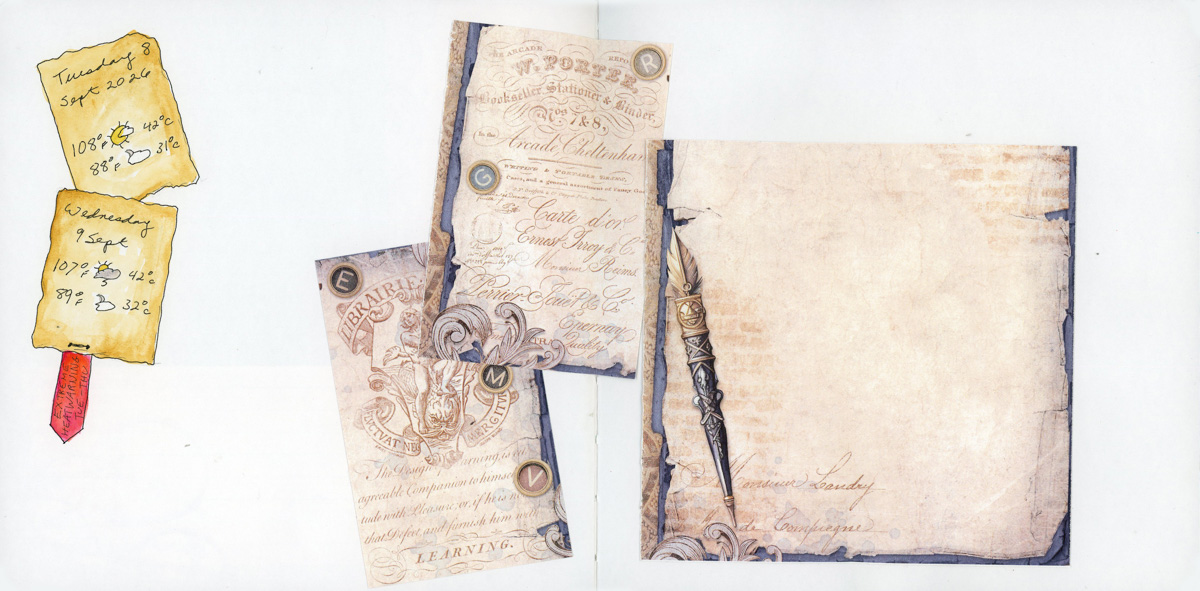
Though it’s nothing like how collage is used in the lesson, this is how I’ve been using collage a lot these days. Using junk journal ephemera and note cards to add some seasonal flavor and notecards when I’m not sketching other things. It keeps my sketchbook alive, even if I’m blocked in the sketching department.
Diagrams
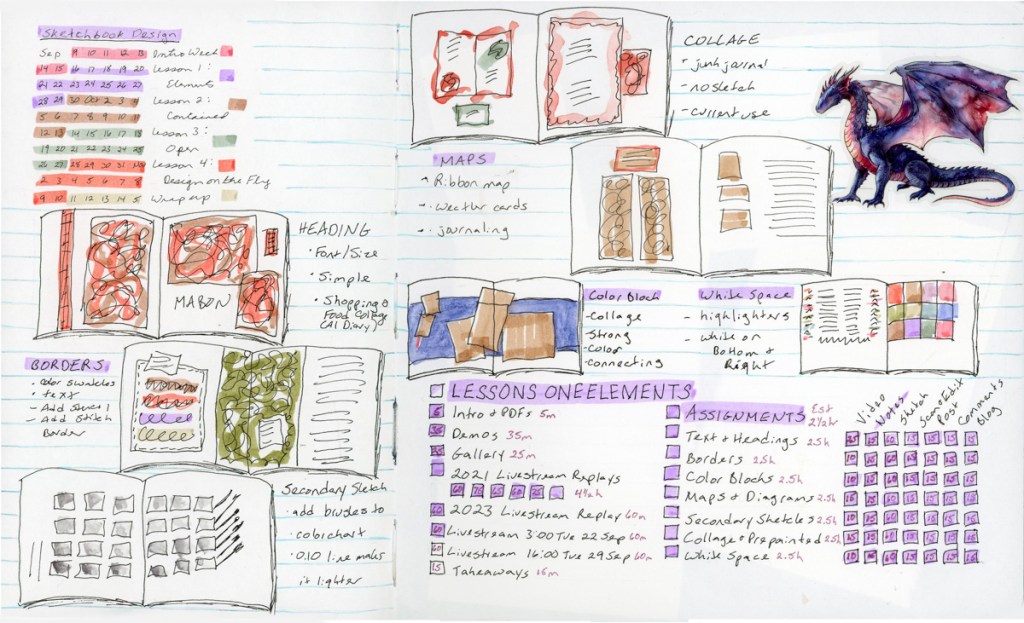
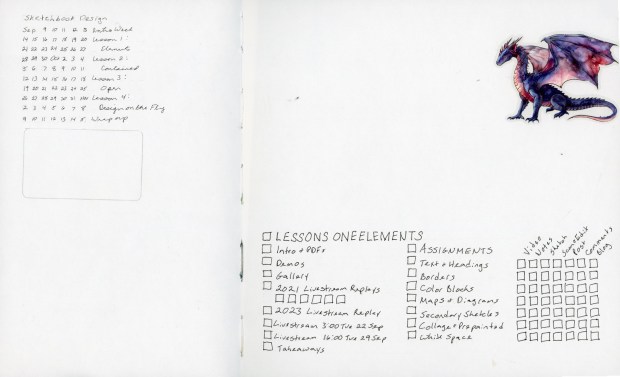
I made this planning page for Lesson One to help me track everything, and I found I absolutely fell in love with having my planning and design thoughts happening in the thumbnails on the same page as the checklists! This kind of page is now a new must have for me. Thinking on the page, and having such thinking out loud, thinking on the page itself. I really thought about how to place all the various bits of information as well, and I loved adding the drawn lines to really pull it all together!. This might be my favorite page, so far, and it certainly is the one where I learned the most about myself!
I’m working my way through the elements for the first lesson of Sketchbook Design. I started by finishing the previously unfinished pages and adding elements to make said pages look better. Lesson one has seven different elements one can use, and here are three of them.
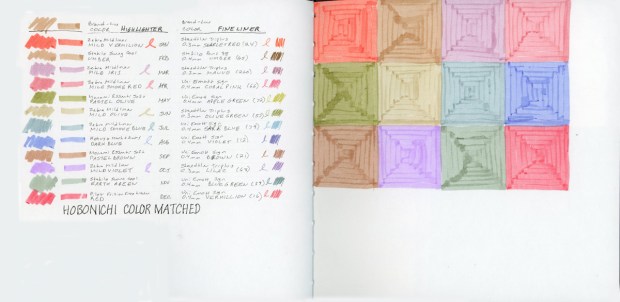
Adding the border around this color swatching chart really helped this page come together in a way I like a lot now. This page was one of those that sat for a long time in the “I don’t like it but what do I do with it?” arena. It is amazing how much the border helped. So did adding the stenciled column, but in many ways that feels like it reinforces that border even more. That’s where the eyes goes, right to those colors and it’s little border. This page also has that strong text block, which I like for the journaling, but it’s the border I felt did the best work for this page.
For this one I had those weather cards just hanging out there, and the collage ephemera just floating. I wondered how to create a cohesive page. I tried this strong color block, and suddenly this page really came together and looks like one page, rather than random elements. A few pages early I have a solid color background with weather cards on it, but the color block somehow makes it look even more intentional than the solid background. The horizontal aspect gives it shape and movement. I also notice the choice of color strongly impacts the feeling and the color story, perhaps coordinating with other pages in the sketchbook as a whole.
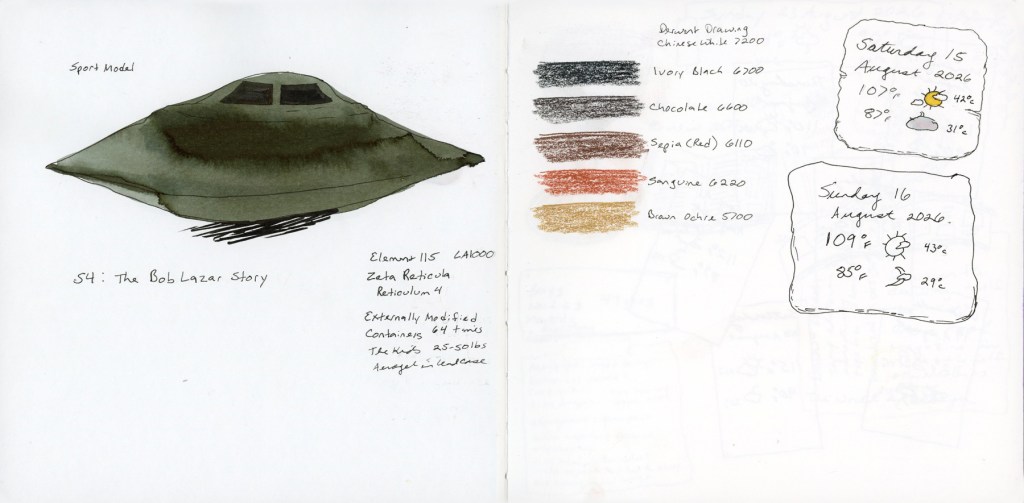
I held the white at the bottom and the right side of the color chart to really help the colors here shine. This page is to document this purchase, and keeping the design asymmetrical with that nice white edge makes this one feel almost soothing to me.
This page has been a breakthrough for me because I combined Page Design with making Design Notes and Thumbnails to actually think on the page, plan my coursework, and I even included a little chart to help me keep track of all the tasks! This page kept me inspired, because I was working out my layouts visually, and kept me from getting lost in where I was with the assignments! Planning plus design thumbnails, all on a designed page! Yes, I will be doing this again!
I have begun the page for the First Lesson as well. I haven’t decided if I’ll put class notes on the elements on this page, or the design ideas for some of the pages, yet. That will develop as I go, since this is a working, thinking-on-the-page page.
The assignment is to have a collection of unfinished pages so we can add elements to them to finish them off in the future. We are encouraged to go back and use older sketch pages, but I have a tendency to prefer very full pages without a lot of white space. Plus, once I’m done and moved on I don’t generally like to go back. Let the page sit as it was, that better captures what the moment was. However, knowing this assignment was coming up I did make sure to leave white spaces, or not otherwise finish off some pages for this exercise.
Additionally, I’m not actually sketching things or objects that much right now, which makes it even harder to select good examples for class. The class seems to assume you have a sketch first, and need to finish the page. Lately I’m more, I have my weather cards, and some notes, but no sketch, how can I finish this page. Slightly different angle. I tend to add color blocks a lot. I love to fill in with abstracts, and color charts. The color charts are usually documenting whatever new art supply I have either ordered, or found again in the dusty bins.
I collected a number of unfinished pages, wondering what I can do with them. And I definitely am adding more text this year, aiming for more documentation, and memories.
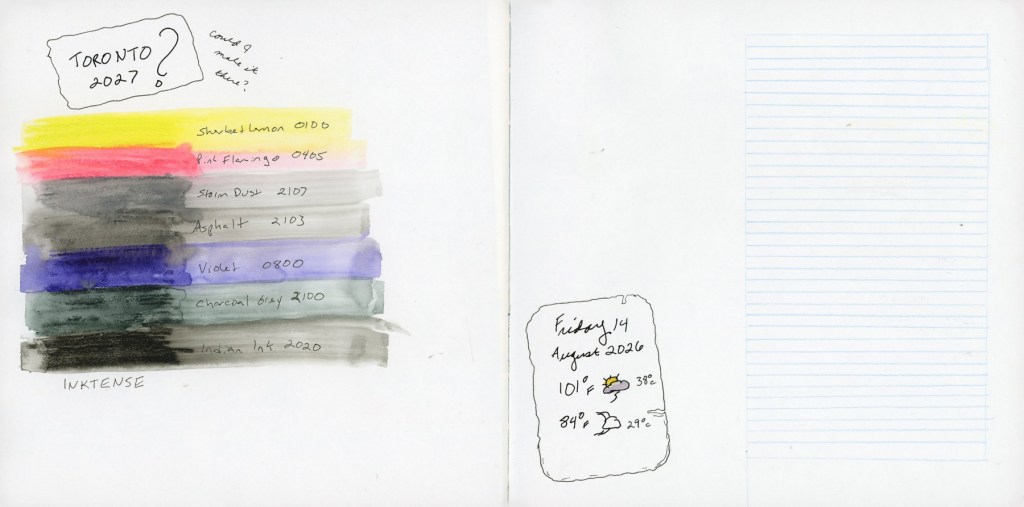
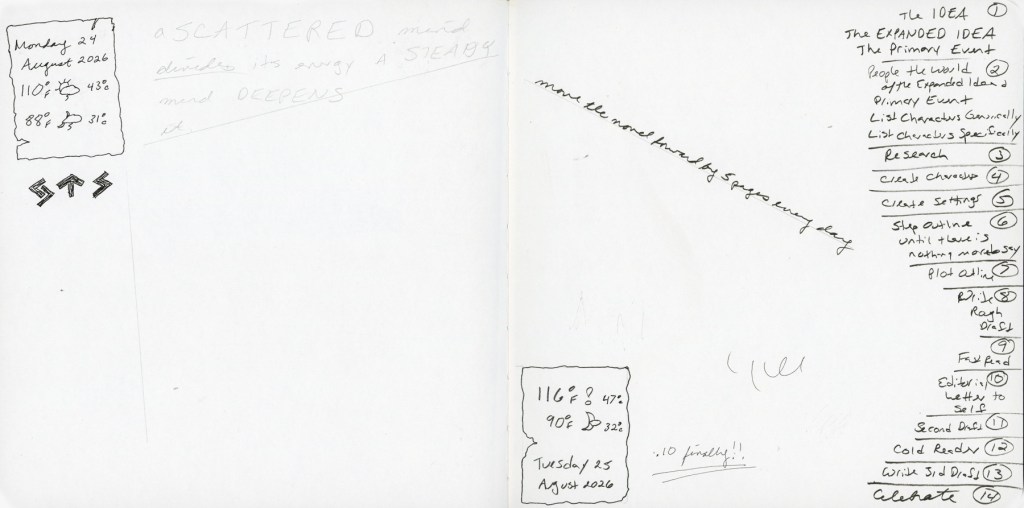
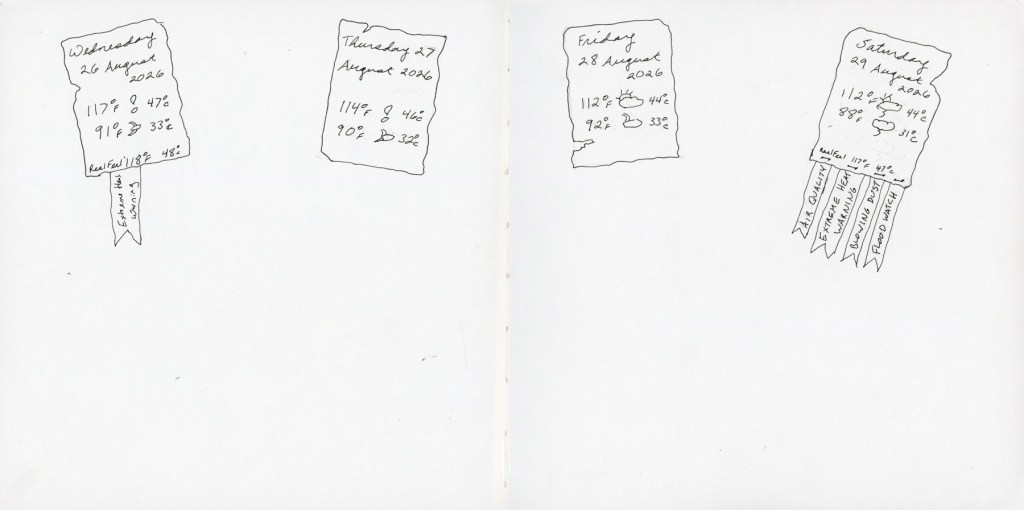
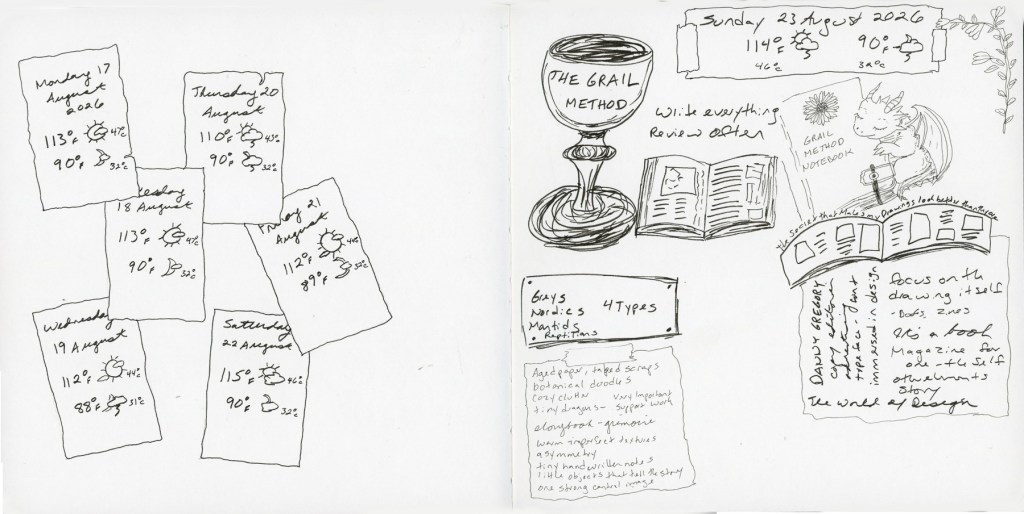
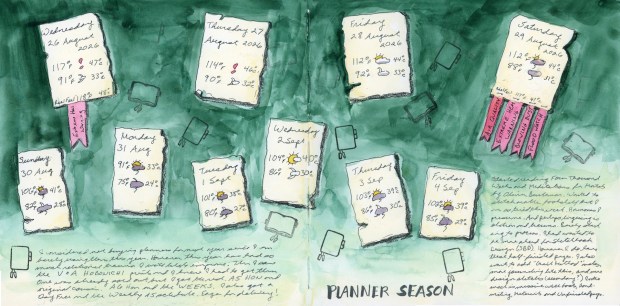
Unfinished page dated 14 August 2026Unfinished sketchbook spread with weather and notes on Write Away methodUnfnished sketchbook page with weather notes for 26-29 August 2026.Unfinished page with sketched UFO and Derwent Drawing PencilsUnfinished sketchbook spread, The Grail Method and various notes.
One of these I finished and it became my “Current Sketch”
The rest are still waiting.
I will confess it brings me a surprising amount of stress to have these unfinished pages waiting for so long! I am a completist at heart, and I’ve been itching to get them done, and move on to the fun new things I want to do!
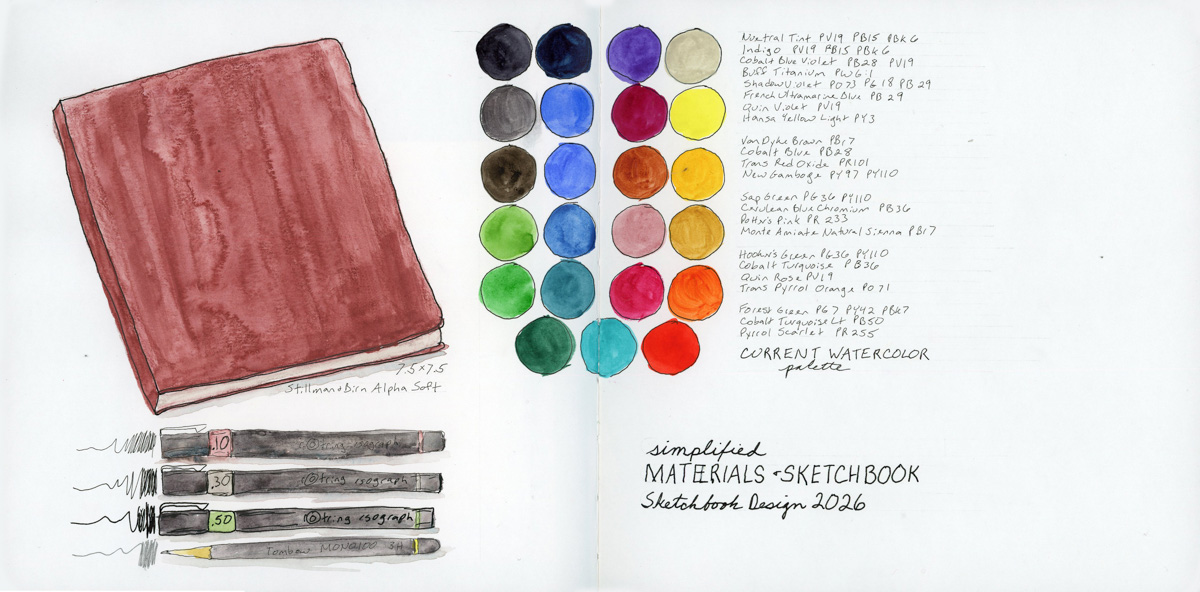
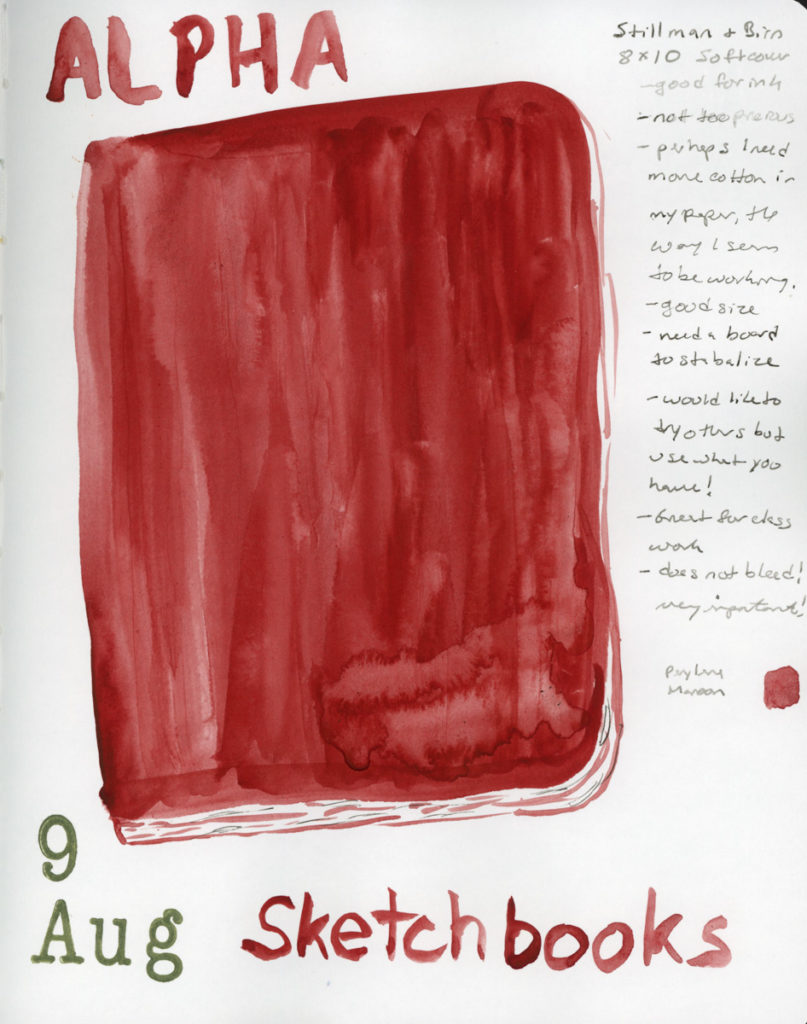
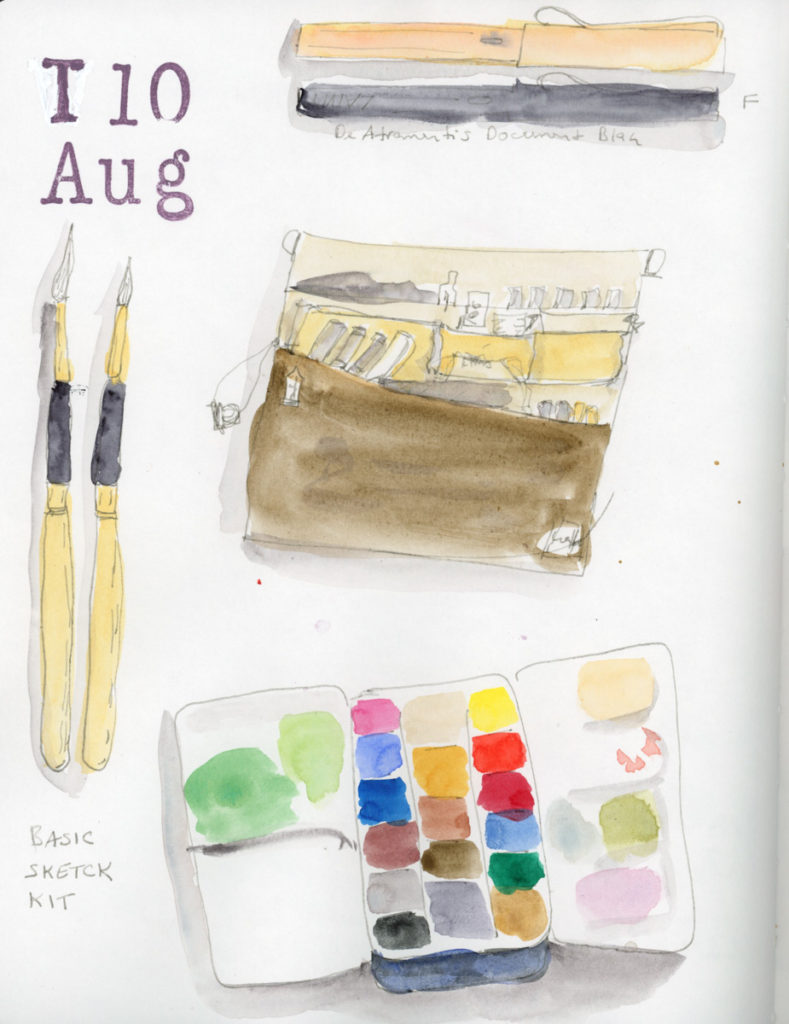
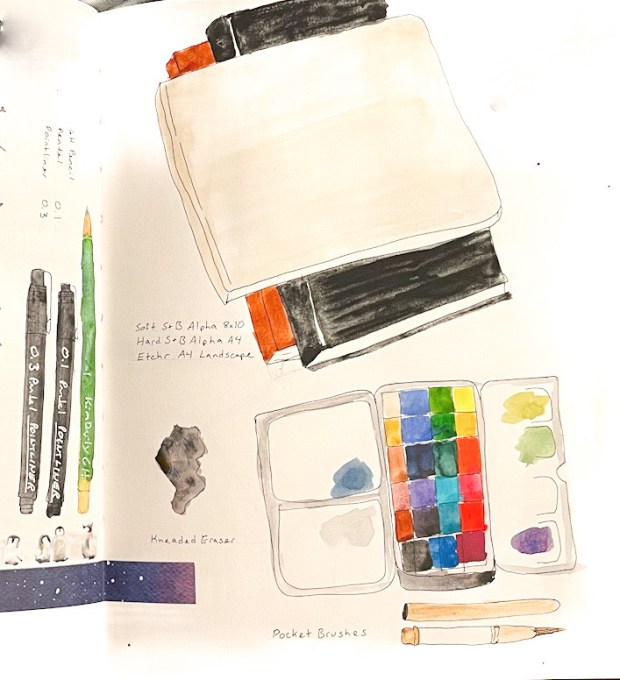
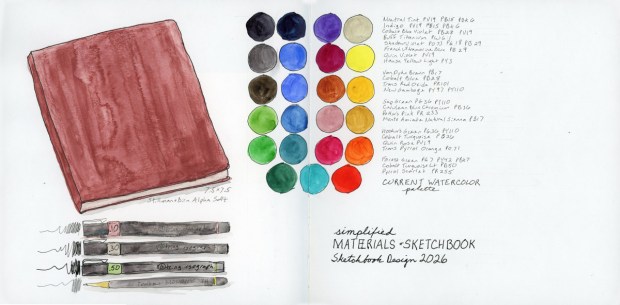
I’m currently working in a Stillman and Birn square softcover 7.5-inches. I’m mostly using the Rotring Isograph Fineliners with Rapidiograph Ink. I also use my TWSBI fountain pens, of course. This is the watercolor palette I’ve been using for ages. Keeping it simple. And since I’m also doing a lot of measuring so far, my new favorite pencil for that is the Tombow Mono100 in 3H. It goes on smoothly, and erases easily.
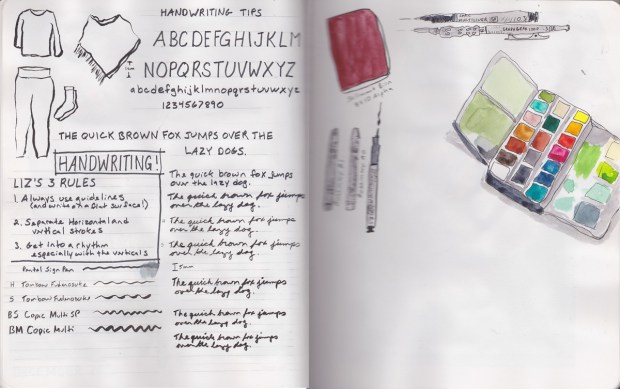
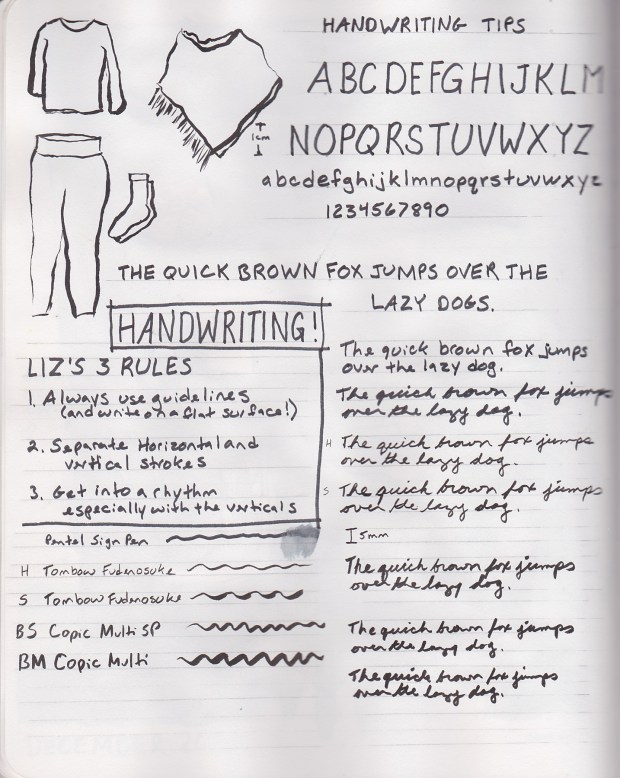
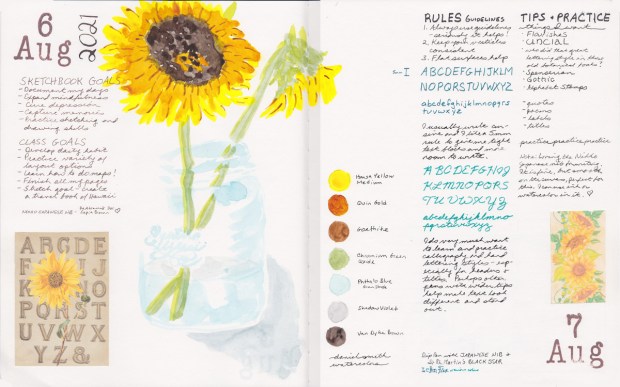
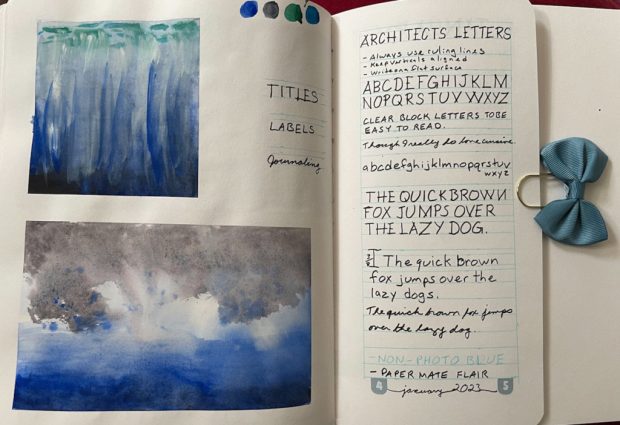
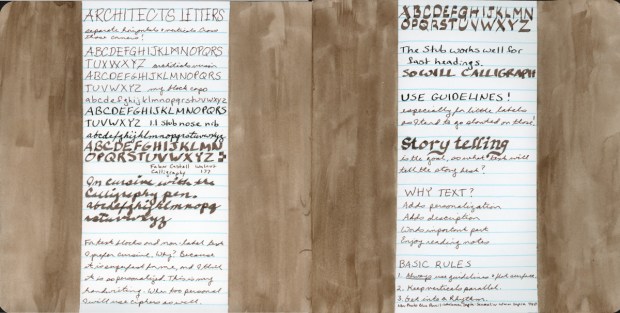
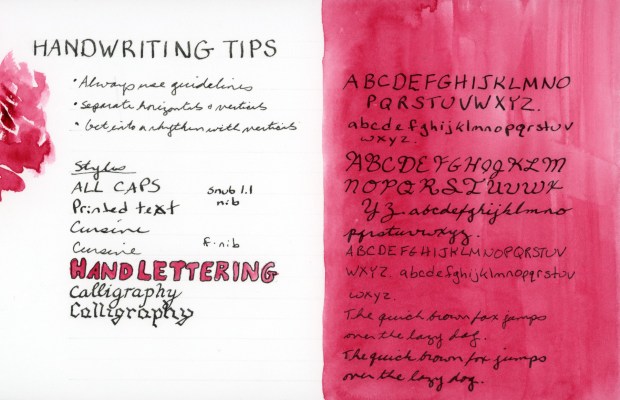
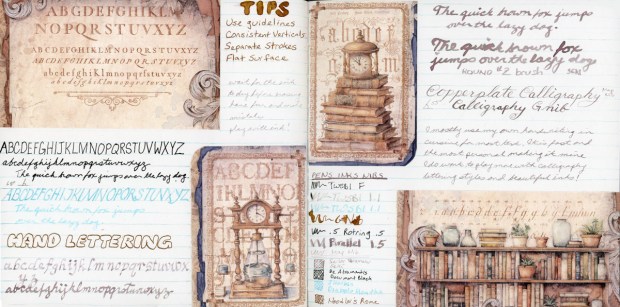
I am going through the current Live run of Sketchbook Design, and as often happens, I really begin to wonder what did I do for the same exercises in previous years? The Handwriting exercise from the Intro Week is one of the few where I did the page every single time I began the course. Various years have differing levels of participation and completion, but I have always done the handwriting page. Here they are…
January 2021 Sketchbook Design Handwriting Lesson
In January of 2021, I took the first Sketchbook design course, but I apparently did not do many of the exercises. I remember watching all the videos, and livestreams, however.
August 2021 Sketchbook Design Goals and Handwriting
August of 2021 is when I did the best in the Sketchbook Design Class, and it was a real watershed course for me. The lessons began to click, and I really enjoyed the work I did. I’ve long since considered this my “best” and “prettiest” phase of my sketchbook.
January 2023 Sketchbook Design Handwriting
The January 2023 run of the course, I continued with a solid effort to do more of the assignments.
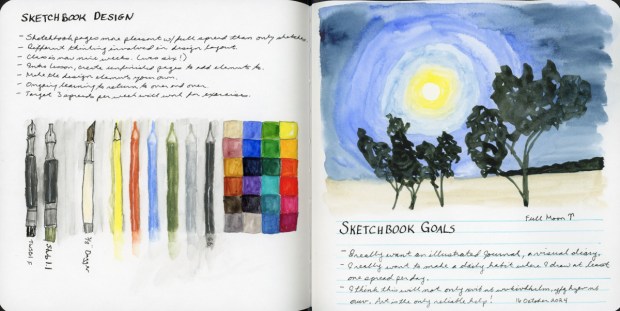
October 2024 Sketchbook Design Handwriting
October 2024 was a group run of the Sketchbook Design course. Well, I think it was supposed to be a group run, but then got cancelled, but since I love this course so much, and every time I go through it I feel like I level up, I did it on my own anyway. This is the year I managed to do the most coursework.
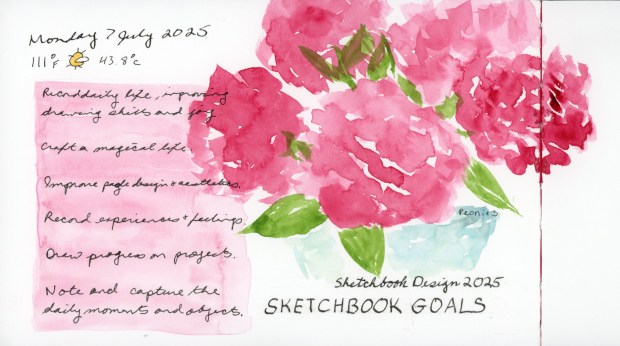
July 2025 Sketchbook Design Goals and Handwriting
July 2025 was a group run, and since life got difficult, I only did a few of the exercises.
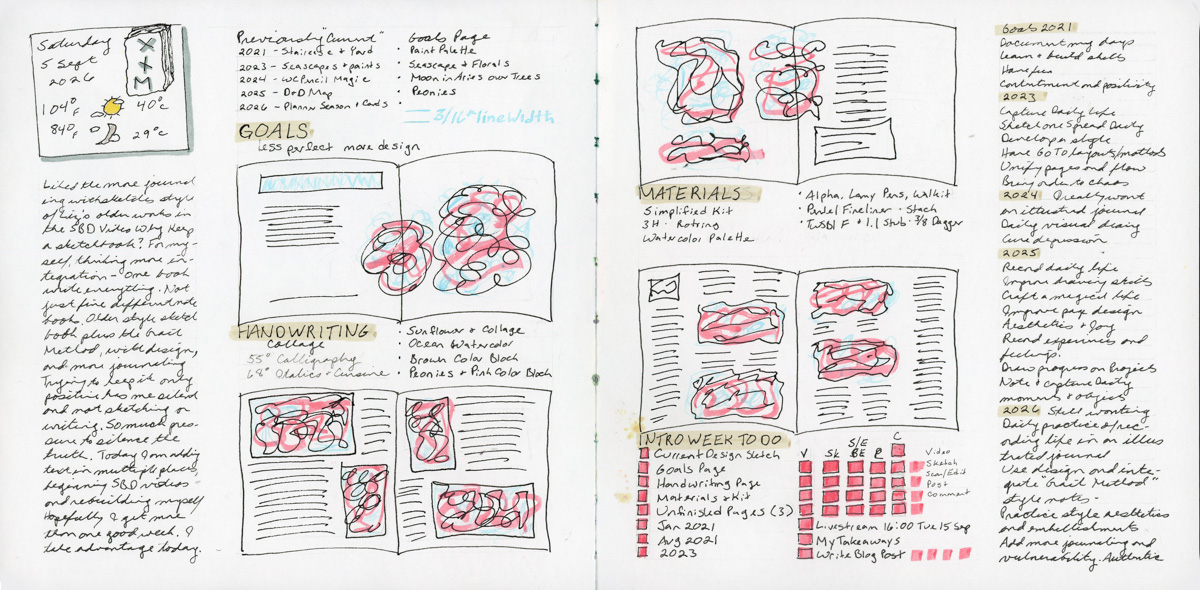
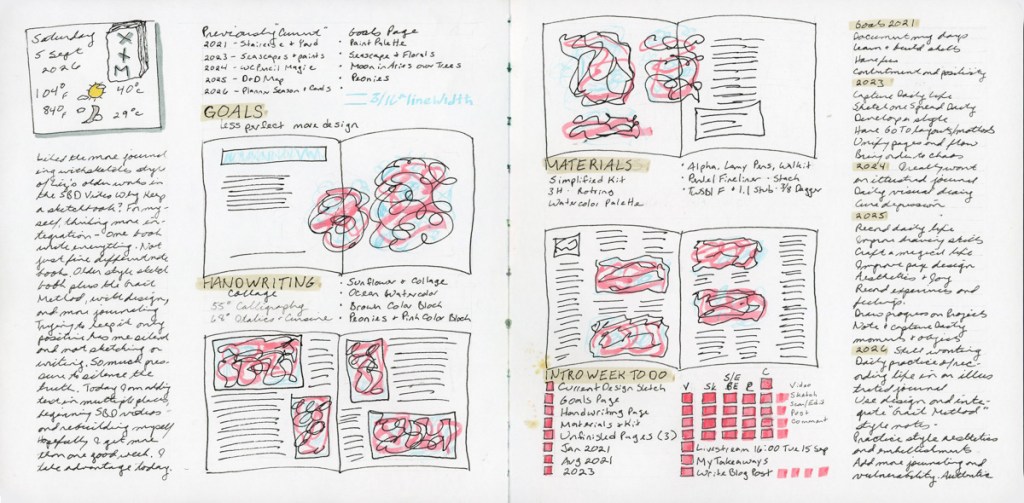
This brings us to the 2026 Live run of this course, and I am, as ever, super excited about it. I’m determined to do all the exercises! Especially if this course is only going to have a live run every three years! I always level up, and I always get so inspired by the ideas of others.
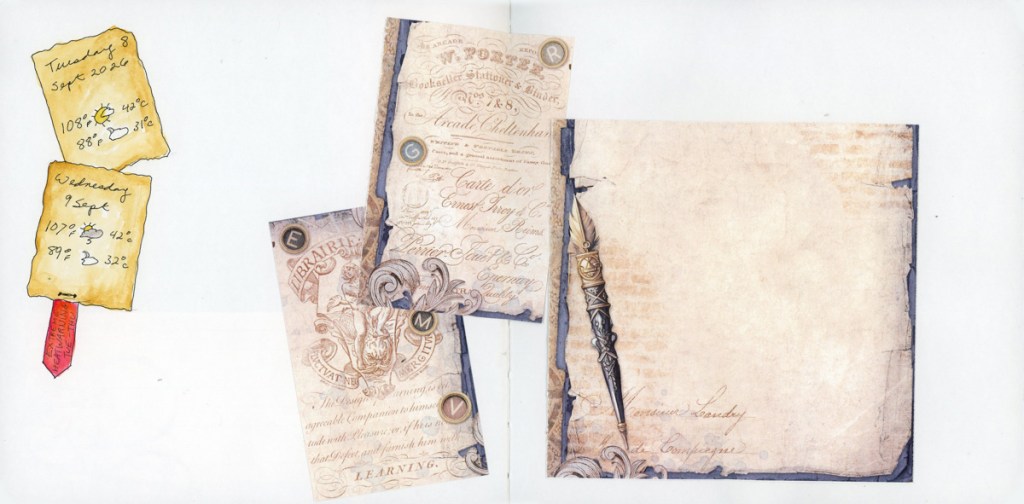
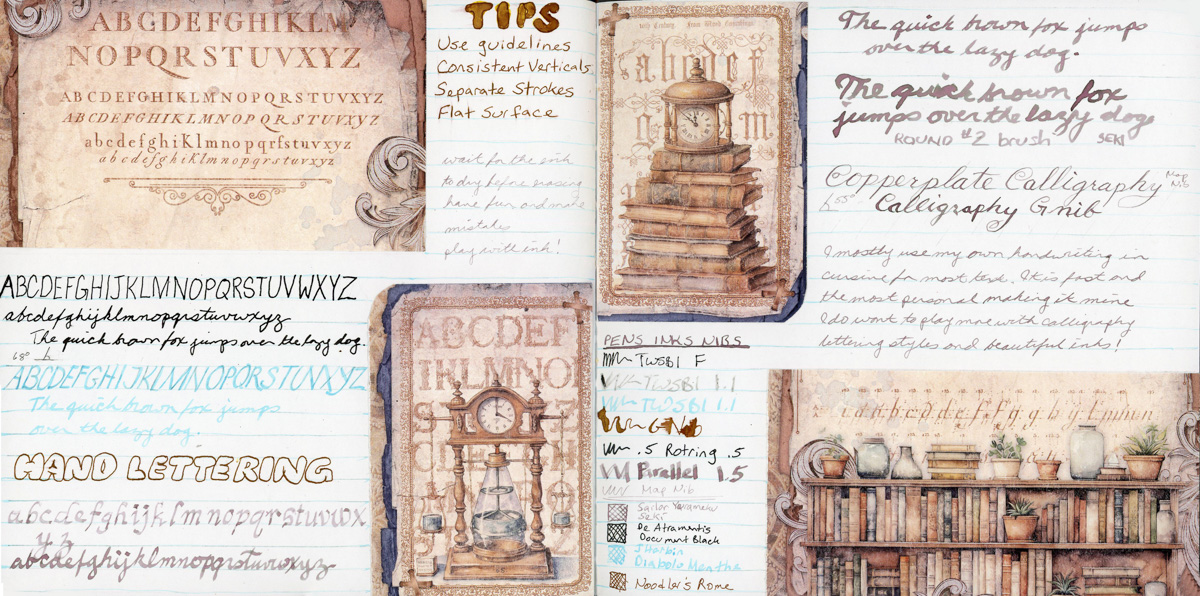
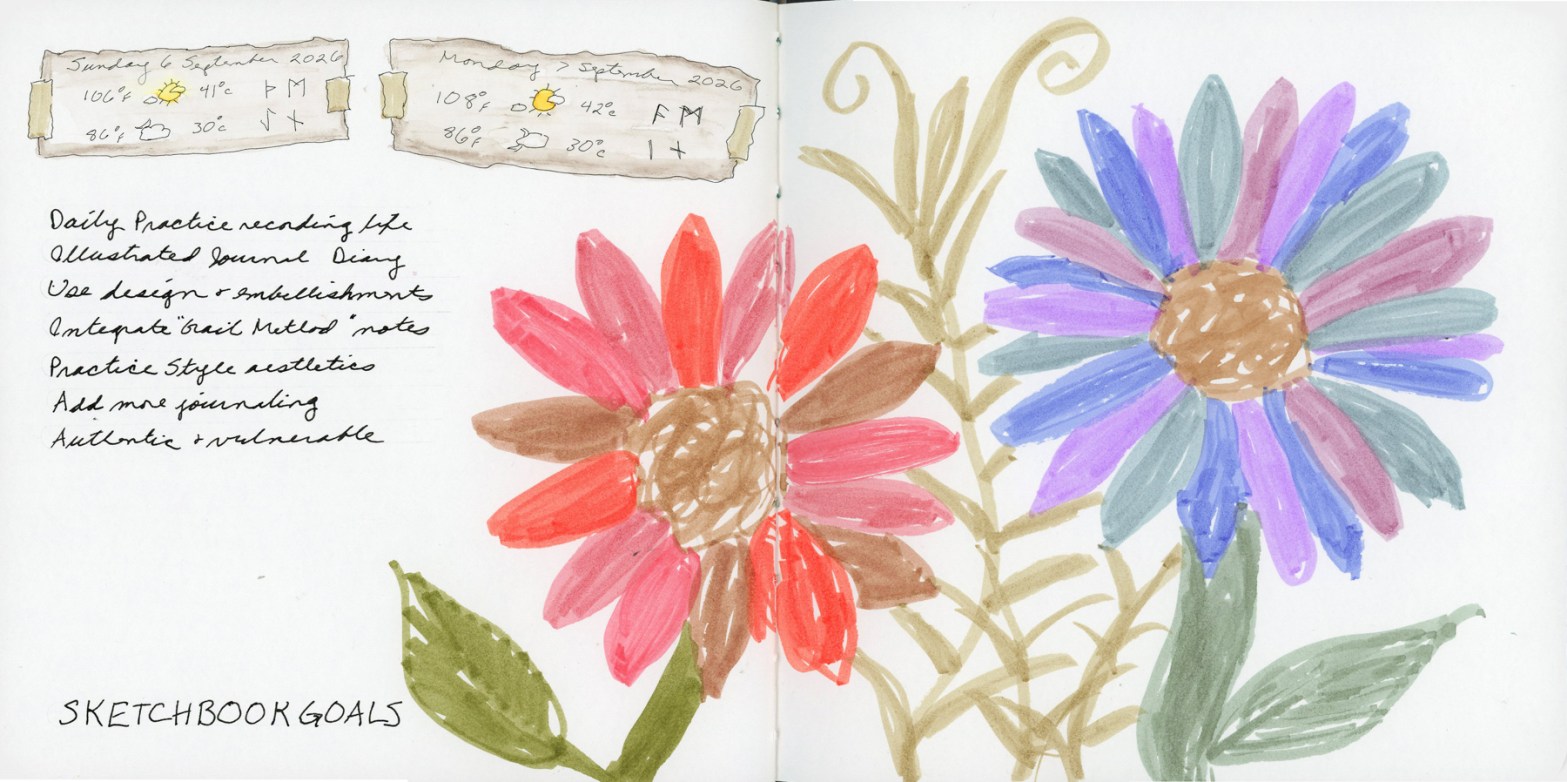
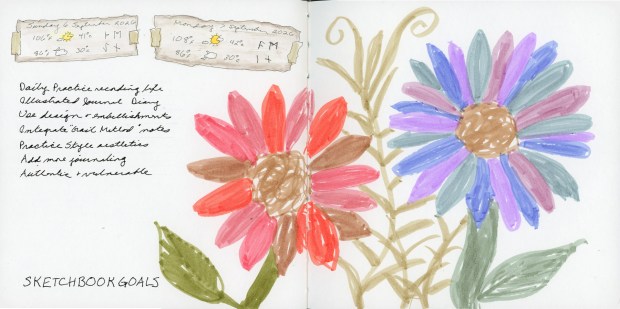
September 2026 Sketchbook Design Handwriting
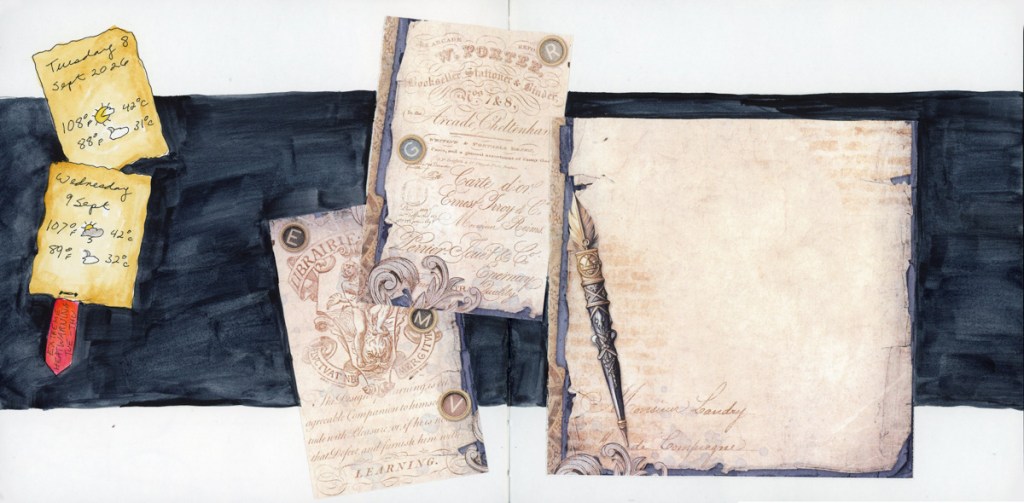
I had so much fun doing this year’s handwriting page. I am currently using a lot of collage in my sketchbook, so I carried that into this page. I also am working with different lettering styles. As with previous years, I tried to stick with what I actually do, or want to do. I’d love to do more calligraphy right now, for example, though I rarely take the time. And this page took a LOT of time. I think I spent over three hours doing this, not including the scanning and uploading time. However, I love this page so much, it is utterly worth it!
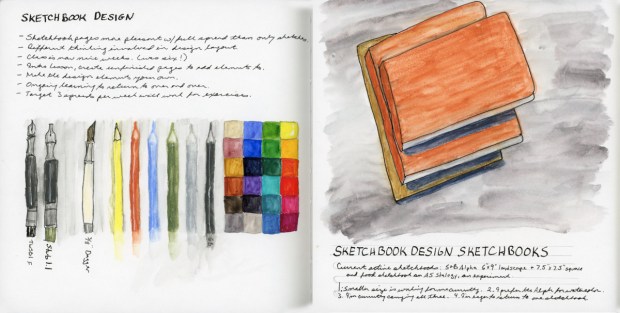
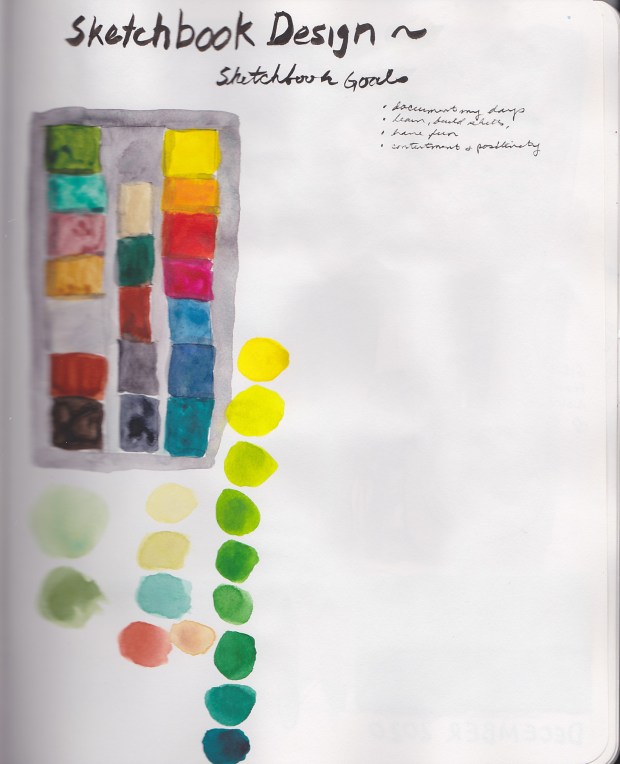
My goals for Sketchbook Design have not changed much over the years. I always want to establish that daily sketching practice, capturing life in the sketching of objects and moments. I always want to improve my drawing skills. I always want to improve my page design.
As I’ve mentioned I have taken this course multiple times. I do not always finish, but I have done several of these Sketchbook Goals pages.
This year I am adding in the focus of style elements and the “Grail Method” style of notes. I watched a trio of You Tube videos on The Grail Method by Perry Daniels which inspired me to begin to include thinking on the page and more notes and feelings and comments. An all-in-one approach. Perfect timing for class, and working with these ideas for how to make it all flow and look cohesive, as as sketch more and capture more of real life, even when it’s subtle.
For example, those flowers are made with highlighters which are color matched to the Hobonichi. The page after this one, in the sketchbook, is the color chart for those pens. I’ll share that in a future post.
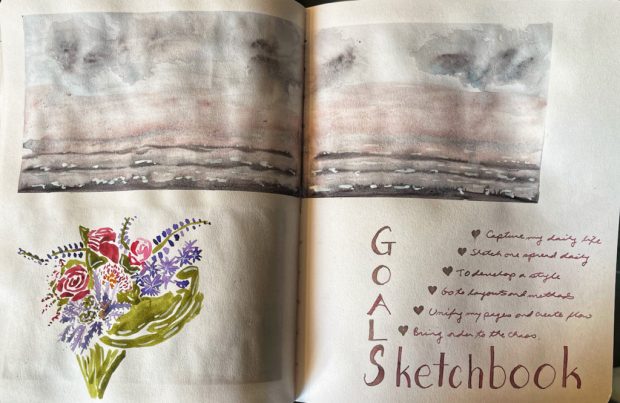
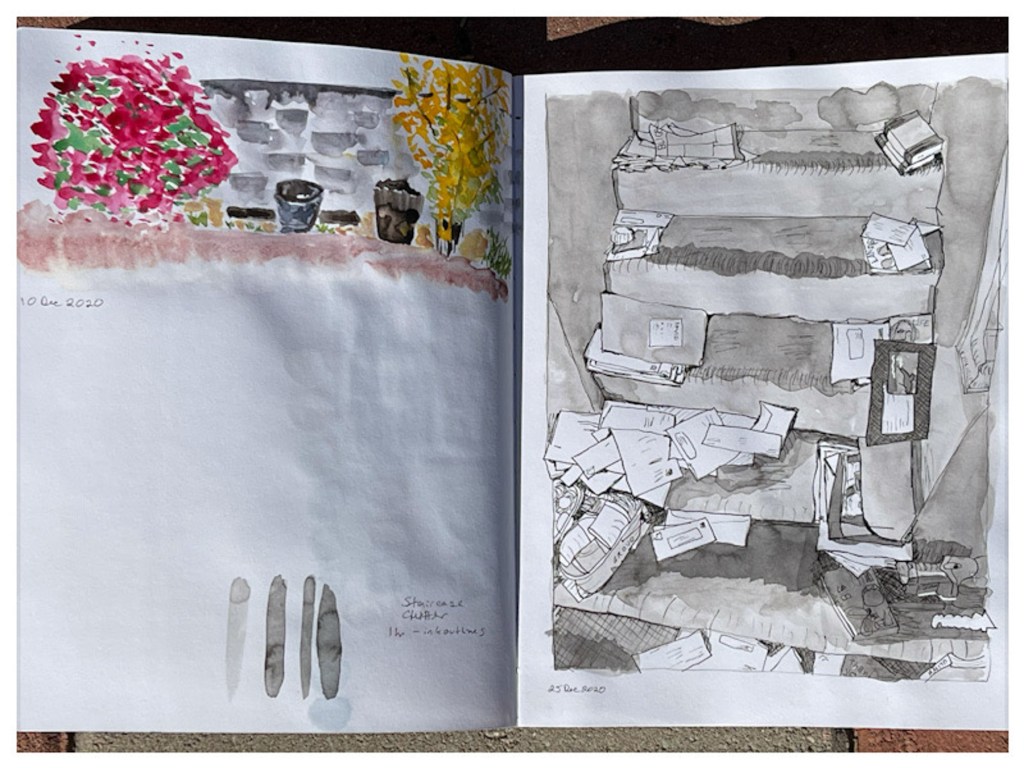
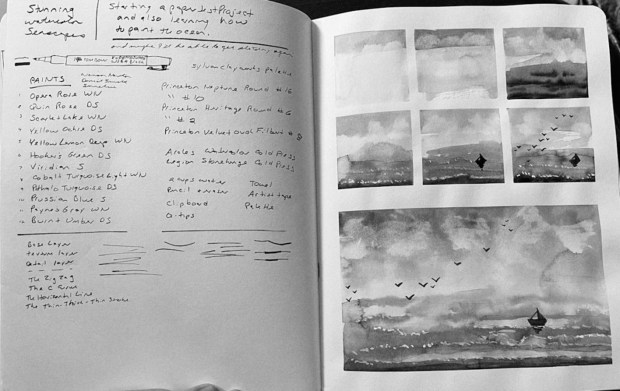
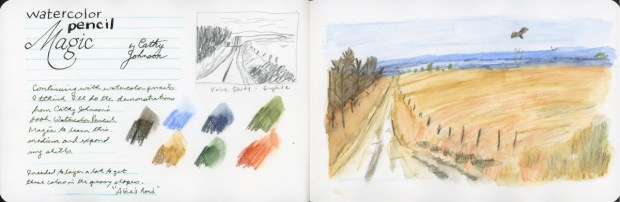
I went through and looked up all the times I’ve taken, or partially taken, Sketchbook Design. Every class with Liz Steel begins with posting one’s current sketch. A sample of where their style and skills are before beginning the course. I was curious what had I posted before each run, and it always is so interesting to look back and review.
These are from the years 2021, 2023, 2024, and 2025.
This year, it seems I’ve mostly just made pages with weather cards on them, so that is most definitely my “current” style of page!
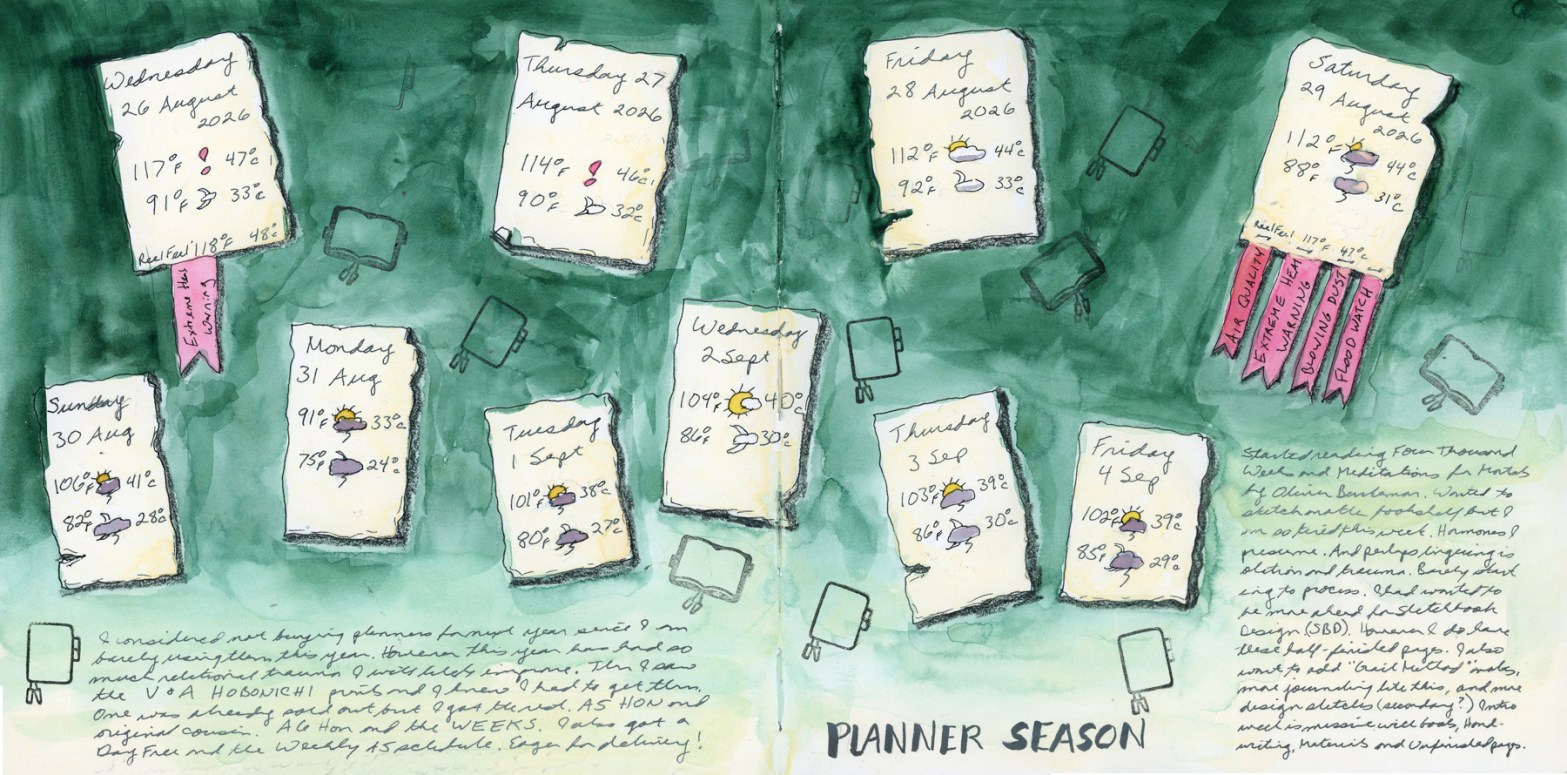
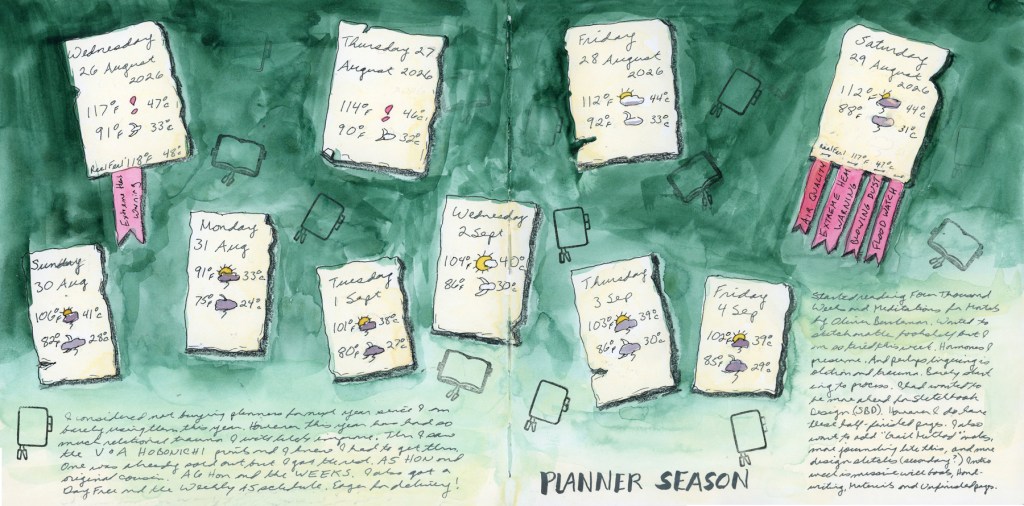
This is also one of those unfinished pages from my previous entry. Obviously another week passed, so I added yet more date and weather cards. Then I decided it was a good page to finish off by documenting this year’s planner season, and Hobonichi purchasing. Just like that, it’s a page about current life!
Once again the autoimmune adventures hit hard, and life piled on. I ended up just not doing any of the Travel Sketching class work except the intro kit building, and the current sketch. Now for the hard work of forgiving all the things I cannot control and just accepting the losses. I have, however, decided that I’m going to rest this summer, and not try for the Watercolor on Location group run. I’m obviously needing the recovery time.
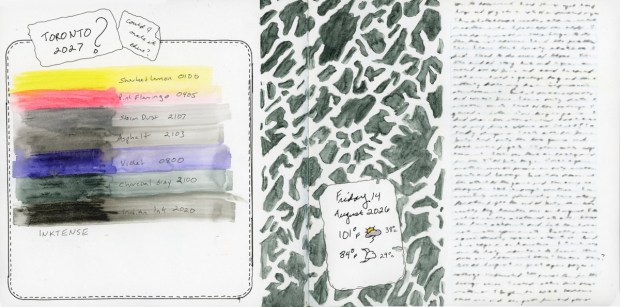
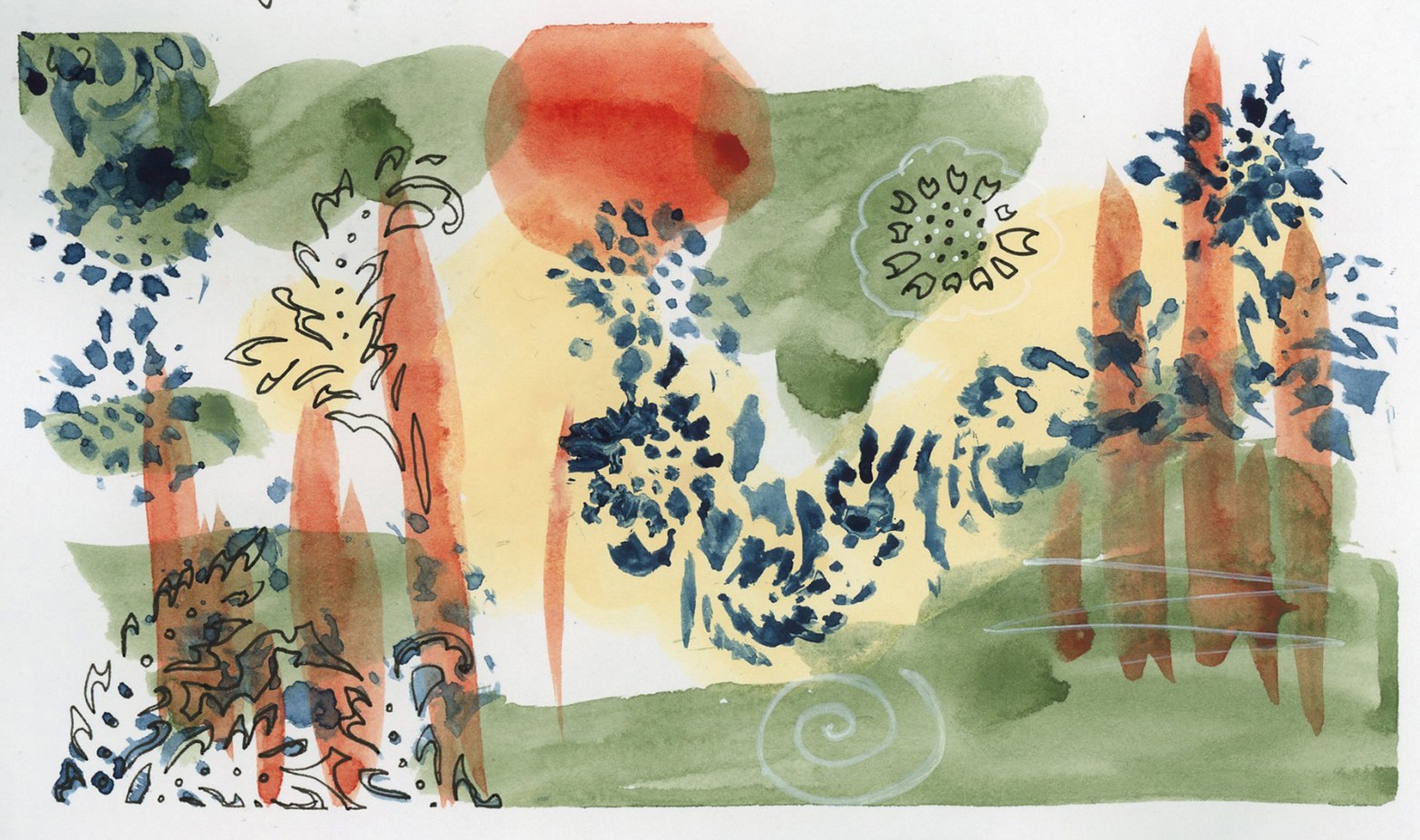
It was hard to let go this time. But so be it. Back to the days and days of just listing the dates and the weather to mark the passage of time. I left some white space. In one of those half pages, I did a watercolor abstract like I used to do, and that turned out really well! (See below.)
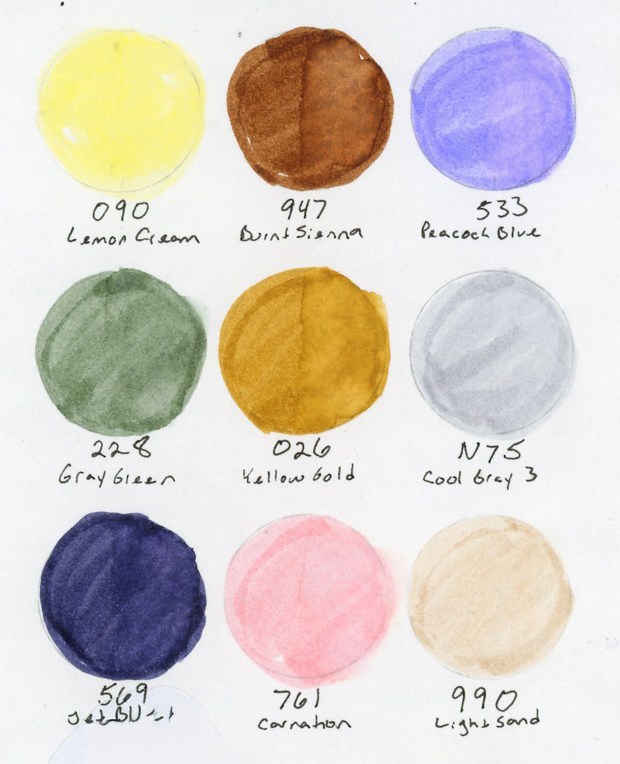
Before I lost all oomph, I did get the color charts done for the Tombow Dual Brush Markers:
Tombow Dual Brush Markers in Travel Sketching Palette
The Tombows do not seem very reactive to water. The second half of each circle was activated with water, and it shows in a couple colors, but not in most of them.
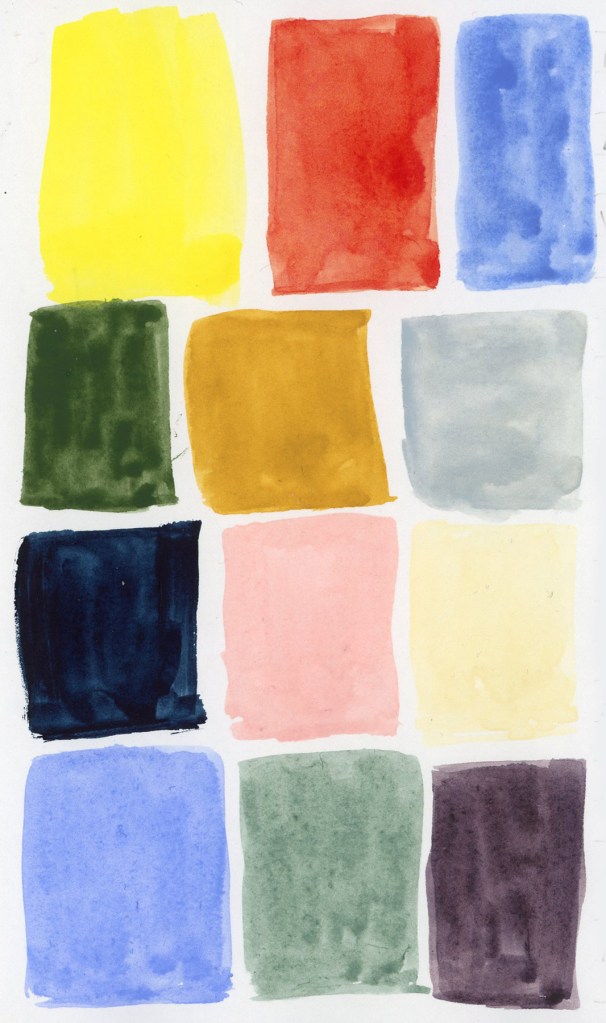
Holbein Watercolors in Travel Sketching Palette
Still in the grip of my obsession with recreating this Travel Sketching Palette (I blame the brain chemistry from the allergen hits!) I bought these Holbein Watercolors. Aren’t these lovely?
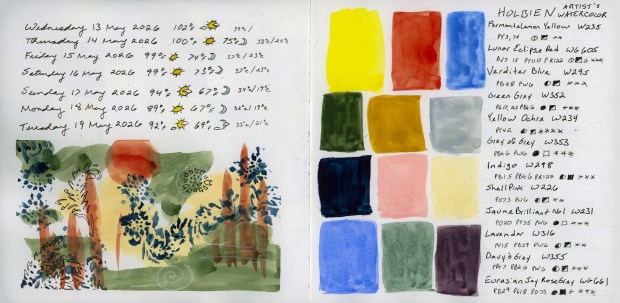
Holbein Watercolors in Travel Sketching Palette: Permanent Lemon Yellow W235, Lunar Eclipse Red WG605, Verditer Blue W295, Green Grey W352, Yellow Ochre W234, Grey of Grey W353, Indigo W298, Shell Pink W226, Jaune Brilliant No 1 W231, Lavender W316, Davy’s Grey W355, Eurasian Jay Rose Grey WG661.
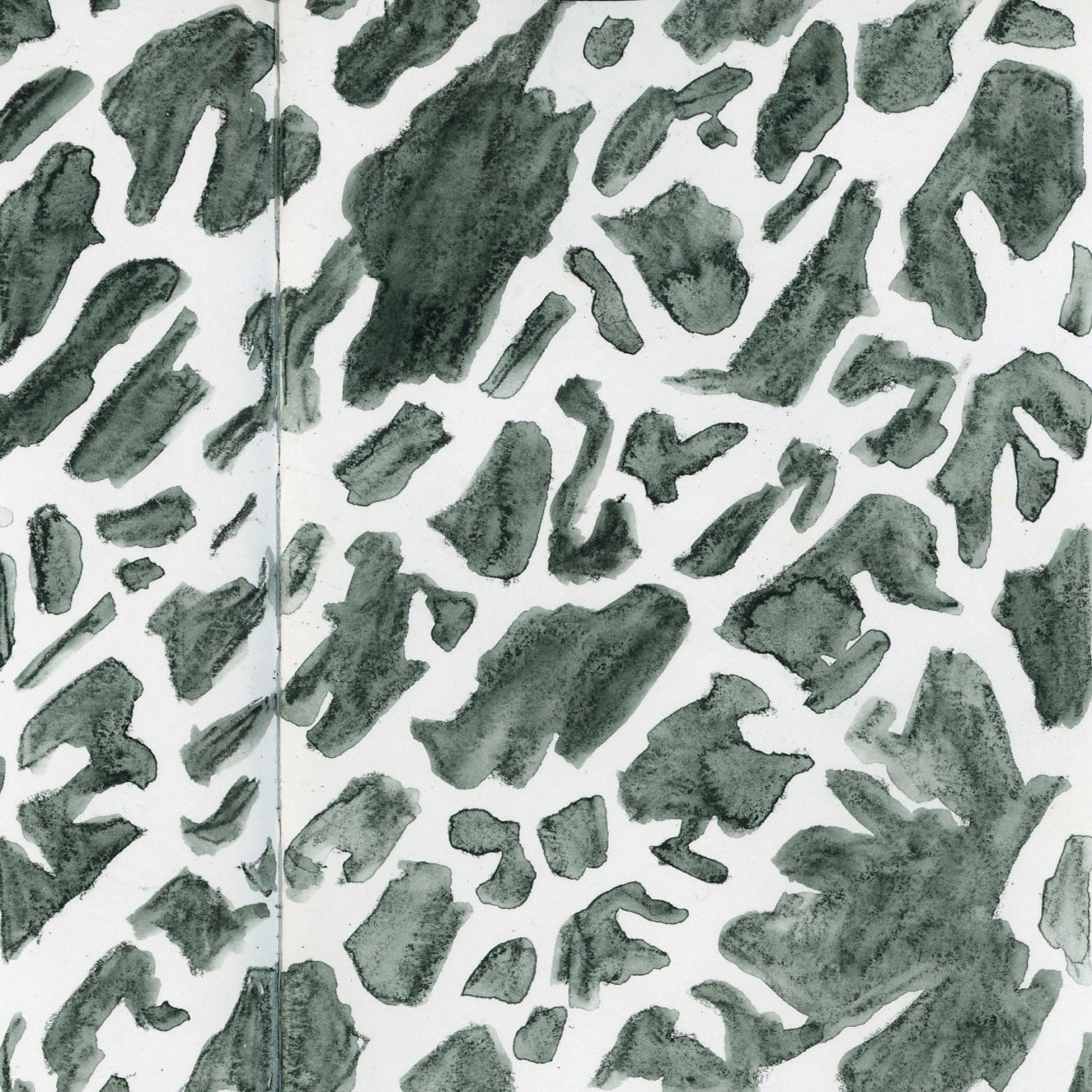
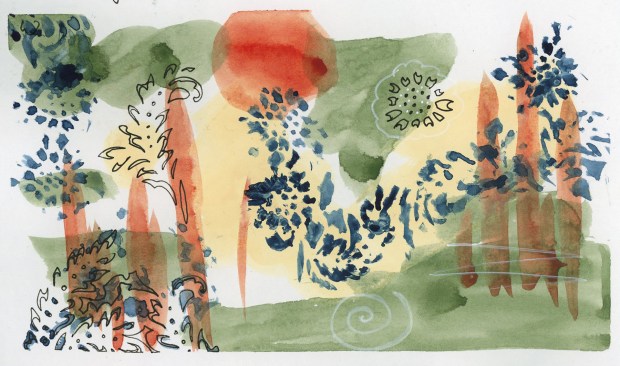
Abstract Watercolor
Last year I was doing some of these watercolor abstracts. They are such a lovely way to play with color. I had to test this palette with one. I rather like this one. It ended up looking like an abstract landscape. (Also note: I cannot for the life of me get Posca pens to work! Is my climate just too dry? But there is a hint of white showing my attempt!) These abstracts are so good for capturing mood, or a moment that I find they fit documenting life surprising well. They hold memories and feelings quite well.
The complete spread in my sketchbook. A bit more thought on page design than I’ve used in a while, which feels good.
As for this summer, I have a few half pages with white space along with my dates and weather. Perhaps I will be able to sketch items or scenes. I will definitely make more abstracts.
I want to return to illustrated journaling, and documenting life as it happens. That has always been my primary goal, and what drew me to keeping a sketchbook in the first place. I am missing that in my influences and in my own work, so when I regain some oomph, I shall revisit my old inspirations.
I’m looking forward to the run this upcoming autumn of the Sketchbook Design course. Every time I’ve done it, I end up capturing more life and making pages I love. My sketchbook ends up feeling like me.
13-19 May 2026 with Abstract Watercolor, and Holbein Travel Sketching Palette swatches.