One Palette, Six Ways. An Obsession.

One Palette, Six Ways. An Obsession.

I will be taking Liz Steel’s Travel Sketching course this May. I’ve taken it before, in September 2024, and I started in April 2025, but did not finish. (See all my posts for Sketching Now Travel Sketching here.)

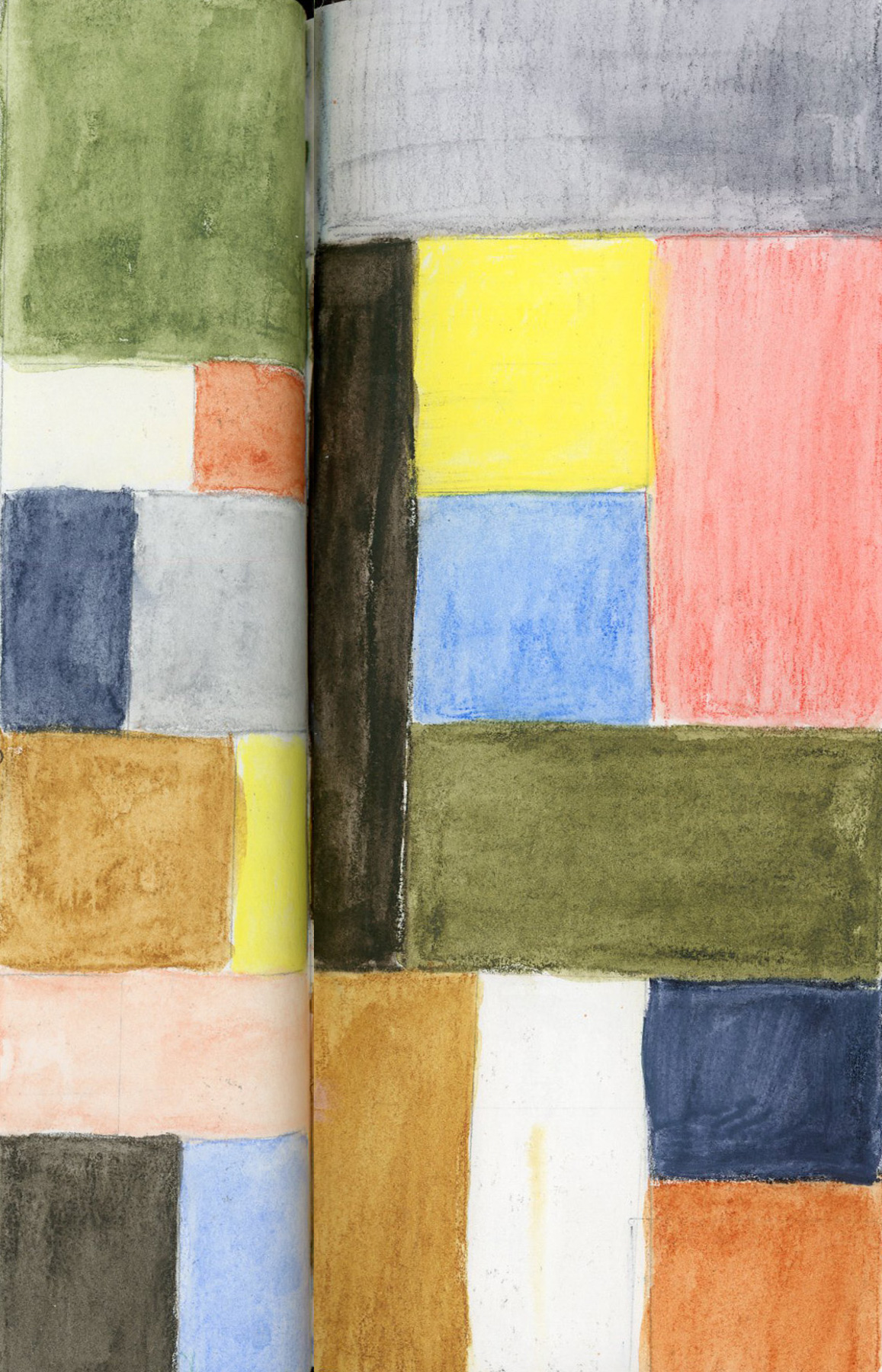
Every time I become a little obsessed with the limited palette for this class. Liz built it using threes: a primary, three earth tones, then a dark and two lights. She kept it fairly pastel, and muted. It really is great for landscapes. Especially Autumn scenes. She used Albrecht Dürer Watercolor Pencils.
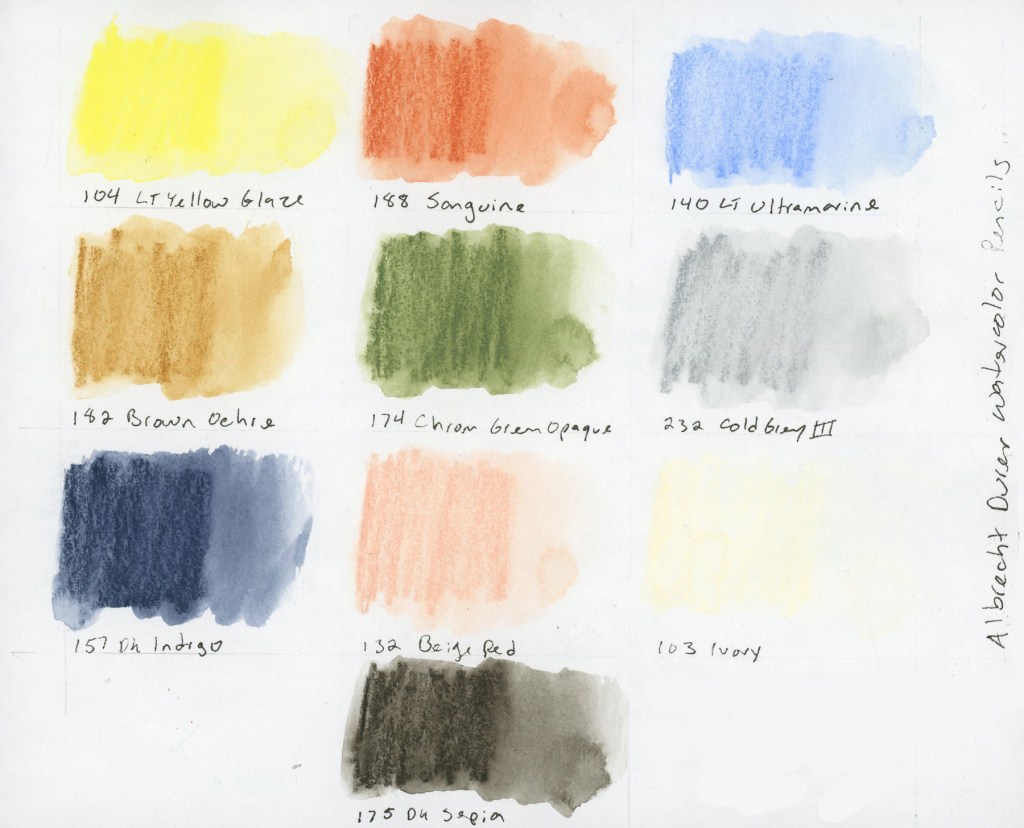
Nine watercolor pencil swatches in rectangular wash format on white paper, labeled with color numbers and names. Colors include Lt Yellow Glaze, Sanguine, Lt Ultramarine, Brown Ochre, Chrom Green Opaque, Cold Grey III, Dark Indigo, Beige Red, Ivory, and Dark Sepia. Albrecht Dürer Watercolor Pencils, Travel Sketching palette.
104 Lt Yellow Glaze, 188 Sanguine, 140 Lt Ultramarine, 142 Brown Ochre, 174 Chrom Green Opaque, 232 Cold Grey III, 157 Dark Indigo, 132 Beige Red, 103 Ivory, 175 Dark Sepia — Albrecht Dürer Watercolor Pencils

The first time I took this course, I discovered I really wanted a brown, so here I’ve added the dark sepia. The second time I became very curious about Inktense pencils, wondering how were they different. Since I owned a set, a pulled the same palette colors and I started using Inktense pencils shortly afterward. I also wanted to explore Neocolors II. I was unable to finish the course, so I did not explore those as much as I intended.

This time around, I decided to find out.

The Albrecht Dürer Watercolor Pencils. Activated, they produce soft, luminous washes. There’s a gentleness to them that feels very suited to location sketching, which is rather the point. Dark Sepia is my second dark, which I really craved. Plus I have a love affair with Sepia, so it’s a natural fit. I did consider a warmer brown, like Walnut, but the cooler sepia keeps the balance between warm and cool tones.
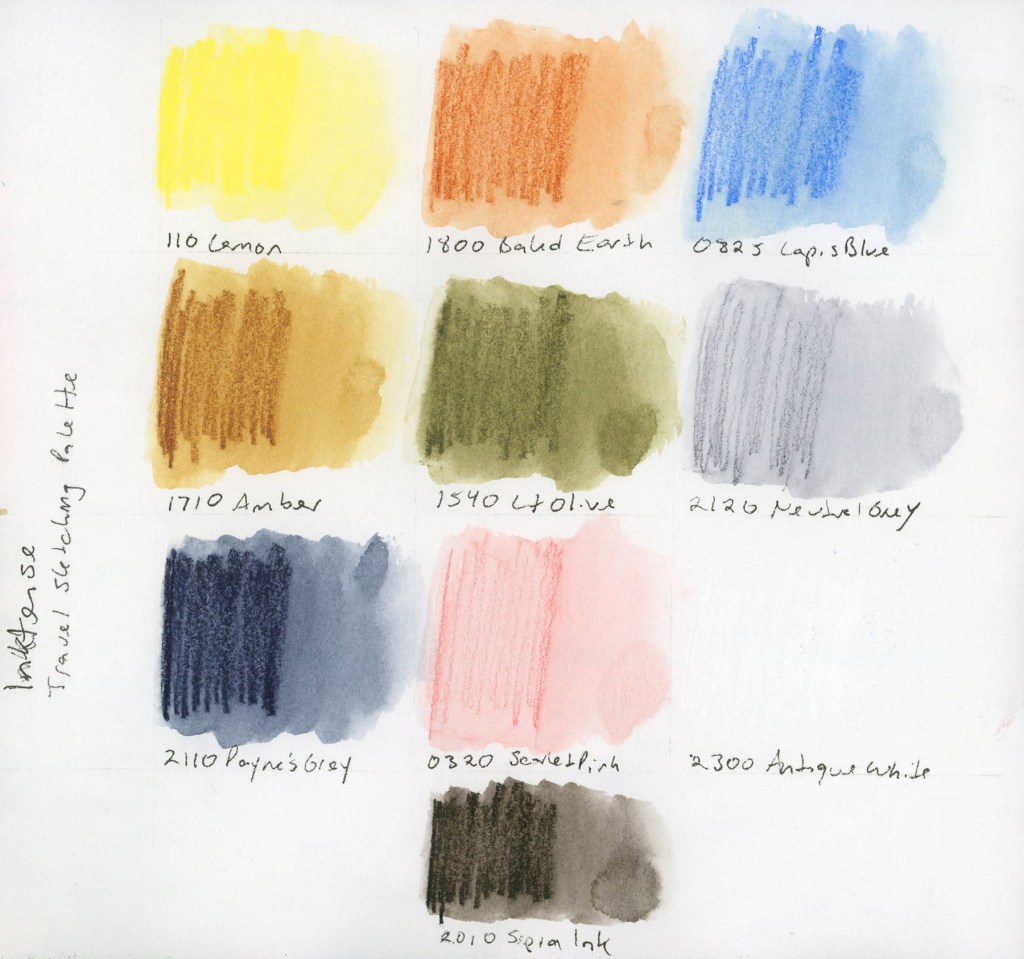
en Inktense pencil swatches in rectangular wash format on white paper, labeled with color numbers and names. Colors include Lemon, Baked Earth, Lapis Blue, Amber, Lt Olive, Neutral Grey, Paynes Grey, Scarlet Pink, Antique White, and Sepia Ink. Inktense Travel Sketching palette.
110 Lemon, 1800 Baked Earth, 0825 Lapis Blue, 1710 Amber, 1540 Lt Olive, 2120 Neutral Grey, 2110 Paynes Grey, 0320 Scarlet Pink, 2300 Antique White, 2010 Sepia Ink — Inktense

I built this Inktense palette to best match the colors of the original palette. Same colors, two media, learn how do they really behave different. The get the more pastel grey and soft pink, you really need a very light touch when applying the pencil, as the colors are darker than the matching shade. They say Inktense becomes permanent once dry, so you can layer over it without lifting. I find they give smoother washes, and they seem more vivid, but this palette is still holding that more muted vibe.
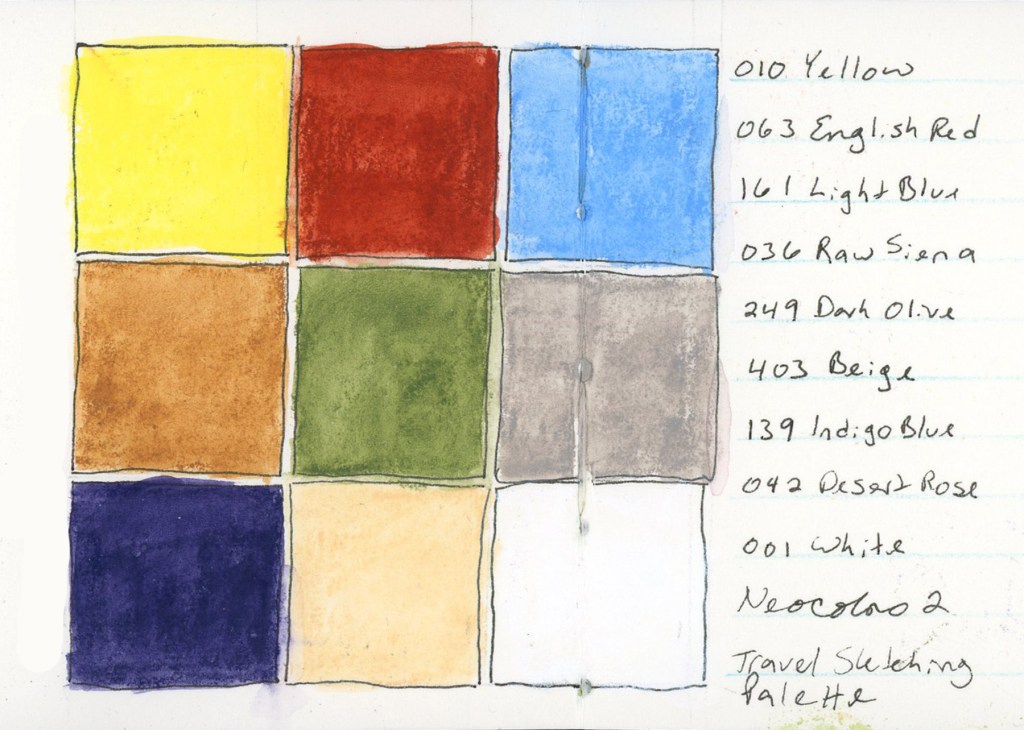
Nine Neocolor II wax pastel swatches in bold saturated squares arranged in a three by three grid on white lined paper. Colors include Yellow, English Red, Light Blue, Raw Sienna, Dark Olive, Beige, Indigo Blue, Desert Rose, and White. Labeled Neocolor II Travel Sketching Palette.
010 Yellow, 063 English Red, 161 Light Blue, 036 Raw Sienna, 249 Dark Olive, 403 Beige, 139 Indigo Blue, 042 Desert Rose, 001 White — Neocolor II — Stillman & Birn Delta, April 2026

I had selected the matching colors in a Neocolor palette for the April course, but never used them. Since I have them, I continue to be very curious to work with them. The swatches are certainly vibrant, and they felt good to lay down. These swatches were Delta book, in ivory paper, so that white shows up a bit better. I wonder how these would look on colored paper? Are they more opaque?

At this point the reasonable thing would have been to stop. I did not stop. Liz mentioned she would be adding markers to the course this time around, and well, I have markers! (Advantage of buying way too many art supplies over many years, I have a lot of stuff just lying around! Whole color sets make great gifts during the holidays!) So I pulled together the same palette in multiple marker types. (I did have to fill in a couple gaps, and order a few, but not too many.)
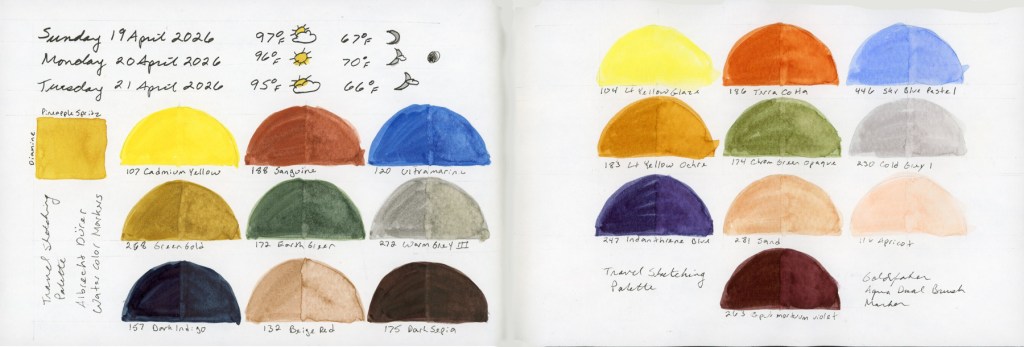
A double page spread in a Stillman and Birn Alpha sketchbook showing Travel Sketching palette swatches in half-dome format. The left page shows Albrecht Dürer Watercolor Markers with weather entries for Sunday through Tuesday April 19–21 2026, and a small Diamine ink square. The right page shows Goldfaber Aqua Dual Brush Markers. Both pages are labeled Travel Sketching Palette.
Travel Sketching palette — Albrecht Dürer Watercolor Markers and Goldfaber Aqua Dual Brush Markers — Stillman & Birn Alpha, April 2026
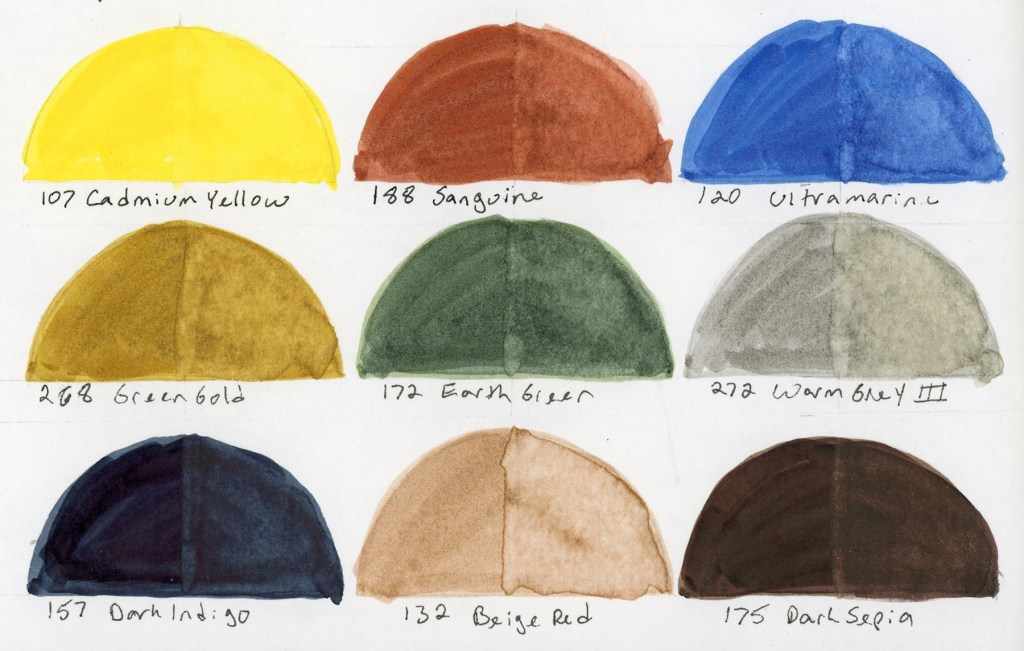
Nine watercolor marker swatches in half-dome format on white paper, labeled with color numbers and names. Colors are Cadmium Yellow, Sanguine, Ultramarine, Green Gold, Earth Green, Warm Grey III, Dark Indigo, Beige Red, and Dark Sepia. Albrecht Dürer Watercolor Markers, Travel Sketching palette.
107 Cadmium Yellow, 188 Sanguine, 120 Ultramarine, 268 Green Gold, 172 Earth Green, 272 Warm Grey III, 157 Dark Indigo, 132 Beige Red, 175 Dark Sepia — Albrecht Dürer Watercolor Markers
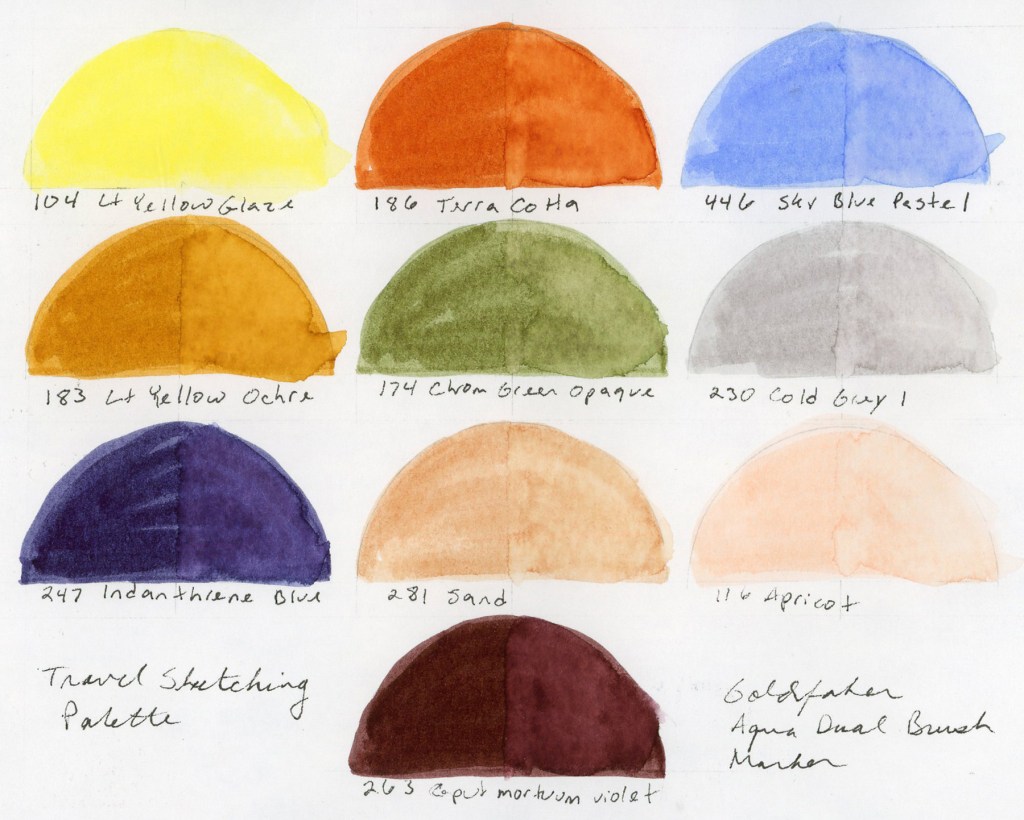
Ten watercolor marker swatches in half-dome format on white paper, labeled with color numbers and names. Colors include Lt Yellow Glaze, Terra Cotta, Sky Blue Pastel, Lt Yellow Ochre, Chrom Green Opaque, Cold Grey I, Indanthrene Blue, Sand, Apricot, and Corpus Mortuum Violet. Goldfaber Aqua Dual Brush Markers, Travel Sketching palette.
104 Lt Yellow Glaze, 186 Terra Cotta, 446 Sky Blue Pastel, 183 Lt Yellow Ochre, 174 Chrom Green Opaque, 230 Cold Grey I, 247 Indanthrene Blue, 281 Sand, 116 Apricot, 263 Caput Mortuum Violet — Goldfaber Aqua Dual Brush Markers

I love how watercolor markers look when activated with water. They bleed and bloom in ways I love. Easy to get complete obliteration of the lines, so it’s a bit like playing a daring game! I also put together the same palette in the pigment Pitt Artist Brush pens, but never swatched those independently. They are only swatched in the big color chart below.

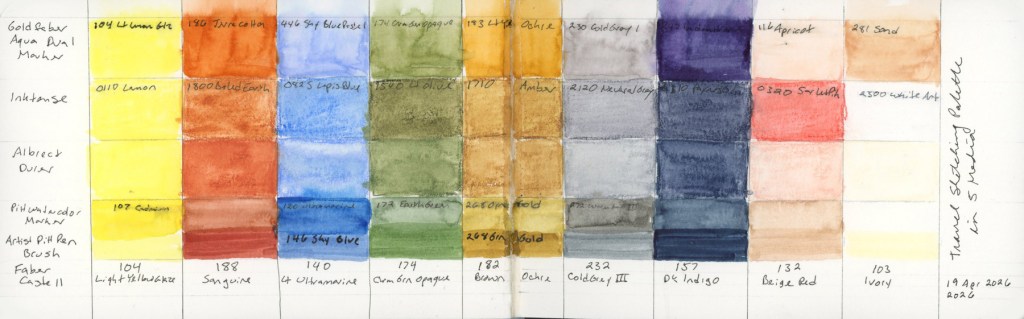
And of course, I had to see everything side by side, right? How well did I match these colors across the mediums?
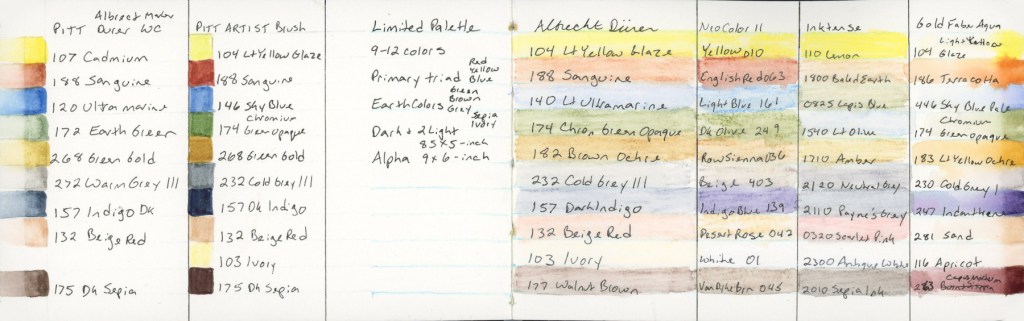
A handwritten reference chart in a Stillman and Birn Delta sketchbook mapping the Travel Sketching palette across six media: Albrecht Dürer Watercolor Pencils, Albrecht Dürer Watercolor Markers, Goldfaber Aqua Dual Brush Markers, Neocolor II, Inktense, and PITT Artist Brush markers. Color names and numbers are listed in columns with small painted swatches alongside each entry. Dated April 2026.
Travel Sketching palette reference chart — Stillman & Birn Delta, April 2026
A horizontal color comparison chart in a Stillman and Birn Delta sketchbook showing the Travel Sketching palette across six media in stacked rows. Each column represents a color family and each row a different medium, including Goldfaber Aqua Dual Brush Markers, Inktense, Albrecht Dürer Watercolor Pencils, PITT Watercolor Markers, PITT Artist Brush markers, and Faber-Castell. Dated 19 April 2026.
Travel Sketching palette in five media — Stillman & Birn Delta, 19 April 2026

I am really looking forward to using these in actual sketches to learn how the different media behave, and discover what I do and don’t like.

I also may have begun a new obsession. I love that Goldfaber Aqua Dual Brush Caput Mortuum. They didn’t have a brown, so that was the closest. The Pitt Artist Brush pens also have a gorgeous Caput Mortuum. So I may have immediately ordered some Caput Mortuum watercolor paint.

It started with one question about two pencil ranges, how is Inktense different from the Albrect Durer watercolor pencils. It ended with six media, so many color charts and a new obsession or two.
Mid-January and Inktense Explorations

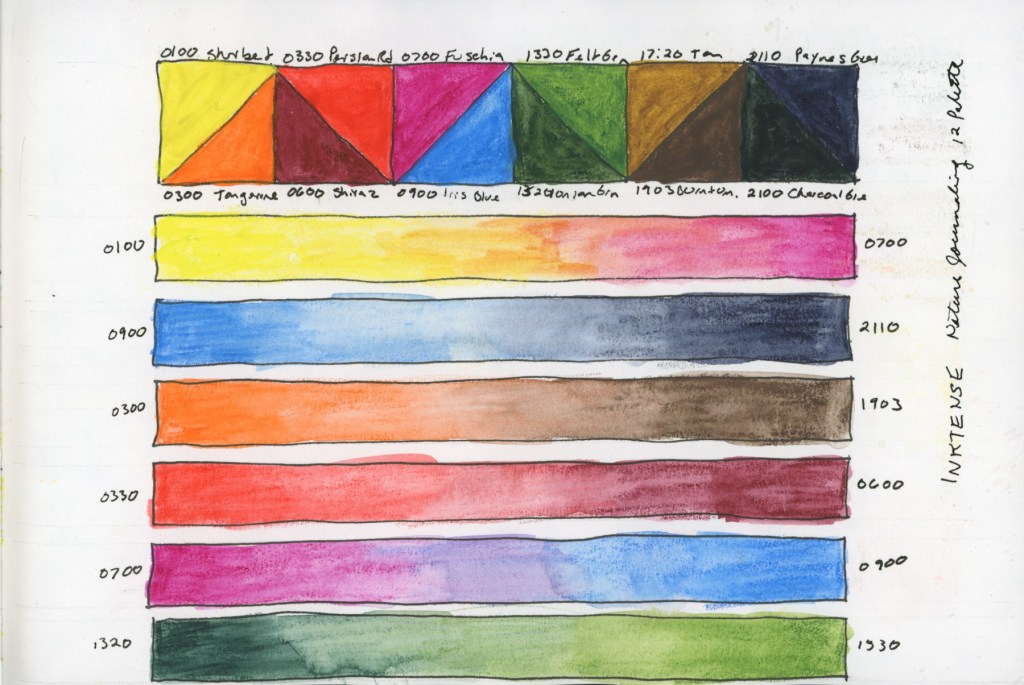
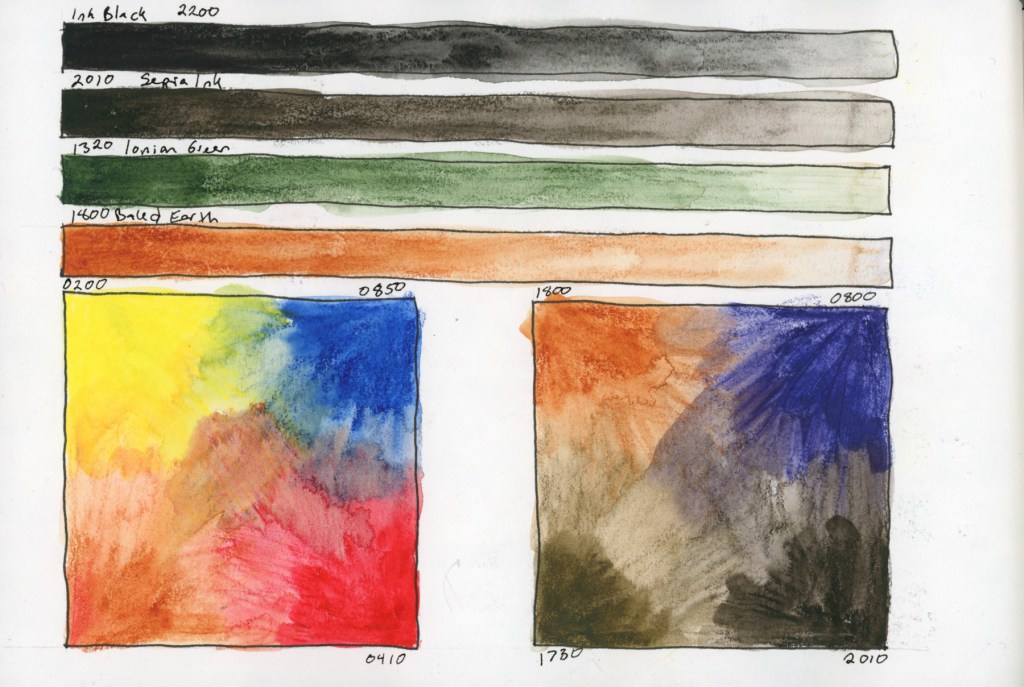
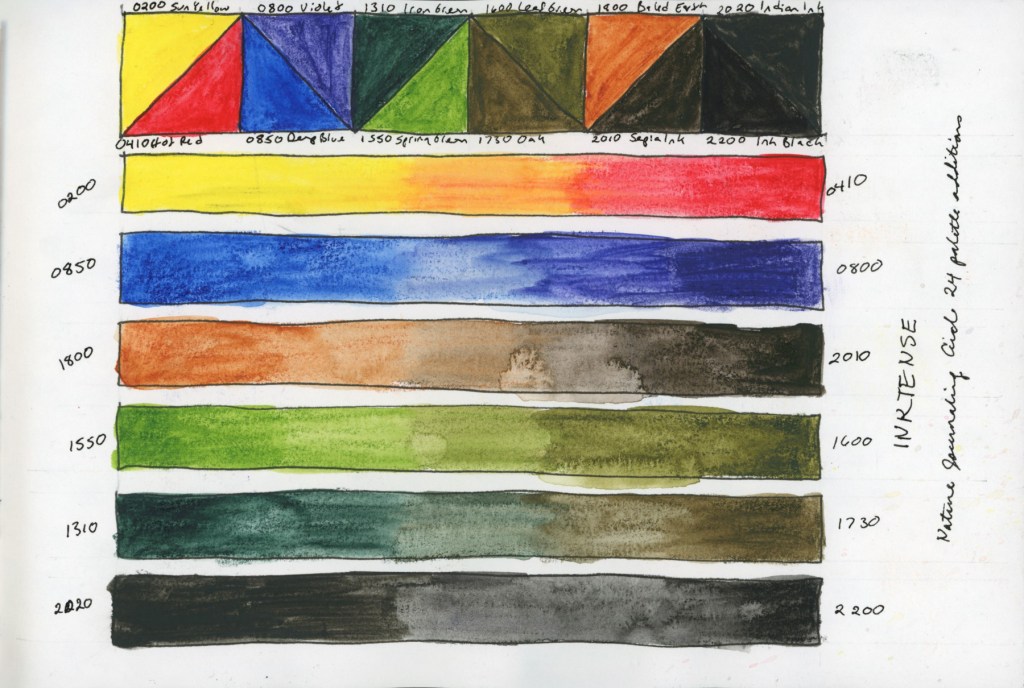
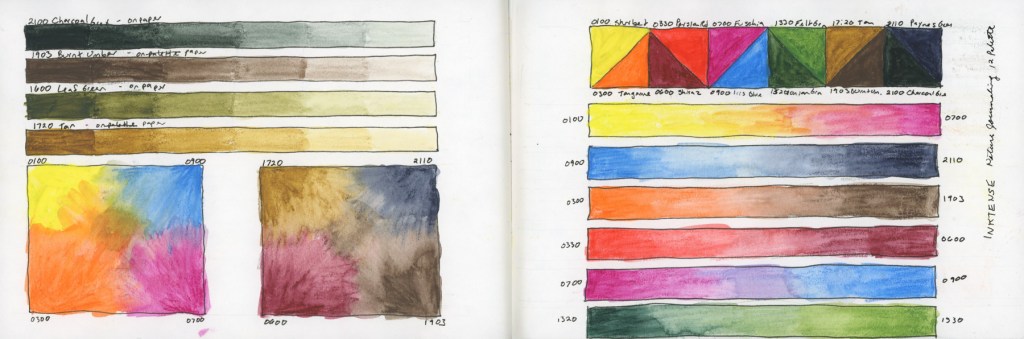
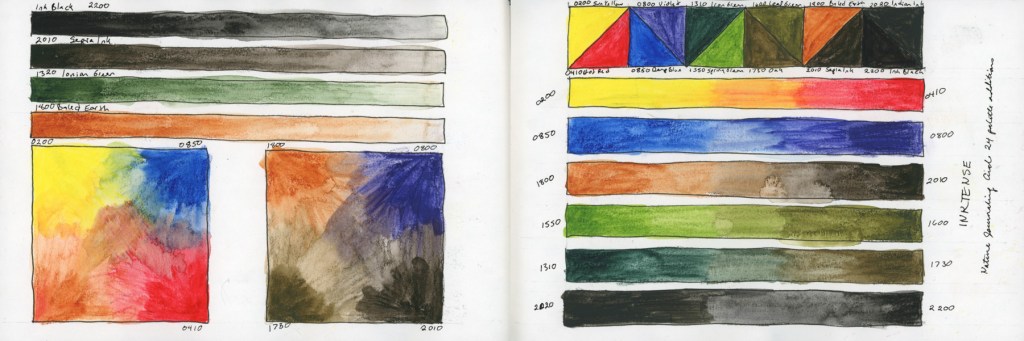
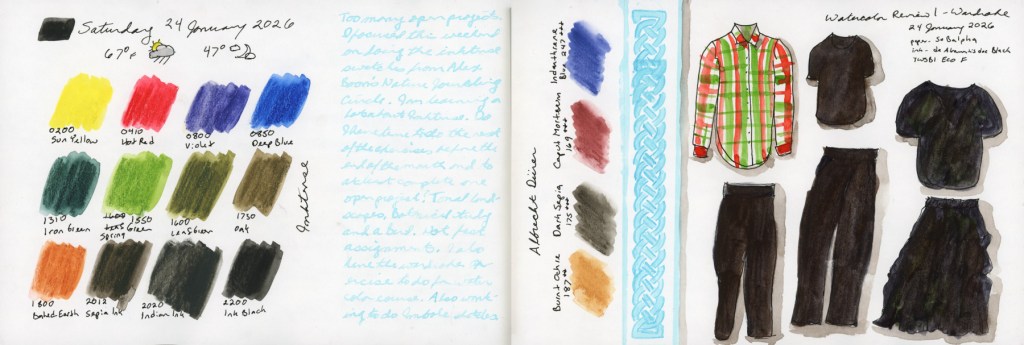
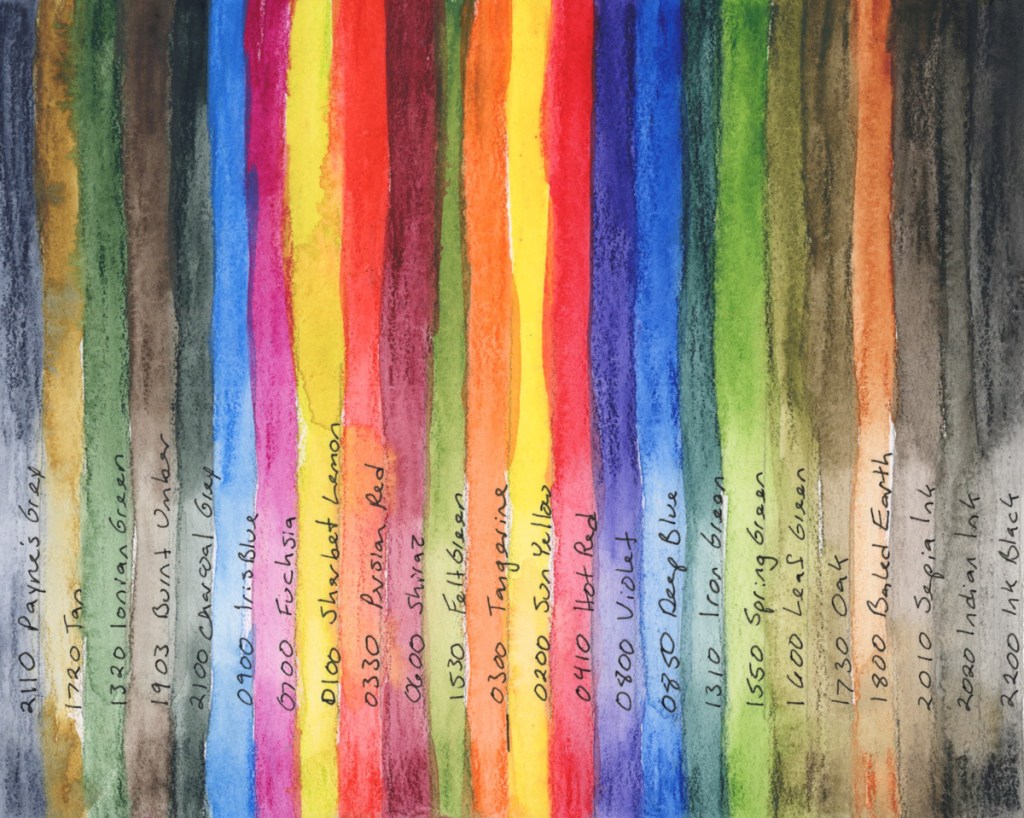
January is moving by so fast! I did work on Alex Boon’s Inktense course in his Nature Journaling Circle. He offers a recommended set of 12, and an optional 12 he recommends to make it 24 set.

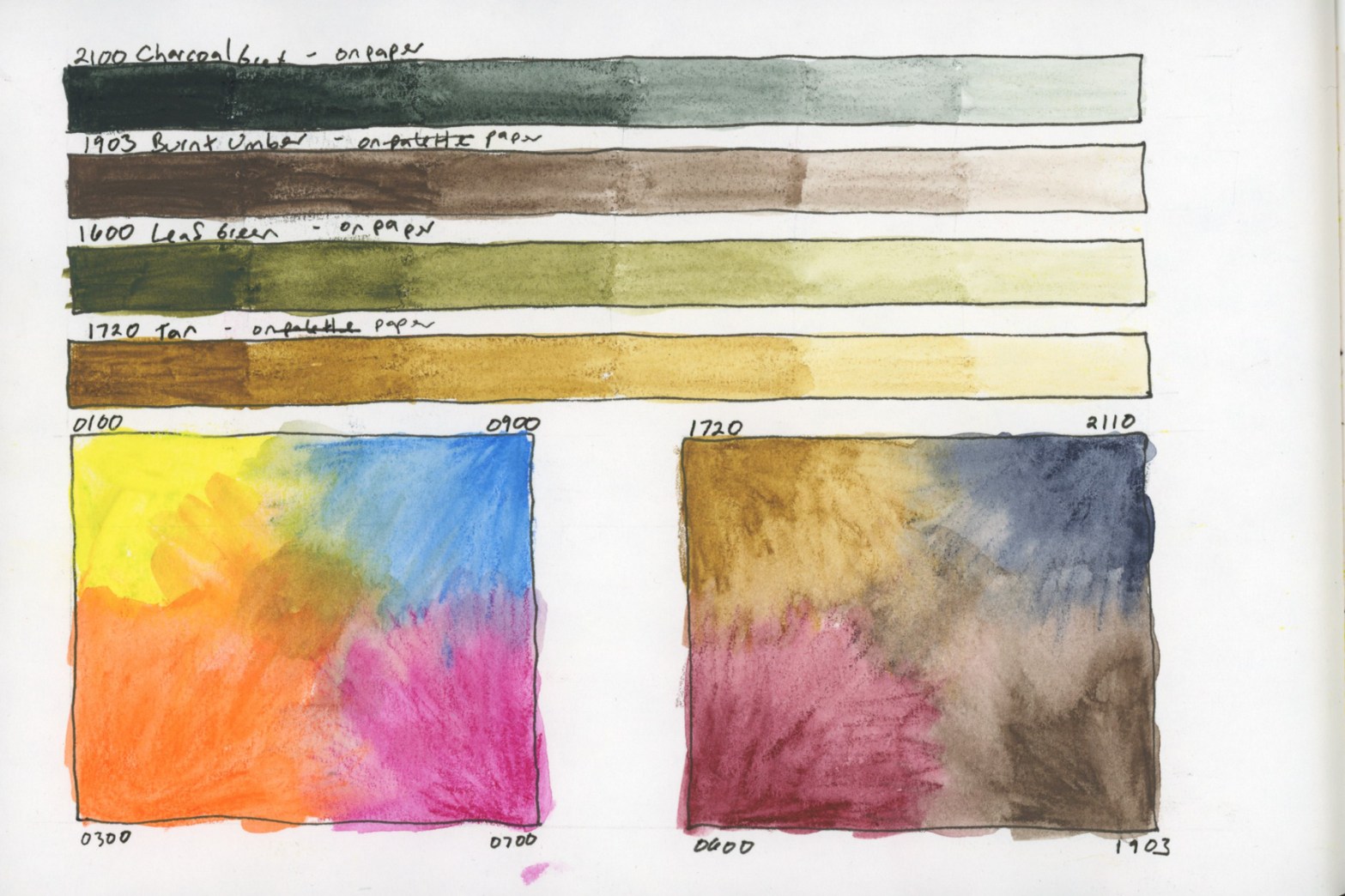
These swatching exercises were extremely helpful in learning how to work with these, and how they color mix.

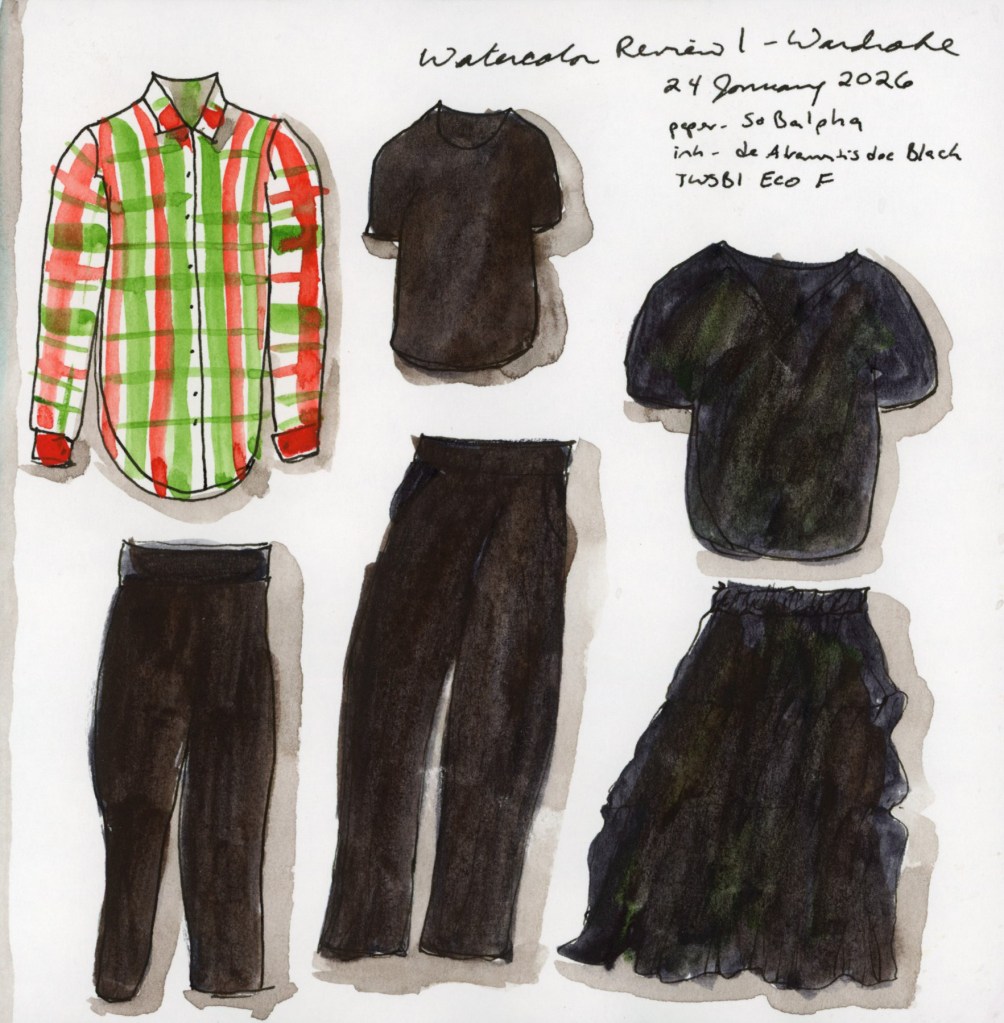
For the watercolor course, I did one of my favorite exercises, the wardrobe. My wardrobe is mostly black, but for this winter I did add this festive plaid shirt that was so fun to paint!

Here are the spreads:

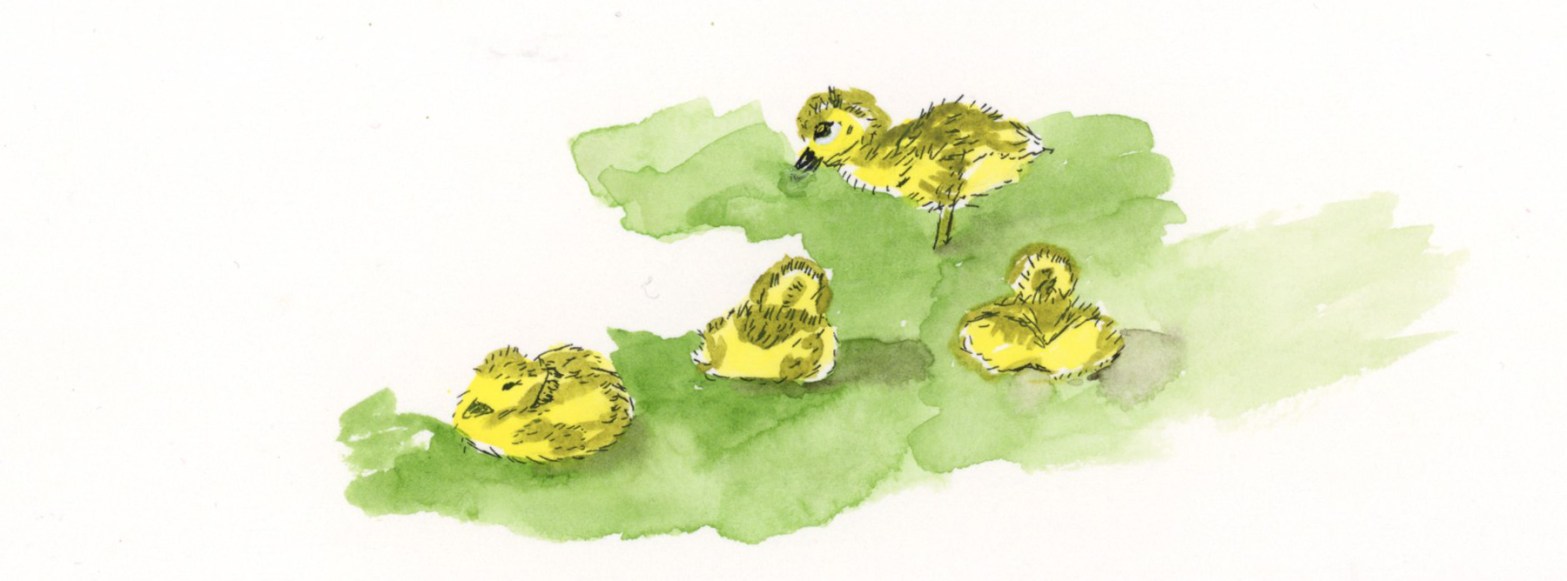
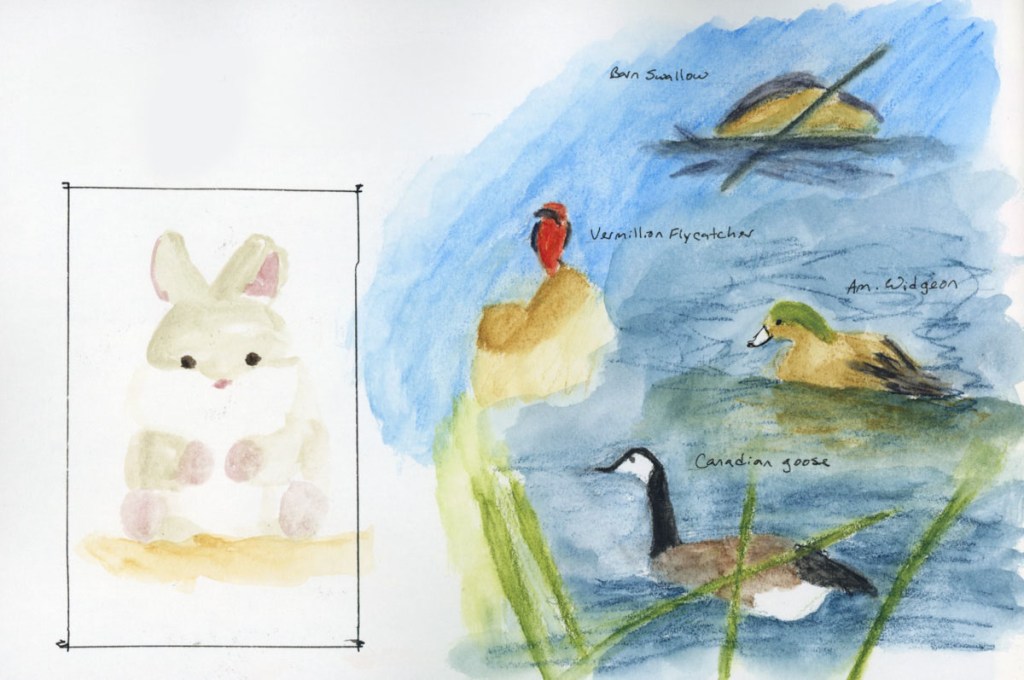
Goslings!

The Spring Greens have erupted on the trees and the entire island has lost all yellows and browns from the winter.

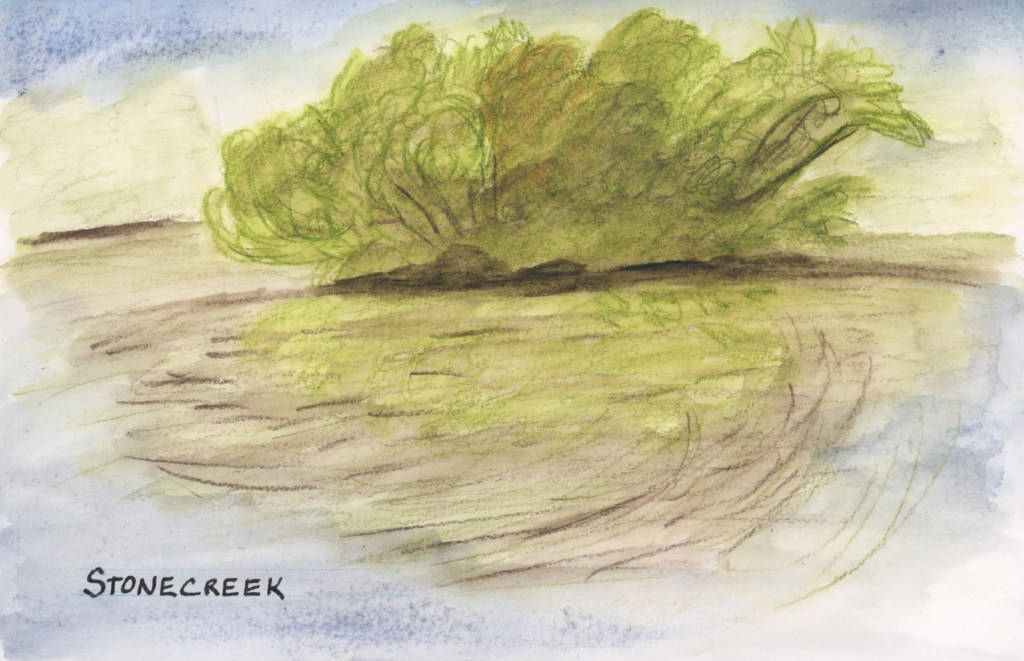
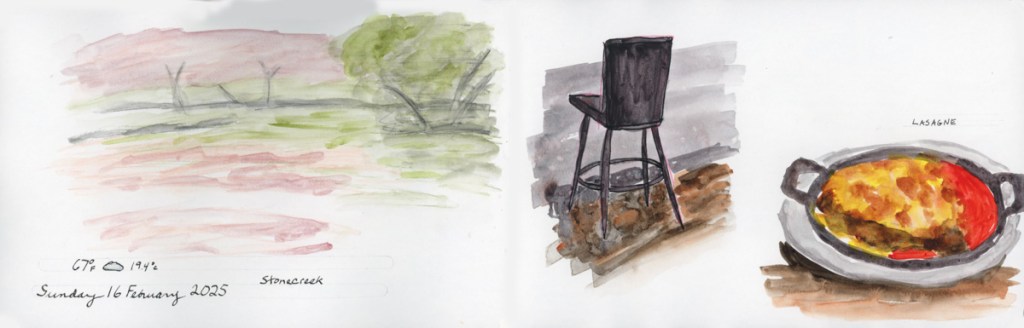
I sketched the island at the pond at Stonecreek with Inktense and I painted the goslings at home from a photo as my eyeballs do not zoom as much as a camera lens.(This is likely why the nature journalists like John Muir Laws carry binoculars!)

This sketch let me down. First my Inktense pencil was too bright, so I tried to tone it all down, but then ended up making it muddy. Not the spring green vibe I’m going for! While the photo was taken in a calm moment, most of the time the wind was rippling the pond water, which is what I captured in my sketch.

The Delta Series paper also let me down. To get a lighter shade of blue for the sky and reflection, I used a lot of water and the paper did this weird spotting thing. I had seen it do that in the previous pages, but since I was using supergranulating paint, I thought that was the granulation effect. Inktense does not granulate, so this is definitely the paper. Worse, those spots are showing through to the other side! Ack! I use this much water all the time with the Alpha Series, and Gamma Series papers, and that near bleeding, and changing of texture does not happen. Interesting difference!

I’m going to try watercolor over the top of this sketch to see if I can fix that muddy feeling to restore it back to that Spring Green vibe which is what I wanted to capture.

Well, I added watercolor over the top, and it is a better shade of green for the spring greens, but I can’t say I’d call this a very successful sketch. I do like it better now, at least.

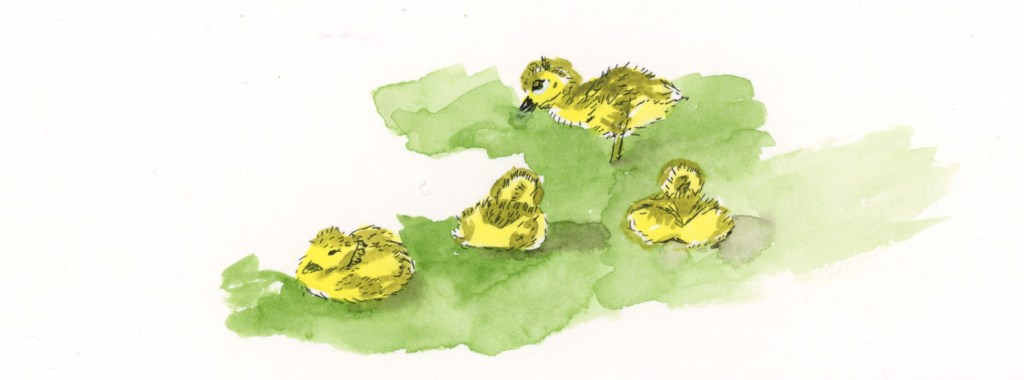
What I love on this page are the goslings I sketched! Cuteness!

I painted the goslings from a photo a couple days later, in ink and watercolor, and I’m super happy with these adorable little guys. They were young and still tiny little fluff balls who had to rest after every few steps. There were actually two families of goslings! One family had five who were slightly bigger than these four. What a treat of a day to see the goslings!

Initial Thoughts on Inktense

I’ve been in a lot of conversations lately about Inktense, and heard a lot of questions about them, which makes me very curious to learn the answers. I’ve done a couple sketches with them, but my goal has mostly been to compare them with Albrect Durer watercolor pencils. One question I’ve heard is what makes them different from watercolor pencils. This is perhaps the question I seek to answer first.

They lay down like watercolor pencils. The lead is a little softer than Albrect Durer, so sharp tips break off. However, sharpening with a knife or using the sticks could fix that. I find it challenging to find which color I’m looking for in my kit bag, when I’m on location, because the pencils barrels are painted black, and  the leads don’t always look like the color they put down. (I’m looking at you Amber and Tan whose leads look green, but they lay down as muted yellows.) The color indicator on the end could help, but I am reluctant to store my pencils tip down, especially with a soft lead. Maybe a roll-up pencil case is the solution?

Because it is a softer lead, it is maybe easier to lay down a thick layer, when I want strong color. Once they are activated, the literature says they are permanent like ink. I haven’t tested that with applications like watercolor over the top. They are vibrant, intense colors with strong pigment, which I like. The pastels I tend to get with watercolor pencils is nice, but I yearn for more color. That might just be my own lack of skill showing, however.

Once the Inktense is activated with water, I find it much easier to put a second layer on top once it is dry, than I do with Albrect Durer. That makes it easier to keep working with them in layers. Especially on location, as I live in the desert, and my pages dry very quickly.

These are my first observations on them. I’ve owned my Inktense pencils for a very long time, and rarely used them, so I’m quite keen to make use of them and learn more. 

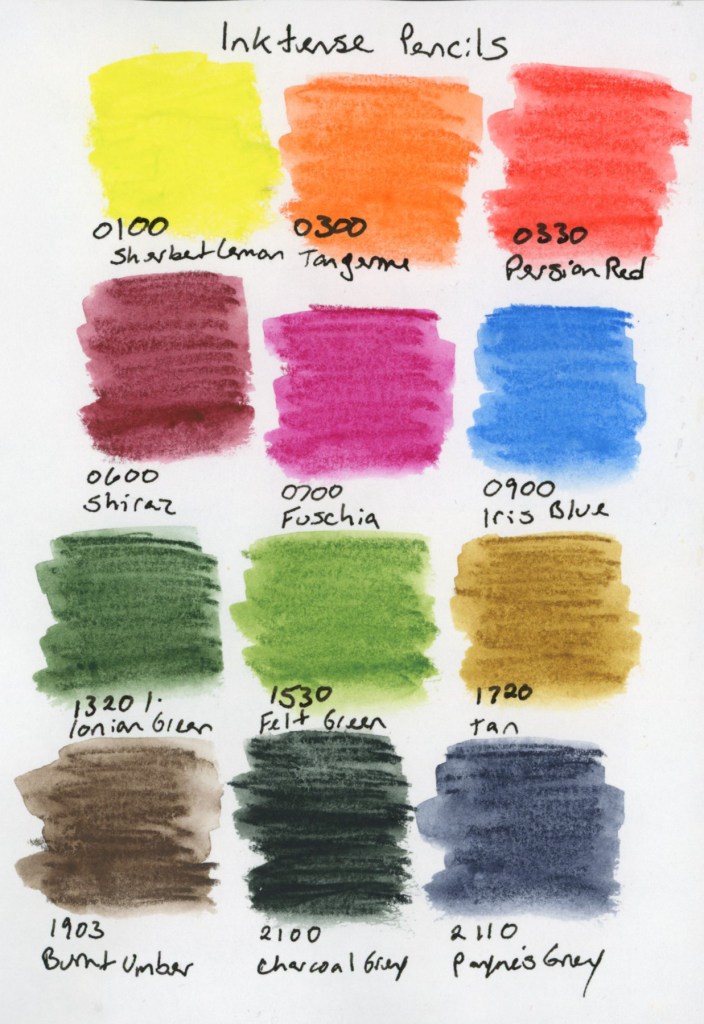
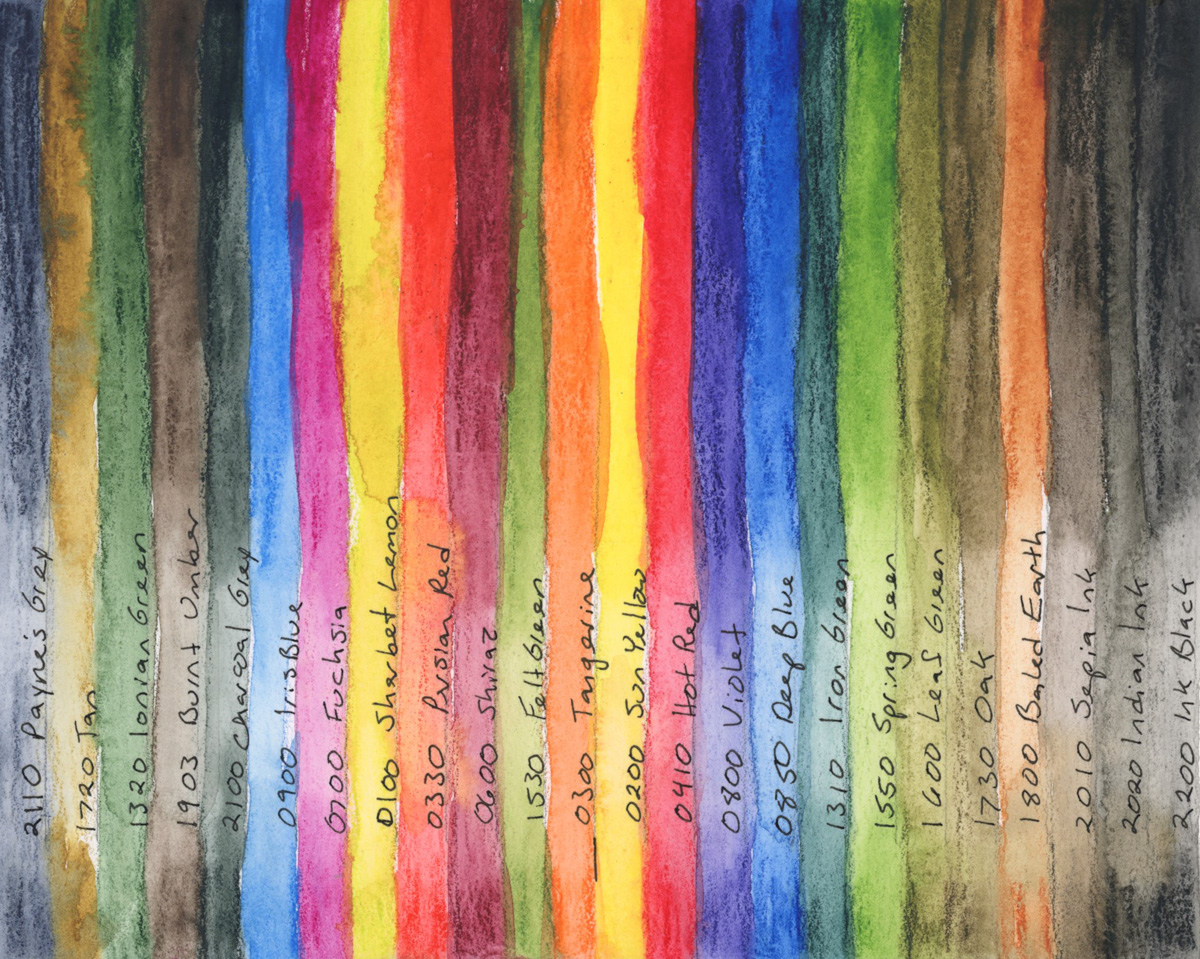
Alex Boon Art on You Tube has been very helpful for me in selecting colors for a palette to carry. He is a Nature Journalist, and he has a few limited palette recommendations. Here are his 12 and 24 color recommendations.

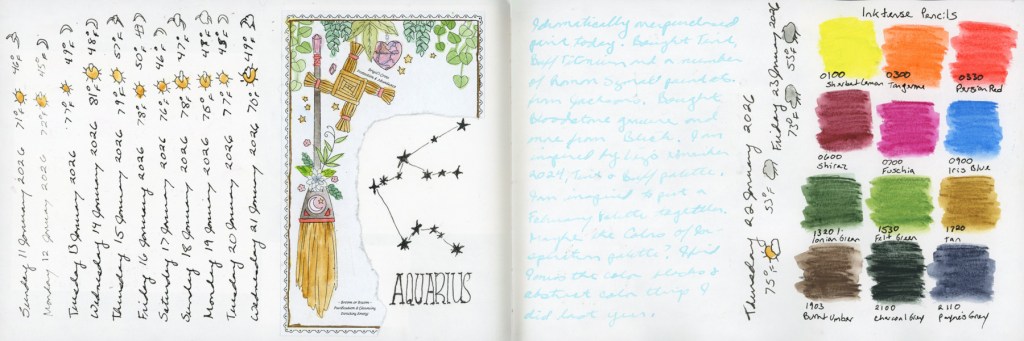
The 12 pencil set: 2100 Payne’s Grey, 1720 Tan, 1320 Ionian Green, 1903 Burnt Umber, 2100 Charcoal Grey, 0900 Iris Blue, 0700 Fuchsia, 0100 Sherbet Lemon, 0330 Persian Red, 0600 Shiraz, 1530 Felt Green, and 0300 Tangerine.

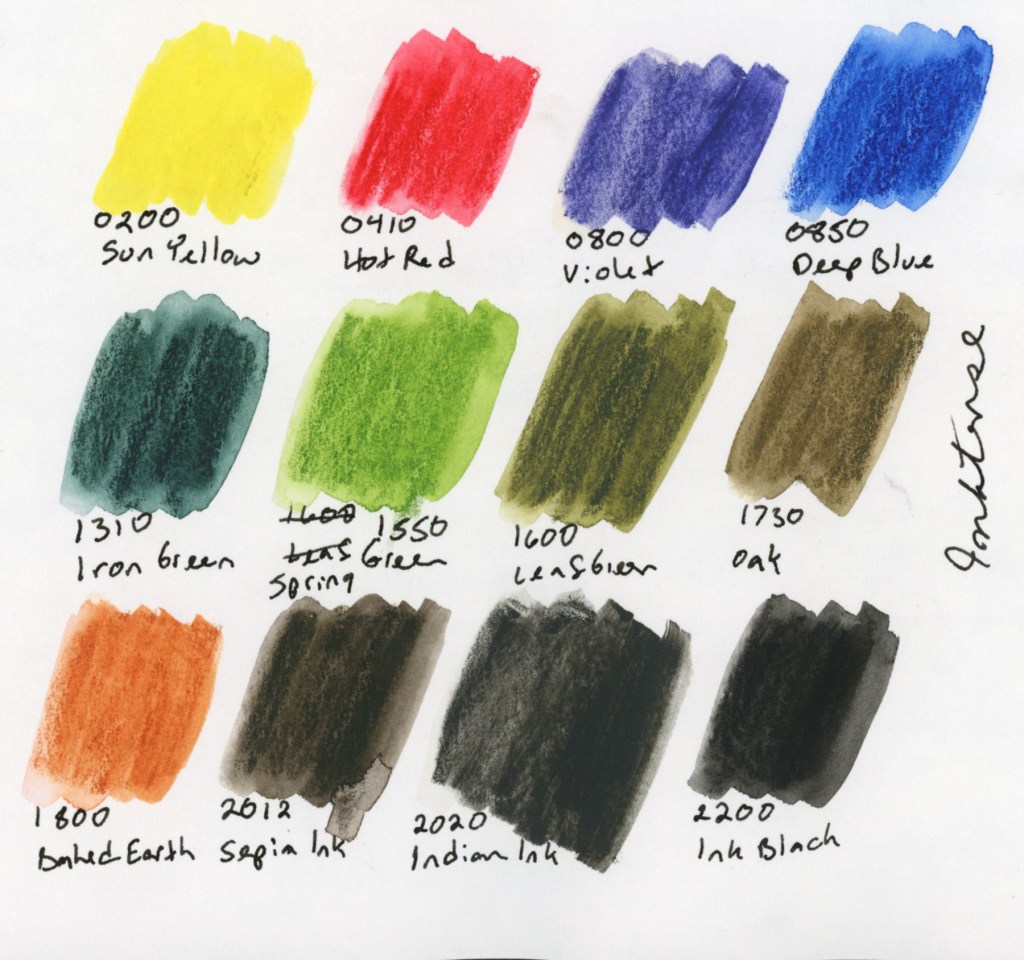
For 24, also add: 0200 Sun Yellow, 0850 Deep Blue, 0410 Hot Red, 0800 Violet, 0850 Deep Blue, 1310 Iron Green, 1550 Spring Green, 1600 Leaf Green, 1730 Oak, 1800 Baked Earth, 2010 Sepia Ink, 2020 Indian Ink, 2200 Ink Black.

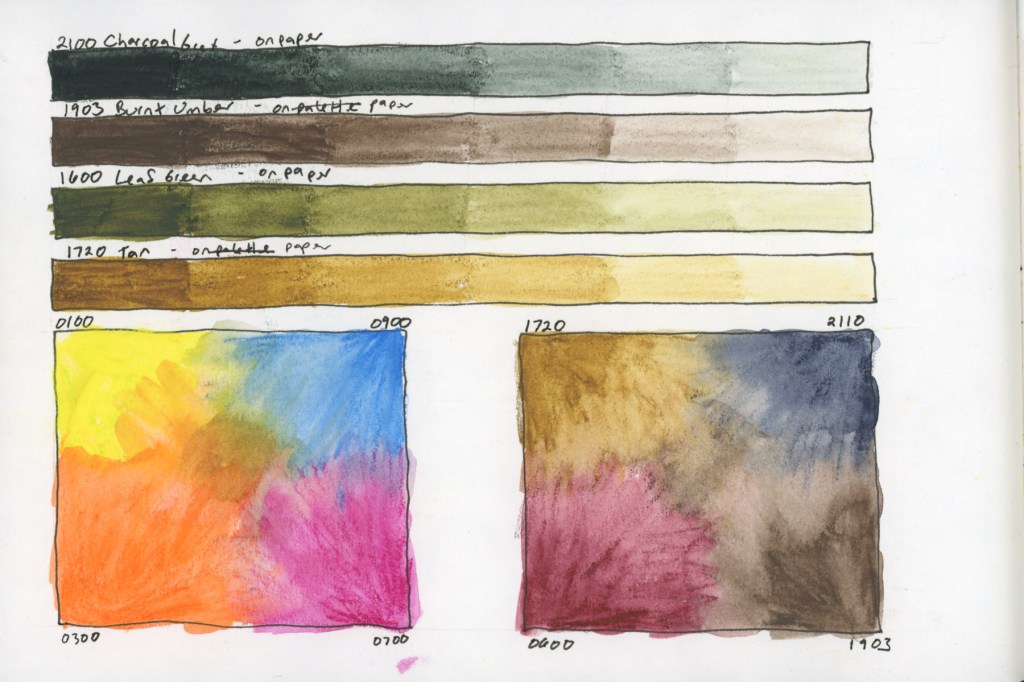
I wanted to see how they work on the Delta paper, so I did another color chart.

I begin to think the Delta paper is working better for the Inktense pencils! The colors seem richer, and they definitely smooth out with water more easily. Interesting.

One Week 100 People 2025

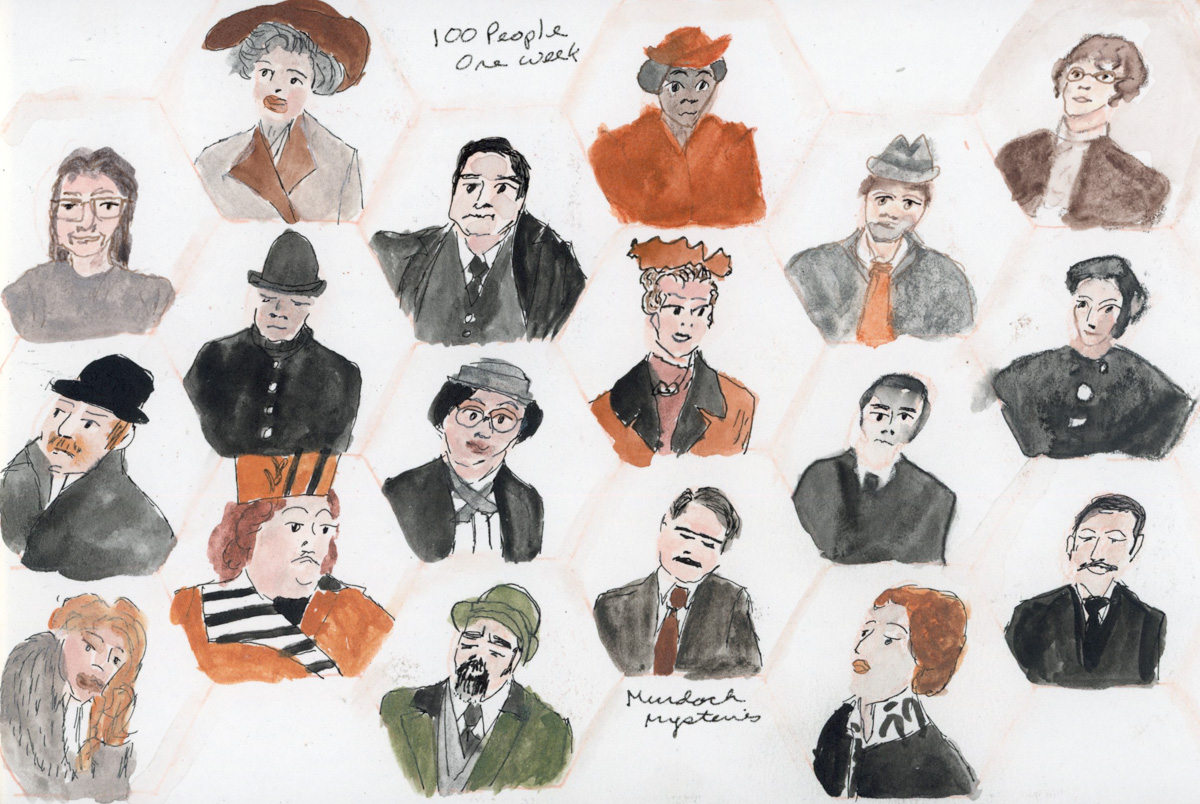
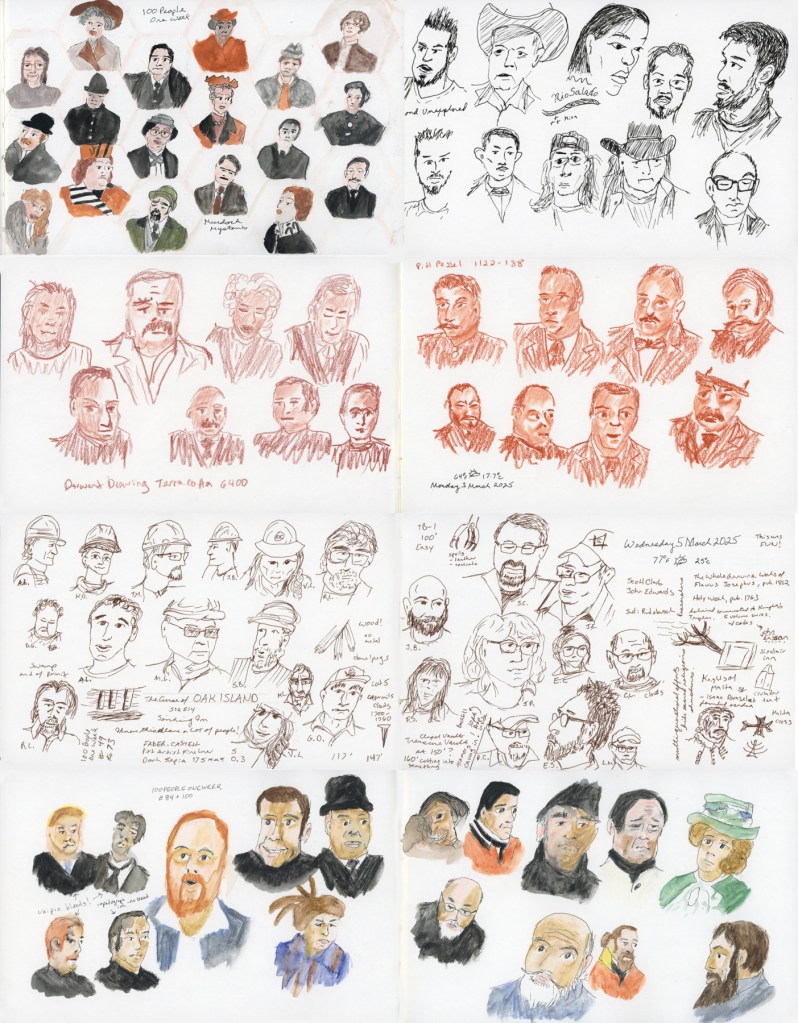
I did it! I sketched 100 people in one week! I sketched mostly from television, mostly Murdoch Mysteries (costumes are fun to draw!) I used a variety of media and enjoyed the exploration. The first page took me 3 hours to complete, the Pitt Pastel Sanguine page, took 1 hour. The rest fell somewhere in the middle.

100 People One Week — 2025

I did it! I sketched 100 people in one week!

Well — one week spread across a few sessions, with a lot of good television keeping me company. This was my most experimental year yet, and I loved every messy, discovery-filled minute of it.

I sketched mostly from television — mostly Murdoch Mysteries, because the costumes are just so fun to draw — but also The Curse of Oak Island, and a show called Unexplained and Unexplored, which turned out to be surprisingly good drawing material. Lots of interesting faces.

A composite image showing all the sketchbook pages from the 2025 One Week 100 People challenge, arranged in a grid. The pages show a variety of media and styles including watercolor, sanguine pastel, fineliner pen, and mixed media, with faces drawn from Murdoch Mysteries, The Curse of Oak Island, and Unexplained and Unexplored.

The Materials

This was a mixed media year, and I leaned into that fully. I used more different tools and materials than any previous year, and I learned things along the way.

The anchor of the year was the Derwent Shade and Tone Mixed Media Set — a gorgeous set with a full range of warm and cool tones across Inktense, Graphitint, Tinted Charcoal, and Pastel Shade media. The first page I completed used this set, with the Murdoch Mysteries faces arranged in a light hexagon grid. That page took about three hours. I also did detailed color swatches of the entire set — all twelve colors and media — which became its own little design on the left page.

A double page sketchbook spread. The left page features large painted color blocks and a detailed list of named swatches from the Derwent Shade and Tone Mixed Media Set, with the set name written vertically along the edge. The right page shows faces from Murdoch Mysteries arranged against a lightly drawn hexagon grid, with the handwritten title '100 People One Week' and the label 'Murdoch Mysteries.'

I also worked with the Derwent Drawing Terracotta 6400 — a rich sanguine drawing pencil — and the Pitt Pastel 1122-138, a sanguine pastel. Both on the same spread, one page each. That spread took one hour. The difference between the two is fascinating — the pencil gives fine detail, the pastel is looser and warmer. Both are entirely in that beautiful terracotta red.

A double page sketchbook spread worked entirely in warm sanguine tones. The left page features faces sketched from television using Derwent Drawing Terracotta 6400, with faces scattered loosely across the page. The right page uses Pitt Pastel 1122-138, with faces arranged in two rows, labeled with the date Monday 3 March 2025 and a weather stamp showing 64°F."

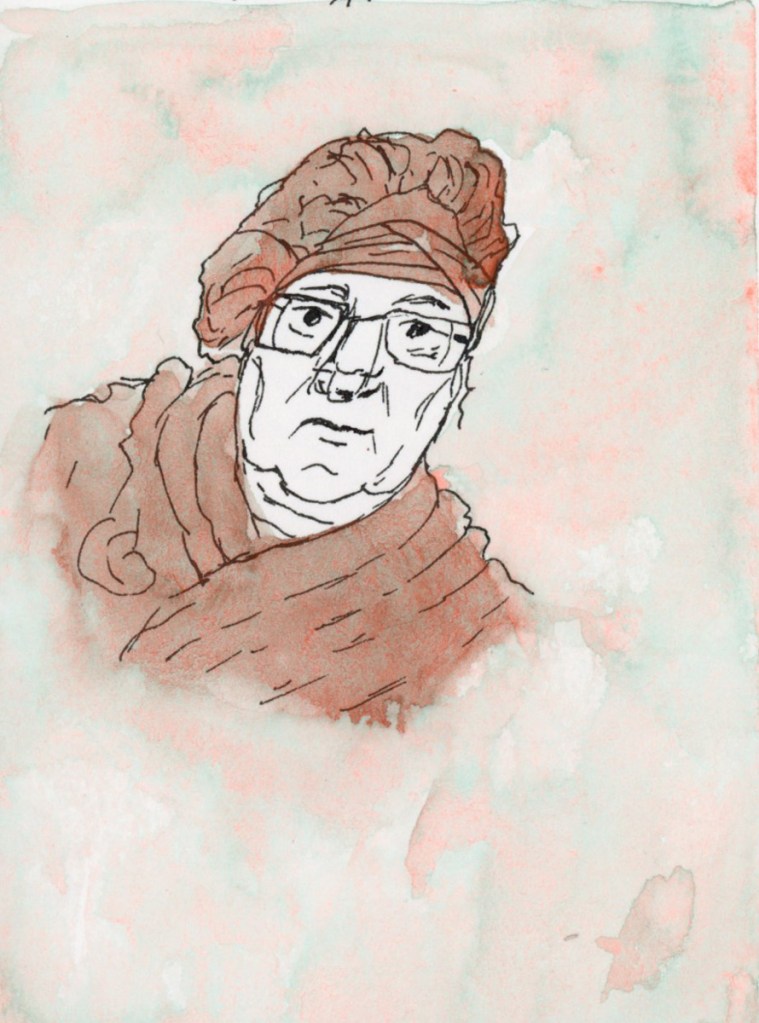
One of my favorite pages featured the Gansai Tambi Granulating Aurora Orange — such a gorgeous paint! I used it for the background wash and the portrait itself. The granulating effect it makes in the skin tones is just beautiful. This is my third self-portrait, and I remain unconvinced it looks much like me, but I love the page.

A self-portrait with a soft, blooming background wash in Gansai Tambi Granulating Aurora Orange watercolor. The portrait is rendered in the same paint with black ink linework, showing a figure wearing glasses and a hat. The granulating quality of the paint creates a delicate, mottled texture throughout."

For the Oak Island pages I switched to the Faber-Castell Pitt Artist Fineliner in Dark Sepia 175 — a lovely warm brown line that suits those weathered, cap-wearing Oak Island faces perfectly. This spread is packed — faces, notes, measurements, show details. It has a wonderful chaotic energy.

A double page sketchbook spread drawn entirely in Faber-Castell Pitt Artist Fineliner Dark Sepia 175. Faces from The Curse of Oak Island are scattered densely across both pages alongside handwritten notes about the show, materials, and measurements. The handwritten title 'The Curse of Oak Island' and the date Wednesday 5 March 2025 appear among the portraits."

I found a new favorite paint on the Thursday pages — Holbein Sepia watercolor, which I tested in a set of swatches alongside more Unexplained and Unexplored pen drawings on the left and Murdoch Mysteries faces in the Shade and Tone set on the right.

A double page sketchbook spread with three distinct areas. The left portion features faces drawn in sepia fineliner pen from the TV show Unexplained and Unexplored, with handwritten notes about Meriwether Lewis. The center features vertical swatch strips of Holbein Sepia watercolor in a range of tones. The right portion features faces from Murdoch Mysteries drawn with the Derwent Shade and Tone Mixed Media Set, with the date Thursday 6 March 2025 and a weather stamp showing 70°F.

The page featuring faces from Unexplained and Unexplored also has a little painted pencil case and color block done in that Aurora Orange — I was clearly smitten with that paint all week. Look at those colors, the oranges and greens, all from one paint!

A double page sketchbook spread. The left page features a painted illustration of a pencil case and a vertical color block, all in Gansai Tambi Granulating Aurora Orange watercolor. The right page shows faces drawn in black fineliner pen, sketched from the TV show Unexplained and Unexplored, with the show name handwritten below the portraits."

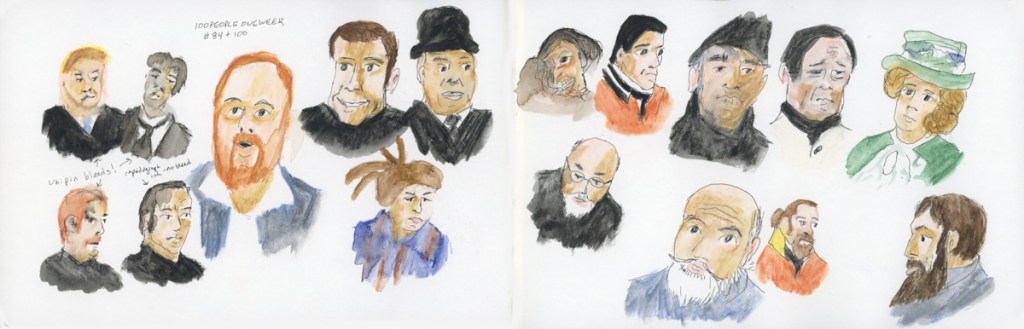
The final pages brought everything together — portraits 84 through 100, Murdoch Mysteries again, using the Shade and Tone set with a little blue and green watercolor for accent. I also made a useful discovery: Unipin pens bleed with watercolor, but Rapidograph ink does not. Noted for next time!

A double page sketchbook spread featuring portraits 84 through 100, sketched from Murdoch Mysteries using the Derwent Shade and Tone Mixed Media Set with blue and green watercolor accents. Faces are scattered across both pages in a mix of warm and cool tones. Handwritten notes record materials discoveries, including observations about Unipin and Rapidograph ink behavior with watercolor.

Best year yet! And the first time I did all 100 people! I did it! One hundred people. And I already can’t wait to do it again.

March Challenges

I’m participating in two challenges this month. One is the annual 100 People One Week challenge hosted by Liz Steel and Marc Taro Holmes. Last year I surprised myself by doing better people sketches than I thought I’d be able to, so I have to do it again!

The second challenge is from Liz Steel’s Patreon Community which is To the Edge. Take your sketches to the edge of the page. I’m intrigued by this one, because I do usually keep a border.

Naturally, I started by swatching paints. I decided to swatch the latest purchase of watercolors I made a couple weeks ago. I took the design element to the pages edges and really like the look of that.
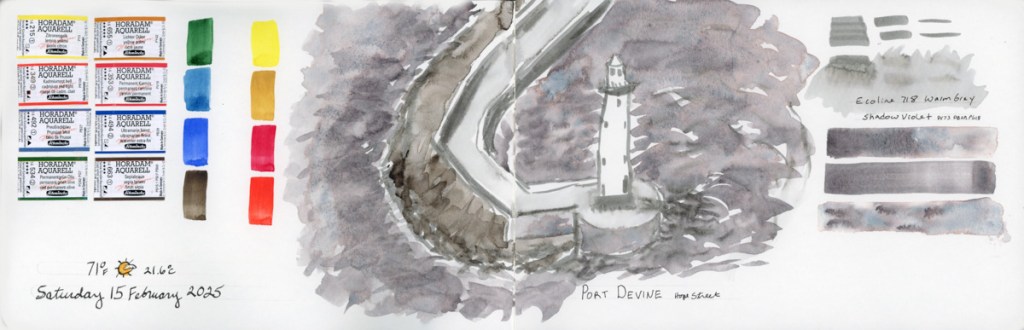
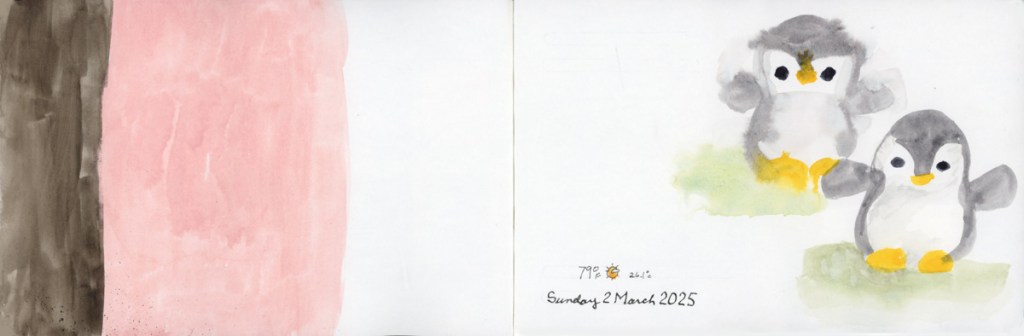
Color blocks to use up left over paint. I was going to sketch a line drawing on the color block, but then I didn’t, and now I’ll just leave as it is. I did paint my cute little penguin. I painted it twice, and I laugh because the wet on wet technique (resulting bleed) to the paint on the head, gives it a more tufted look. Somehow, just that one error, and it looks like I painted an owl! This makes me smile, so I left it.

I color swatched my newest purchase, the Derwent Shades and Tones color palette (it has a combination of inktense paints, tinted charcoal, and more in it.) I wanted to sketch something else with this palette, so what better than the current week’s 100 People One Week challenge? So I set to sketching Murdoch Mysteries, which I was watching. (I also did one self-portrait. I’ll try to do at least one per day.)

Loving these people. This took more time to be so careful, but it was worth it for the first day! I’ll be using speedier techniques and different mediums each day, or each page. We’ll see.

The next day, I put an effort to not only speed up, but test the difference between the two pencils: Derwent Drawing Terracotta, and Faber Castell Pitt Pastel Sanguine. More Murdoch Mysteries portraits (and one self-portrait.) The pastel pencil is chalkier, as expected, but richer in color. To keep these from smudging too badly in the sketchbook when I close it, I use fixative when I’m done drawing.

February 2025 Everyday Sketching

I started the new sketchbook, volume 19, with a Stillman and Birn Gamma, 8.5 x 5.5 inch, softcover landscape. This book has Ivory pages, but is the same weight and texture as the Alpha paper I usually use. I’m curious to see how the ivory paper goes for me.

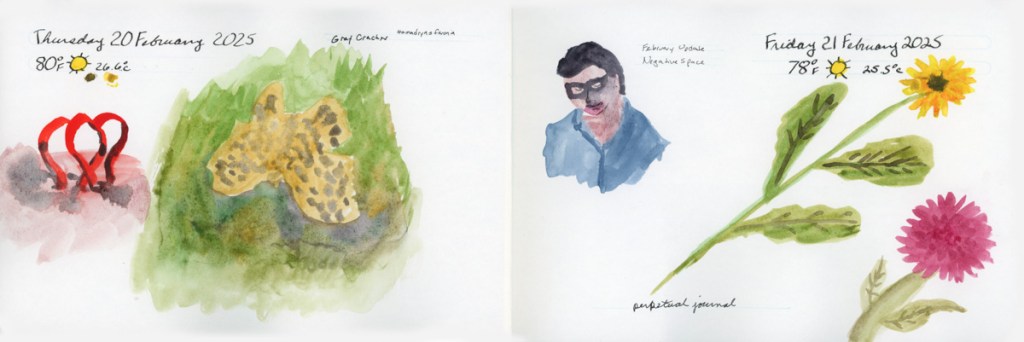
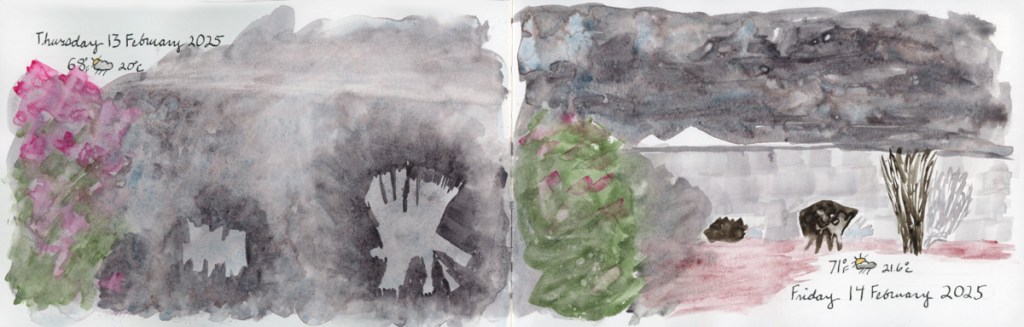
This month has a challenge suggested within Liz Steel’s Patreon, to paint using negative shapes. So I tried that with my backyard on a very grey and rainy day. Not sure I got the planters very well, using negative shapes, but they are certainly expressive of the grey day!

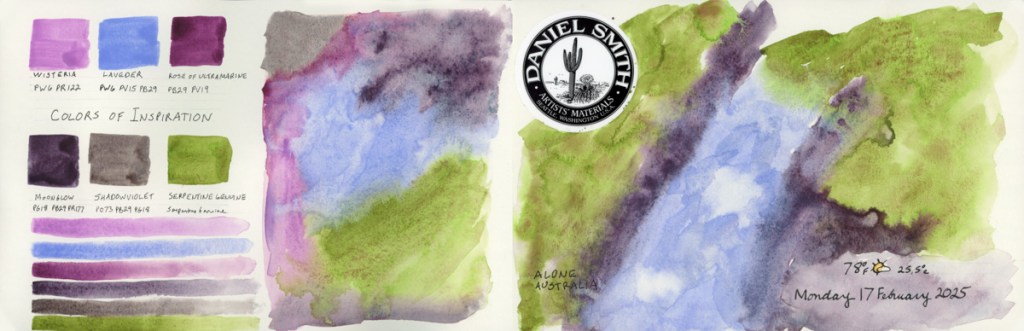
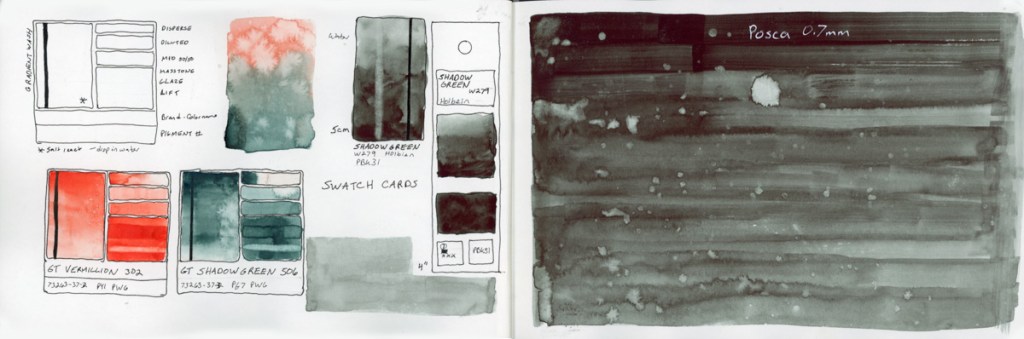
I really began to explore a lot of color charts, and palettes, from a variety of media. With the color charts, I am beginning to explore means of using the colors in some sort of painting to see what they can do. The Colors of Inspiration watercolor palette from Daniel Smith. Gansai Tambi paints are quite interesting to work with. I warmed up with a couple people sketches, since the 100 People One Week challenge is coming up the first week of March. I swatched my current set of Inktense pencils, as I’m curious how are they different from watercolor pencils?

I did select colors to match the Travel Sketching Palette of pencils I’ve been using, so I could do a fair test of like colors.

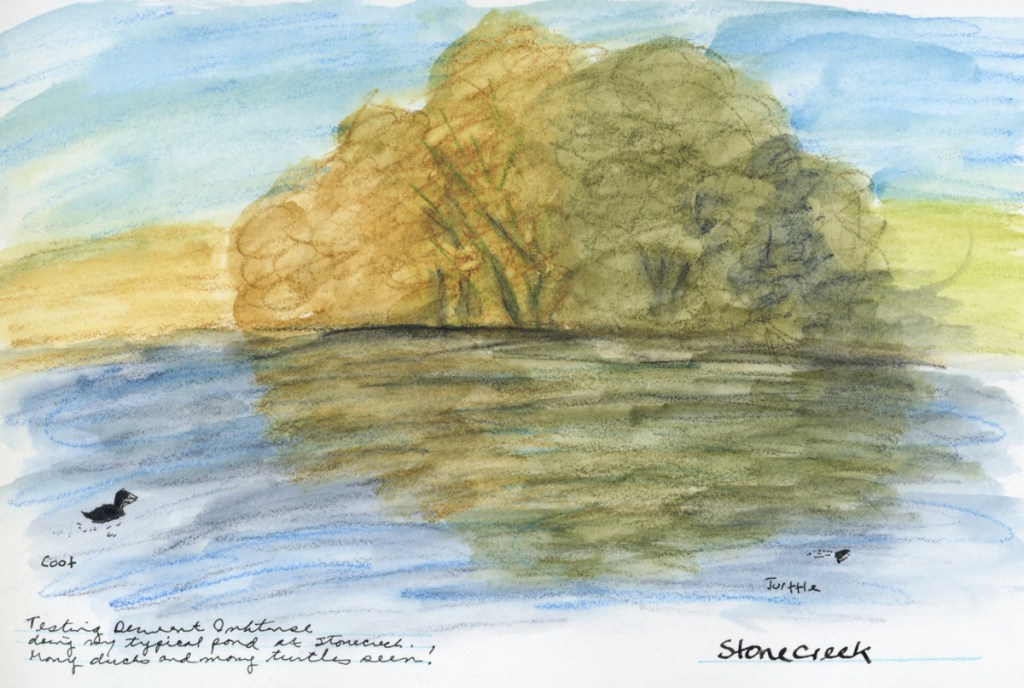
To test them out, I took them out for my walk to Stonecreek and used them where I’ve been using the Albrect Durer pencils. They are a bit softer of a lead, and it easier to go over them after they’ve been activated with water. Once they dry the literature says they are permanent. I rarely go back over work, but it’s good to know. You can get the same vibrancy of color with both, but it perhaps takes less work with the Inktense.