Sketching the Spire


Sketching the Spire (A Chaotic Victory)

Yesterday, I went out and sketched on location, which I rarely do

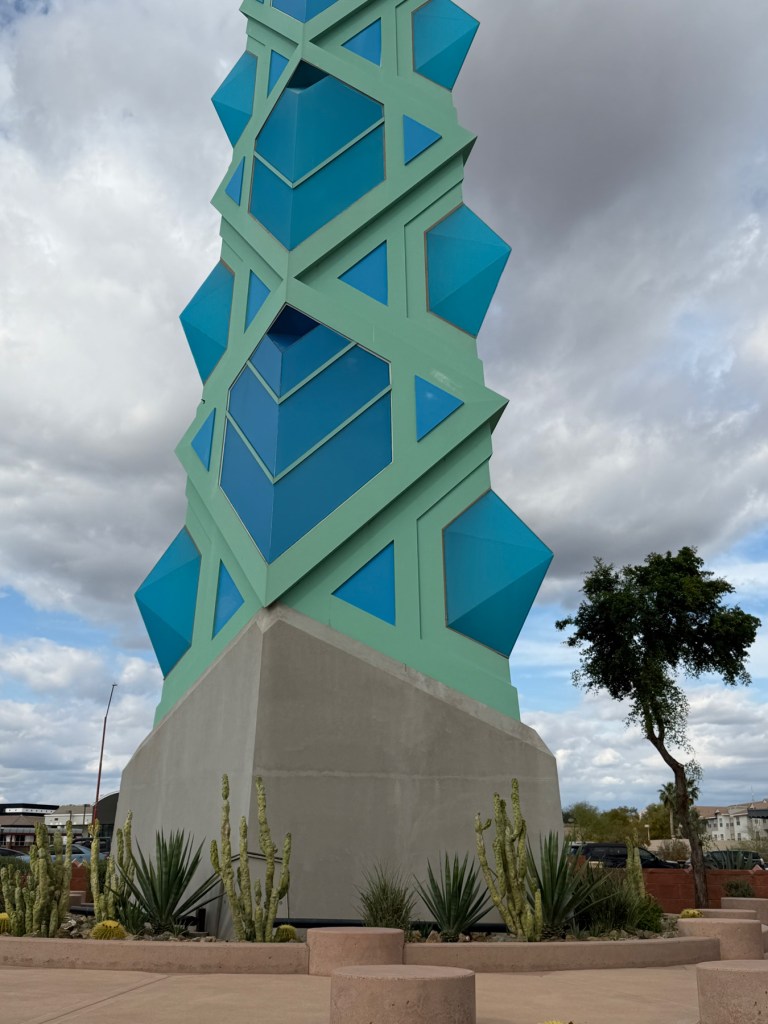
This was Lesson One of my Edges sketching course — the outdoor assignment. I picked the Frank Lloyd Wright spire in Scottsdale. I’ve photographed it many times, but never tried to sketch it. The assignment was to sketch a monument, and this spire came to mind. I had no idea how complicated that thing actually is.
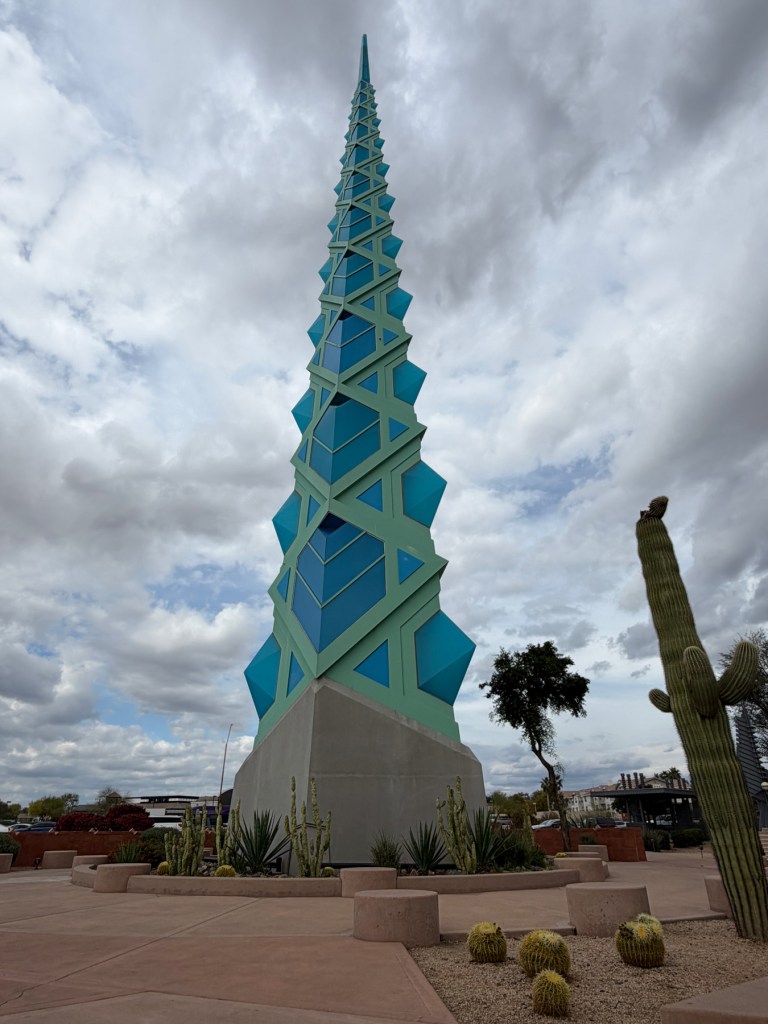
The base and lower section of the Frank Lloyd Wright spire, showing the angular architectural details, with desert cactus landscaping at its base, Frank Lloyd Wright Commemorative Park, Scottsdale, Arizona.

I picked the best possible day for it, keeping a sharp eye on the swings in temperature lately. Clouds were big and plentiful, temperatures a gorgeous 74°F, with plenty of shade. I knew I had to grab it — next week is forecast to hit 100°F, which would be the earliest I’ve ever seen it that high. So Tuesday it was.
I did two ink sketches first — the assignment was to sketch edges where planes change, so I did one thumbnail of the whole spire and one attempting a closer view. I liked how the plants came out. The angles on the spire itself? Not so much. It is genuinely, mercilessly complex and I had completely missed that fact until I was sitting in front of it with a pen in my hand.
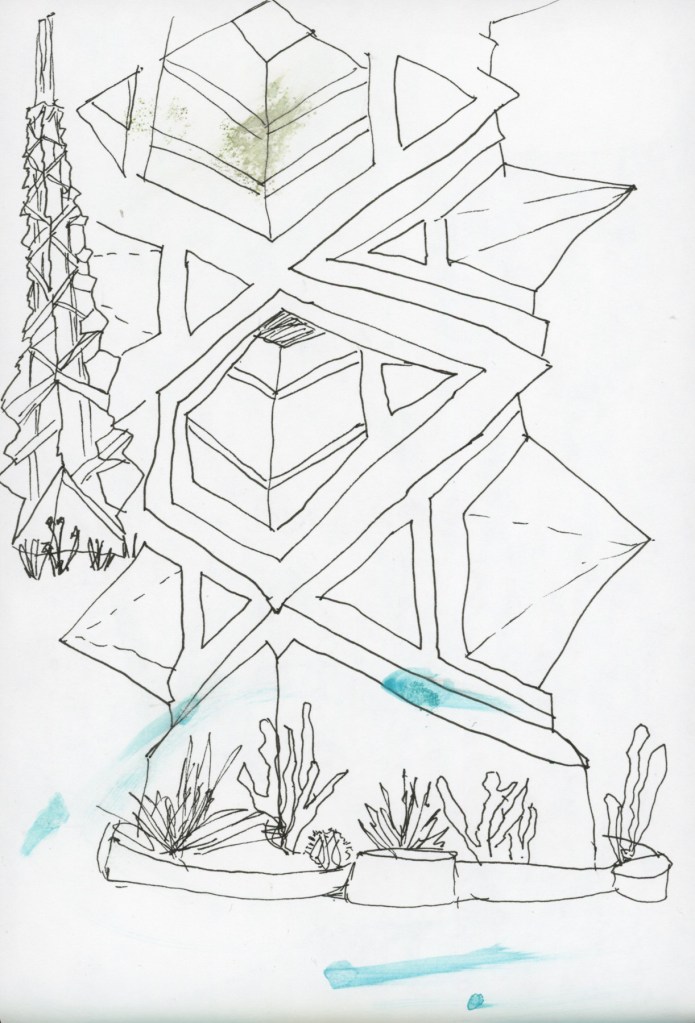
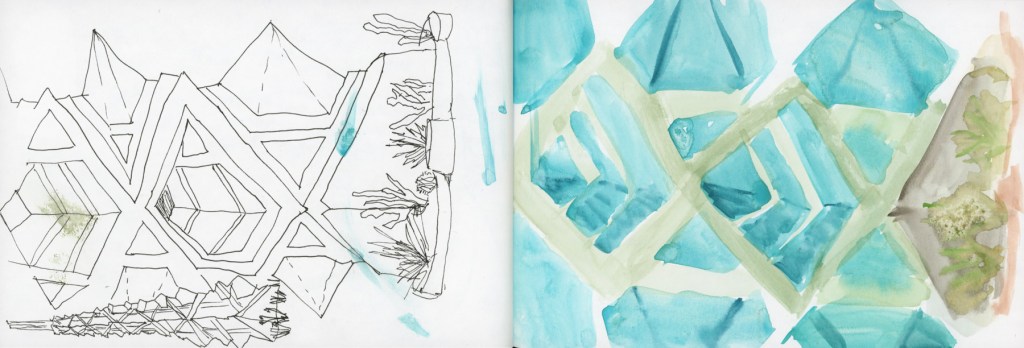
Ink and line sketches of the Frank Lloyd Wright spire — a thumbnail of the full spire and a closer view of the lower section with cactus, with paint smudges.

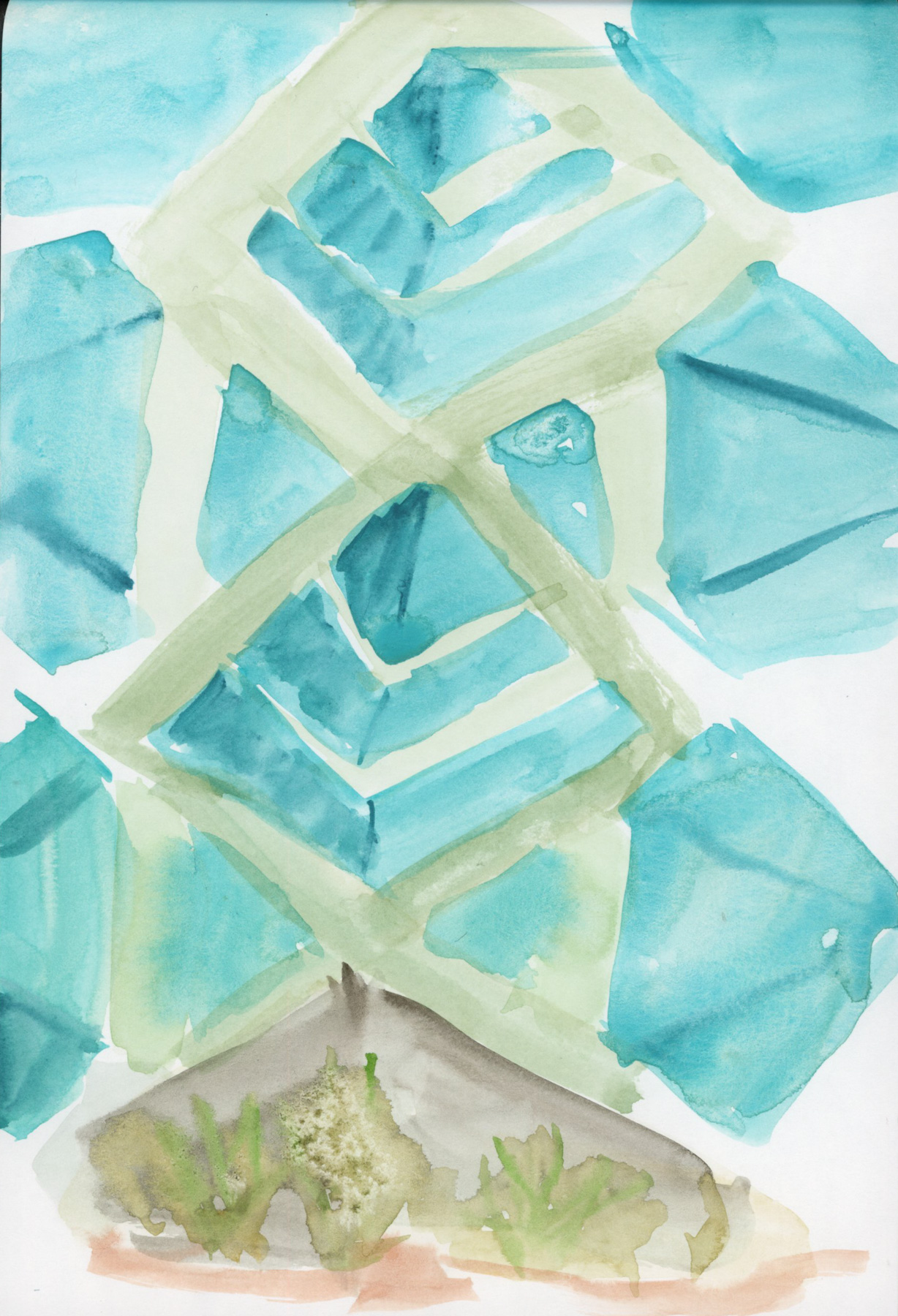
Then I moved on to a direct watercolor sketch to do the changes is color assignment. This became a wet, blobby situation. And then the wind caught the wet page, flipped it over, and smeared wet paint all over the ink sketches on the other side. Ack!

Of course it did.
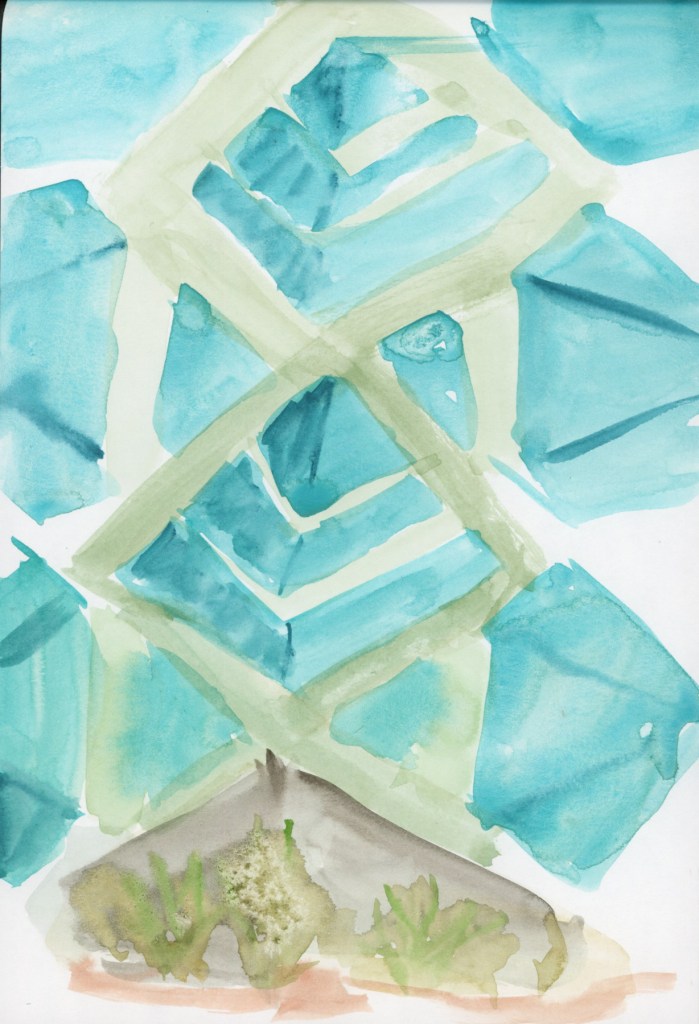
A loose direct watercolor sketch of the base of the Frank Lloyd Wright spire, painted on location, in sage green and turquoise, Frank Lloyd Wright Commemorative Park, Scottsdale, Arizona.
A dual page sketchbook spread showing ink and line sketches of the Frank Lloyd Wright spire on the left page, and a loose direct watercolor sketch of the spire base on the right, painted on location in Scottsdale, Arizona.

The wind had danced with my page, and I had a puddle of water in my palette because I forgot a water container, but I had water. Oh yeah, I also forgot to refill my fountain pen, so I ran out of ink and had to use a fineliner. I was lucky I had my paint! I wrote my notes for next time right there on the page, on location, because some lessons need to be recorded immediately:

  • Don’t run out of ink — good thing I carry many pens
  • Do carry a water container — I was using a well in my palette
  • Do bring a clip — even a little wind will flip a wet page and ruin everything
  • Do think about page design a little first
  • Do enjoy the birds

That last one is important.
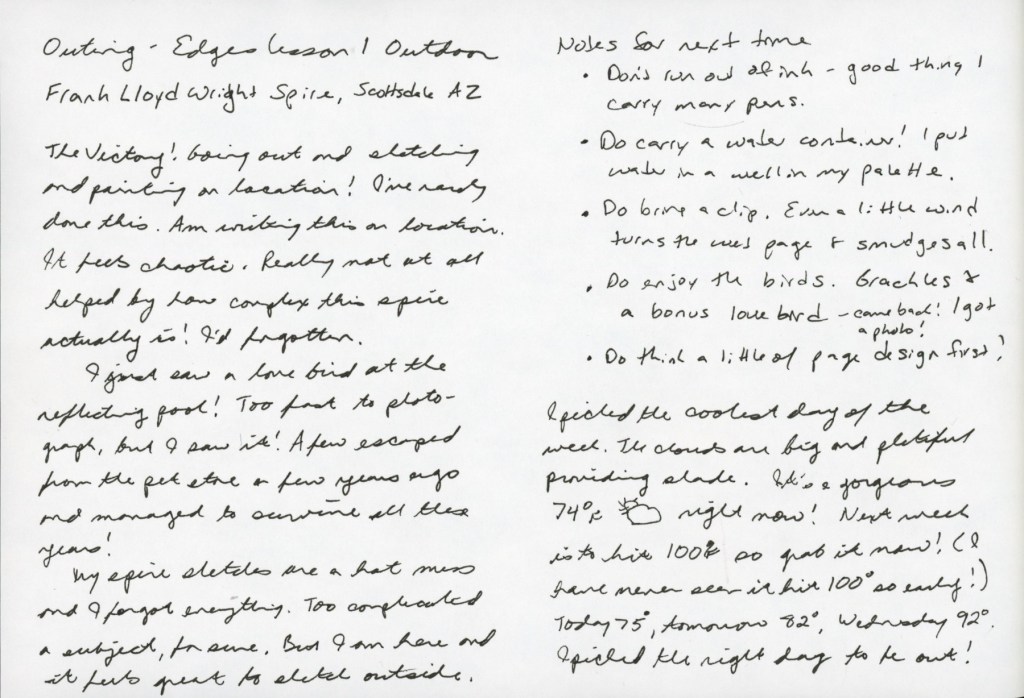
A handwritten journal page describing a sketching outing to the Frank Lloyd Wright Commemorative Park, with a list of notes for next time, from the Edges sketching course outdoor assignment.

There were fifteen grackles at the reflecting pool while I was sketching. And then — a lovebird. A few escaped from a local pet store years ago and a small flock has somehow survived in Scottsdale ever since. It came and went so fast I barely registered it. I thought I’d missed my chance.

It came back. I got a photo.
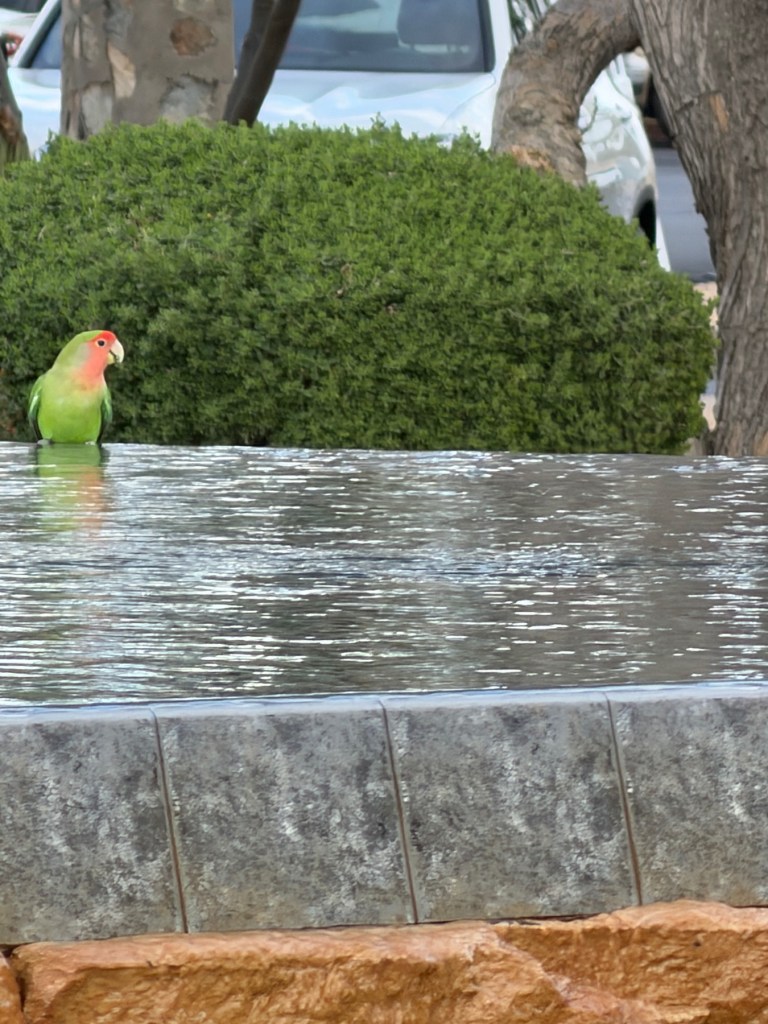
A lovebird perched on the edge of the reflecting pool at Frank Lloyd Wright Commemorative Park, Scottsdale, Arizona, one of a small flock of escaped pet store lovebirds that have survived in the wild locally.

I have a spot waiting on the page next to my journal notes for a proper lovebird sketch. That’s a whole other post.
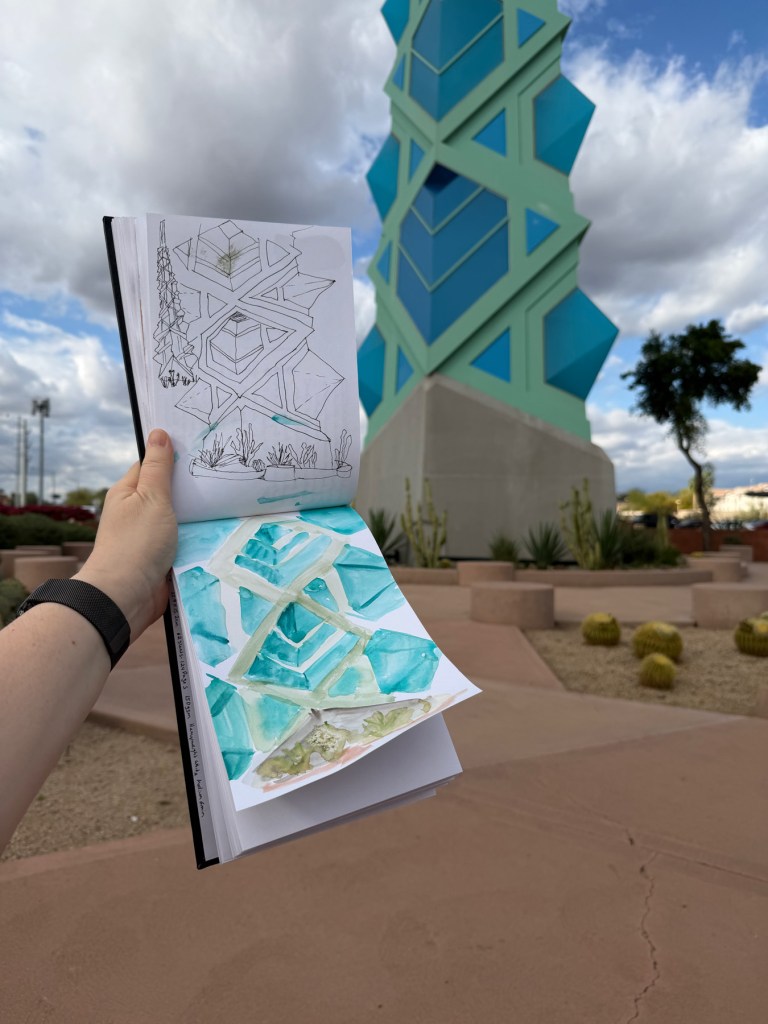
A sketchbook held open to show ink sketches and a direct watercolor painting of the Frank Lloyd Wright spire, with the actual spire visible in the background — Frank Lloyd Wright Commemorative Park, Scottsdale, Arizona.

My sketches are a mess. The watercolor is blobby, the angles on the spire are wrong, the wind made a disaster of my pages. And I sat there on location and wrote in my sketchbook that it felt chaotic, and also that it felt great.

Both are true. That’s the joy of sketching on location, isn’t it?

I will have many chances to improve my rate of on location sketching this year. Not only do I have the four outdoor assignments for the Edges course. but this year is rich with Sketching Now courses that are outdoor. The Travel Sketching course is running in May, and the Watercolor On Location will run this summer. In the heat. Oh dear. I’ll need some strategies for that!
Finally Taking Edges

Finally Taking Edges

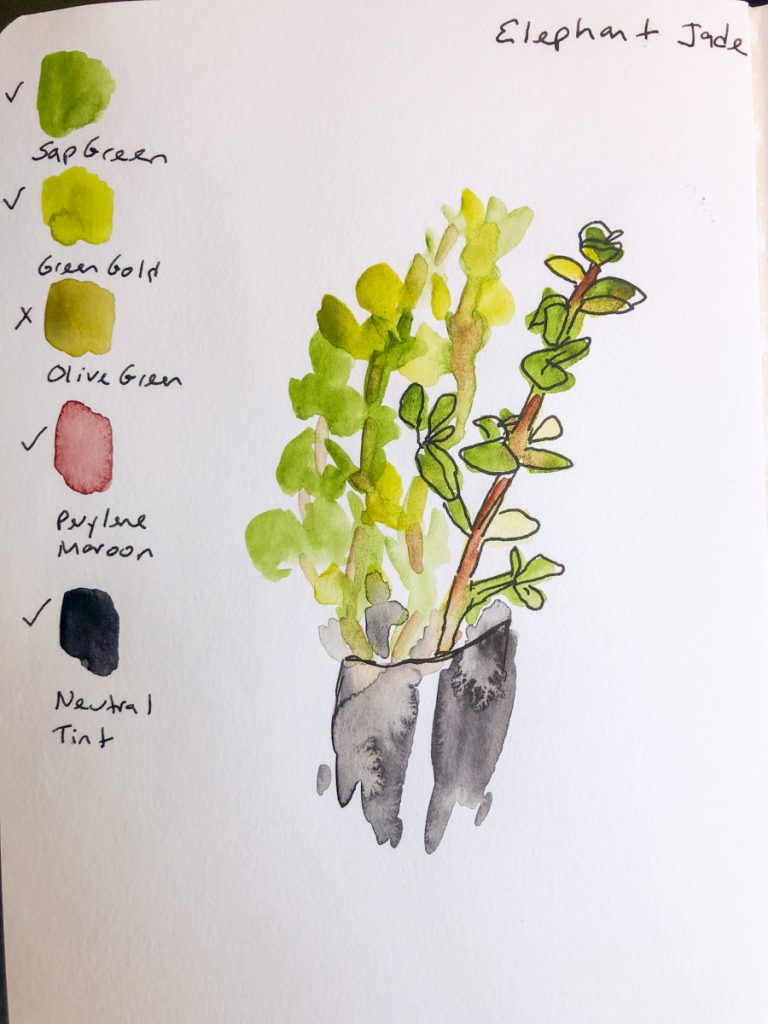
There’s a sketch in my files from 2019 — a small, loose drawing of a little elephant jade plant I’d just bought for the yard. I was proud of it at the time. It was my “current sketch” for Sketching Now Edges, Liz Steel’s intermediate drawing course, which I was just about to start.

I did not start it.

A loose direct watercolor sketch of a small elephant jade plant with ink line details, with color swatches alongside, drawn in 2019.

Life happened, as it does. The class ran again in 2021, which was not a good year for me. I kept thinking I’d wait for the next live run. And then I kept waiting. And waiting.

This year I decided I was done waiting.

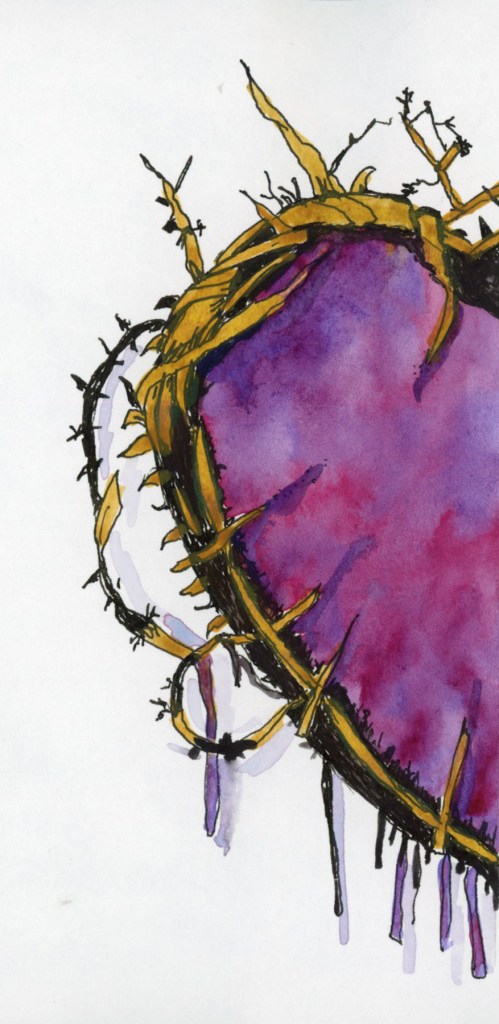
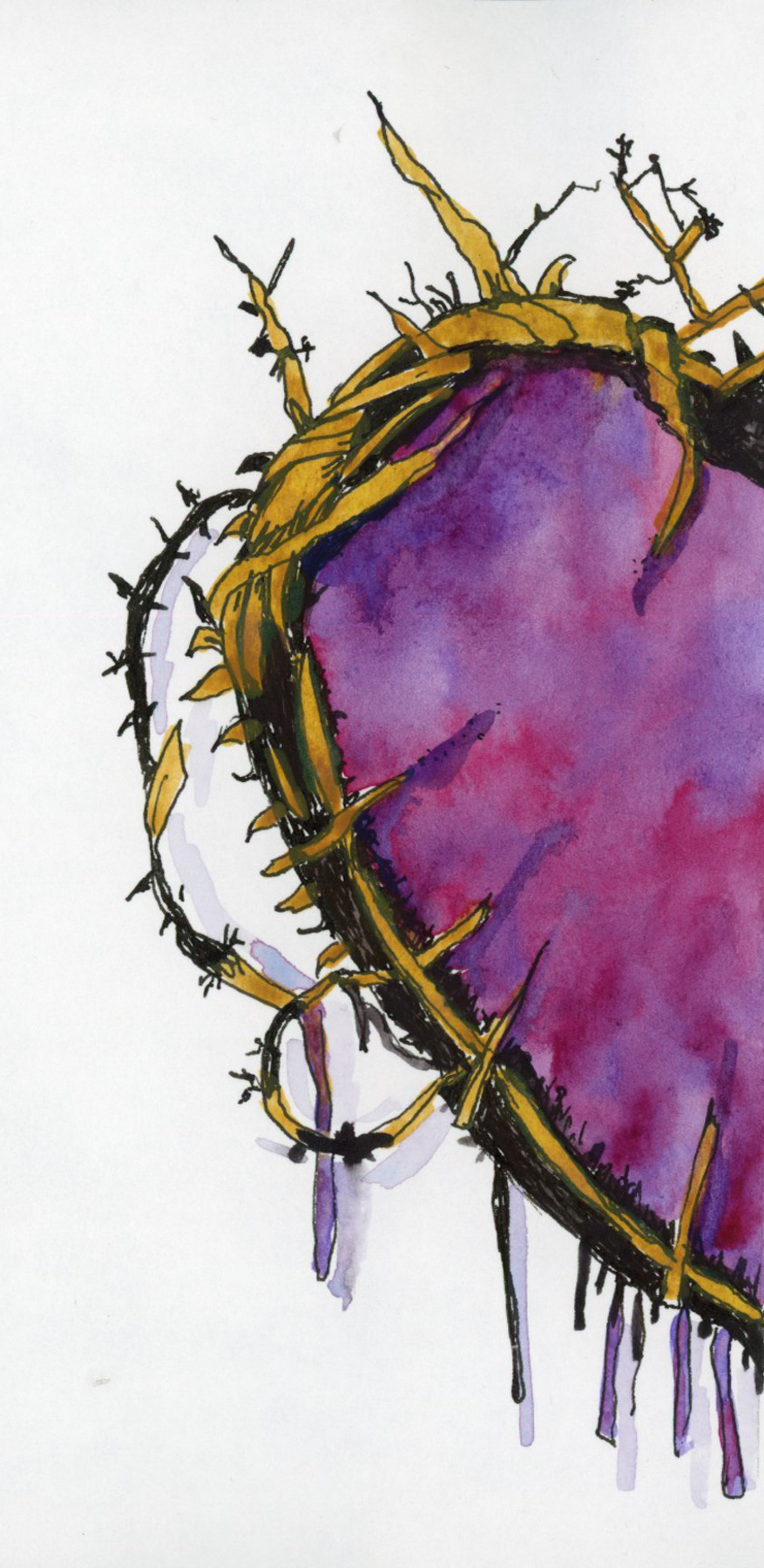
A sketch of half a heart painted in purple and pink with gold thorns twisting around the outer edge and piercing into the heart, drawn from the cover of Losers by Harley Laroux, January 2026.

This is my current sketch for 2026 — a book cover drawing I did in late January, a thorny heart with thorns digging into its edges. And honestly? Other than assignments for my watercolor course, it’s just about the only thing I’ve sketched all year. That’s not a confession I make proudly, but I’m making it anyway, because it’s exactly why taking this class right now matters.

My drawing skills feel weak to me. I want them better. I’m probably too hard on myself — but wanting more is also what keeps me moving forward.

So here we are. Finally taking Edges.

What is Edges?

Sketching Now Edges is Liz Steel’s intermediate drawing course, and it’s built around one deceptively simple idea — that understanding edges is the key to convincing, expressive drawing. The four lessons break it down:

  • Lesson One: Edges as changes in plane versus changes in color
  • Lesson Two: Hard versus soft edges
  • Lesson Three: Prioritizing edges in line
  • Lesson Four: Prioritizing edges in tone

If you’ve spent any time around Liz’s work or teaching you’ll have heard her talk about lost edges — edges that disappear, that suggest rather than define. That concept lives especially in Lesson Four, and it’s one of the things I’m most looking forward to exploring.

The class is running as a group run right now rather than a full live session, but Liz is doing two bonus livestreams, which is a lovely addition. I’ve taken all of her Sketching Now classes multiple times — except this one. That changes now.

It’s going to be a good class. Even if it took me seven years to start it.