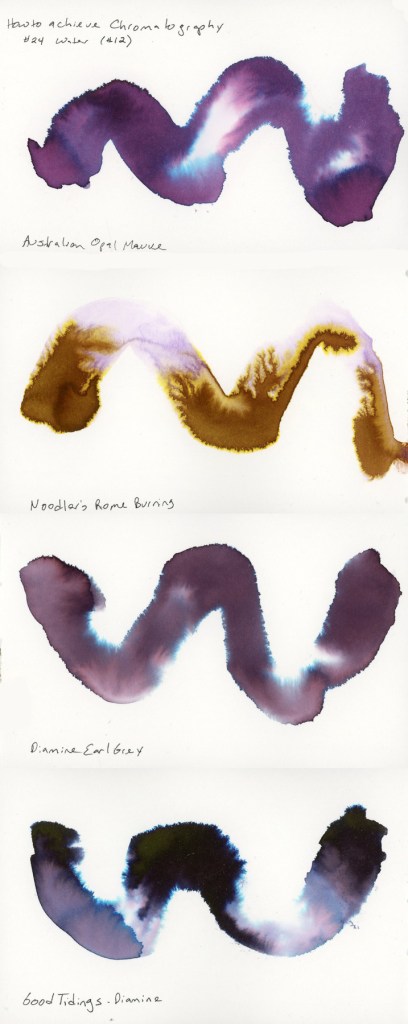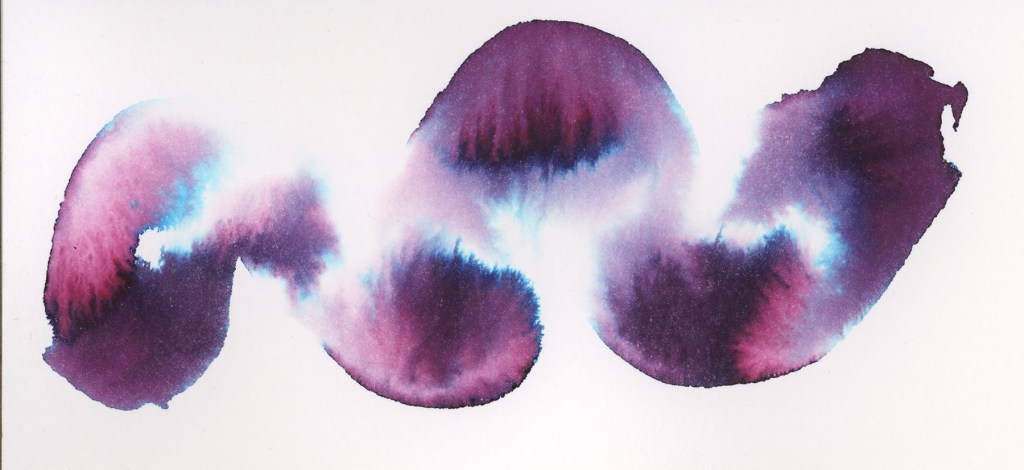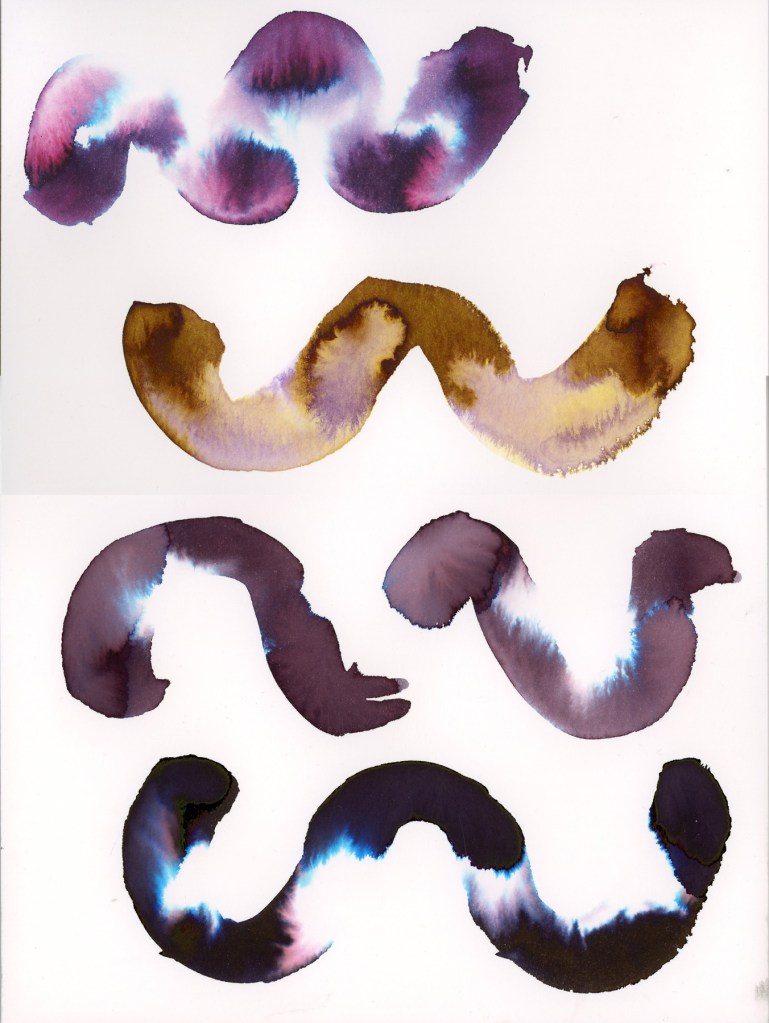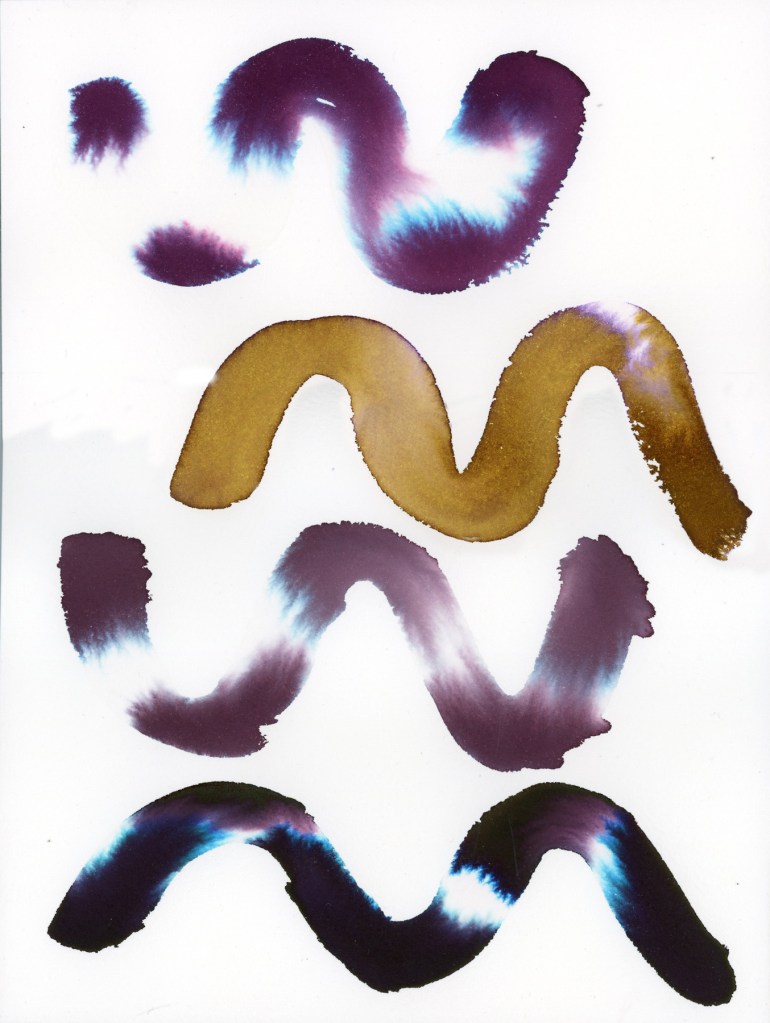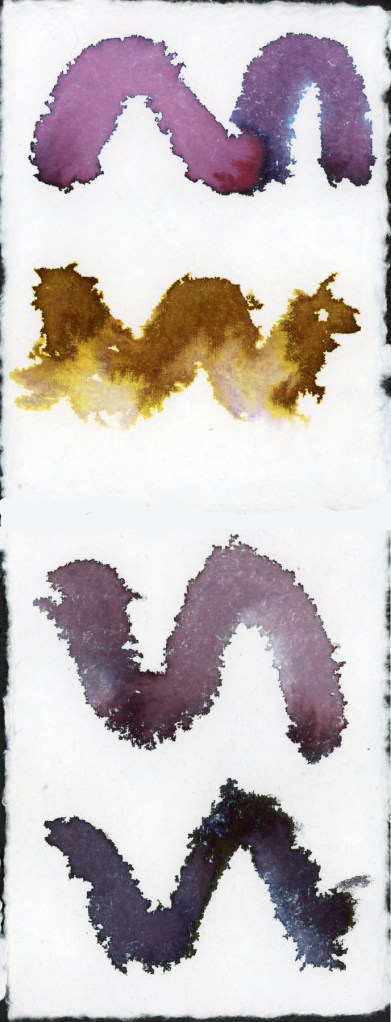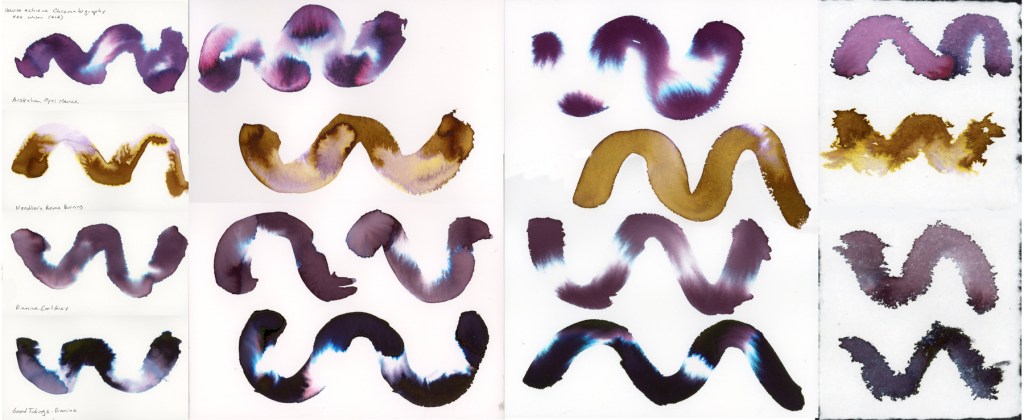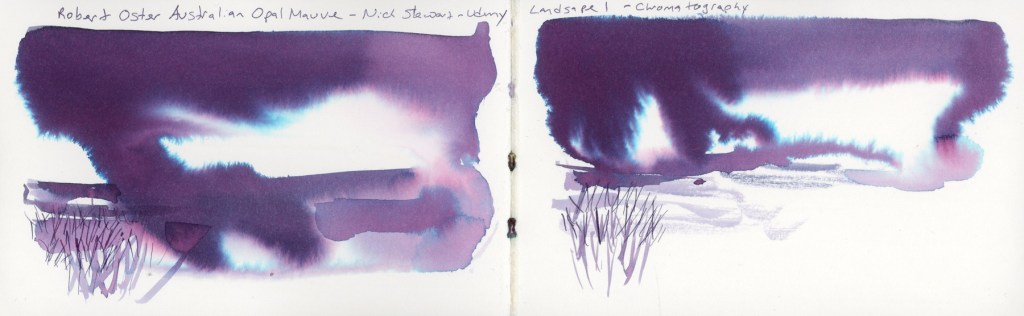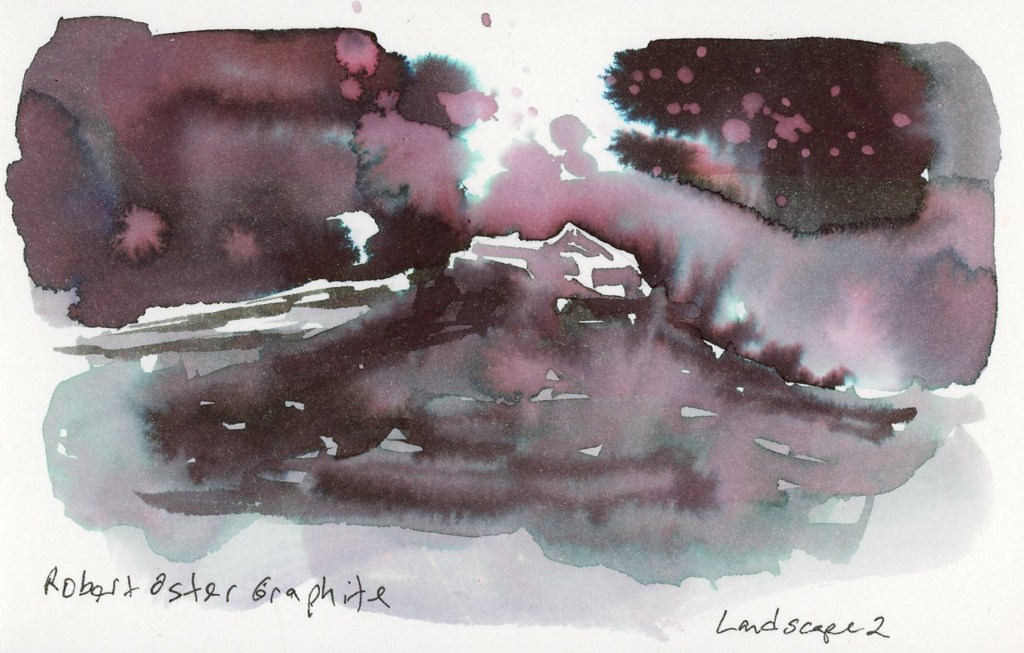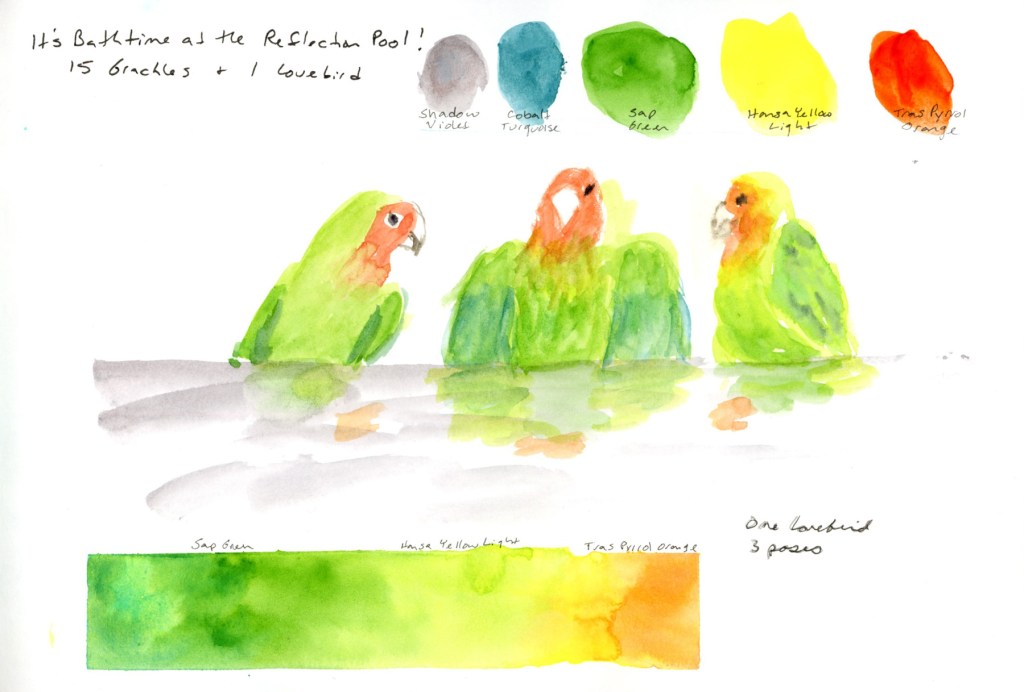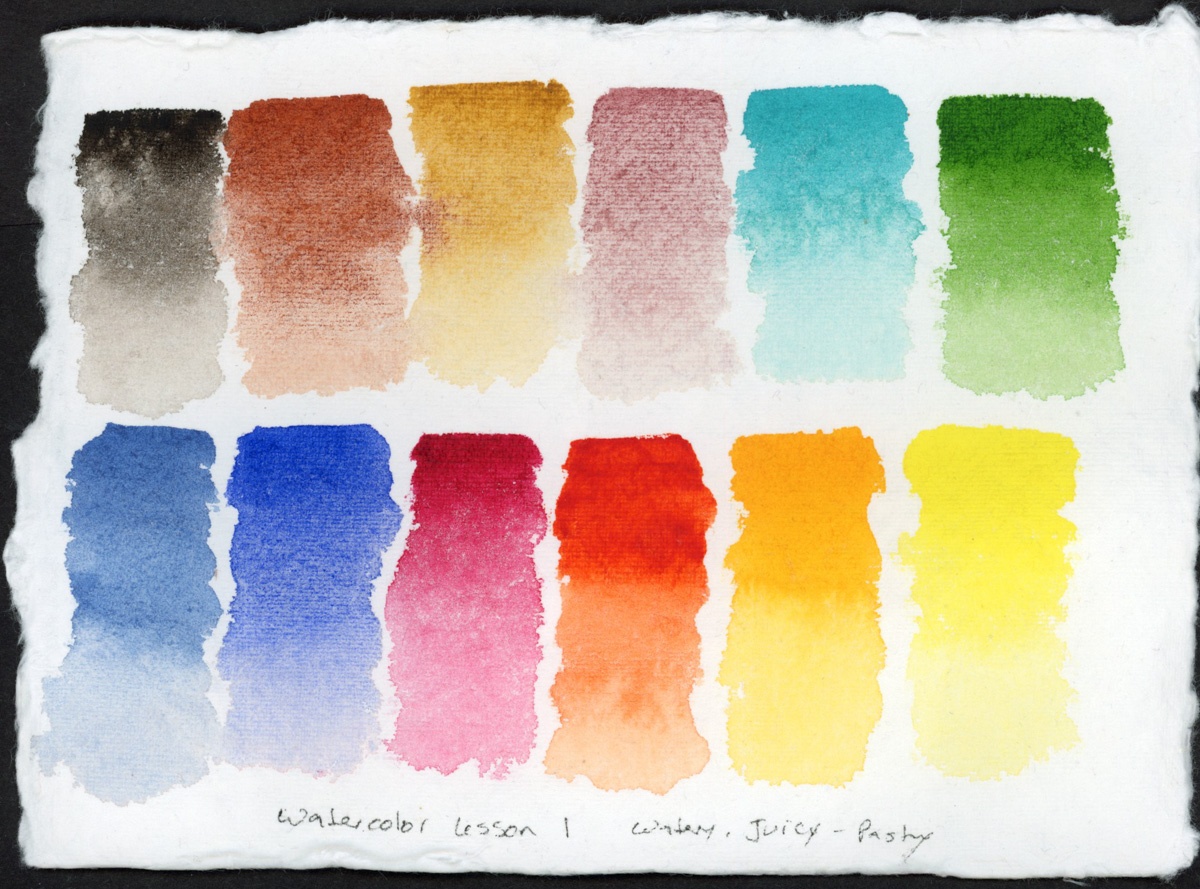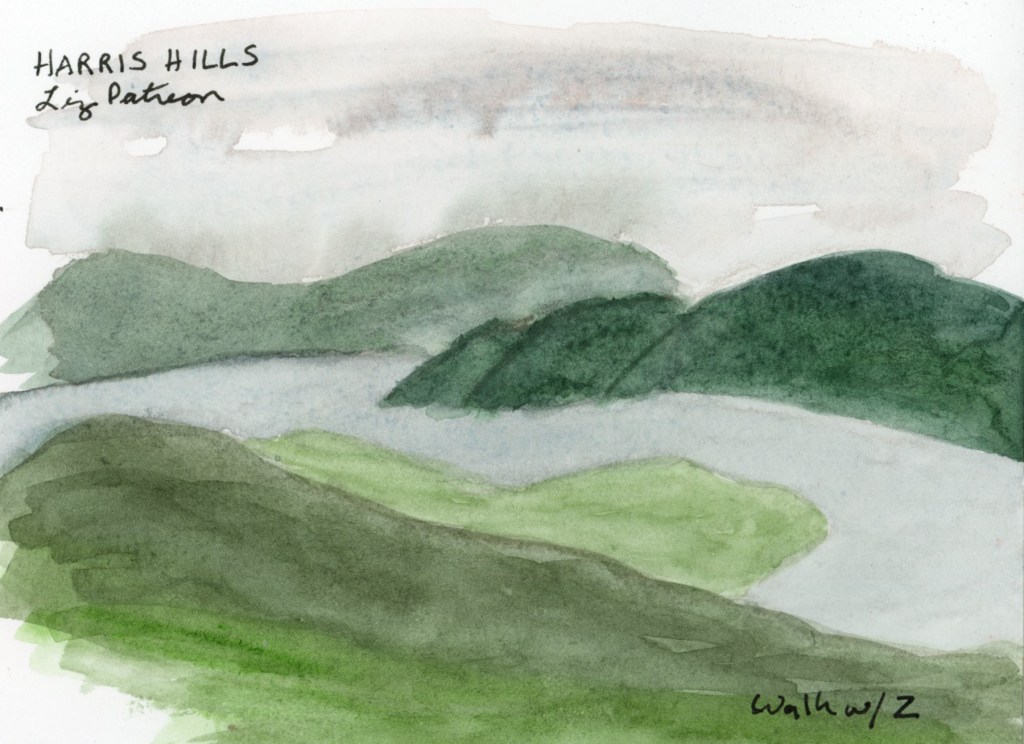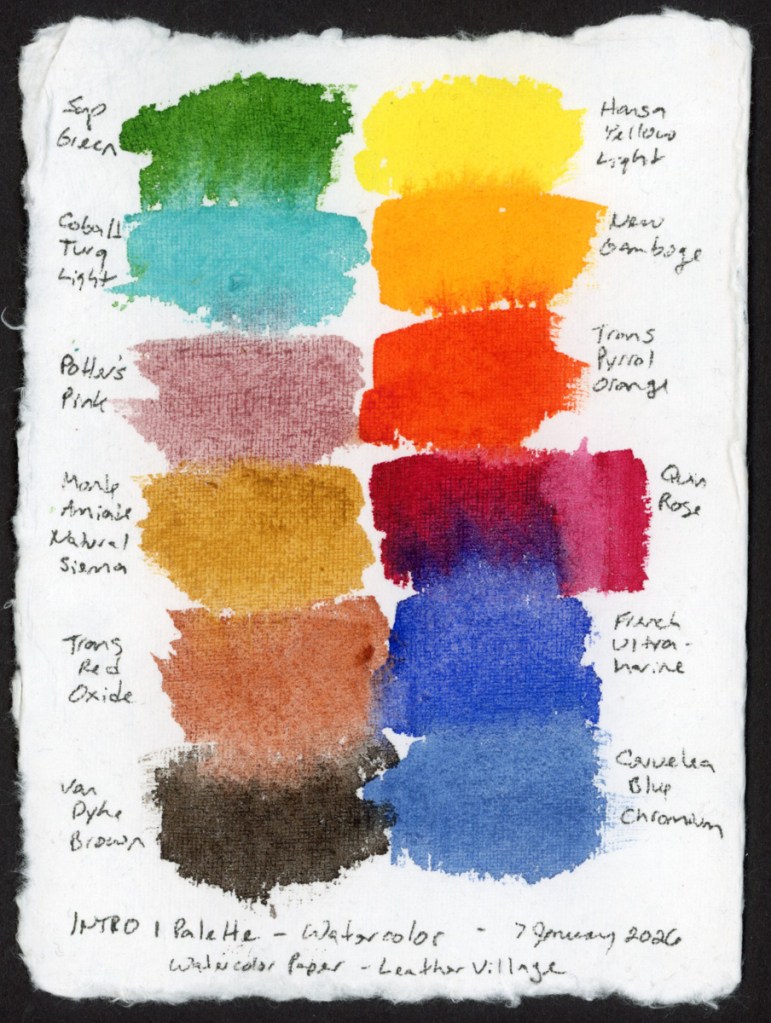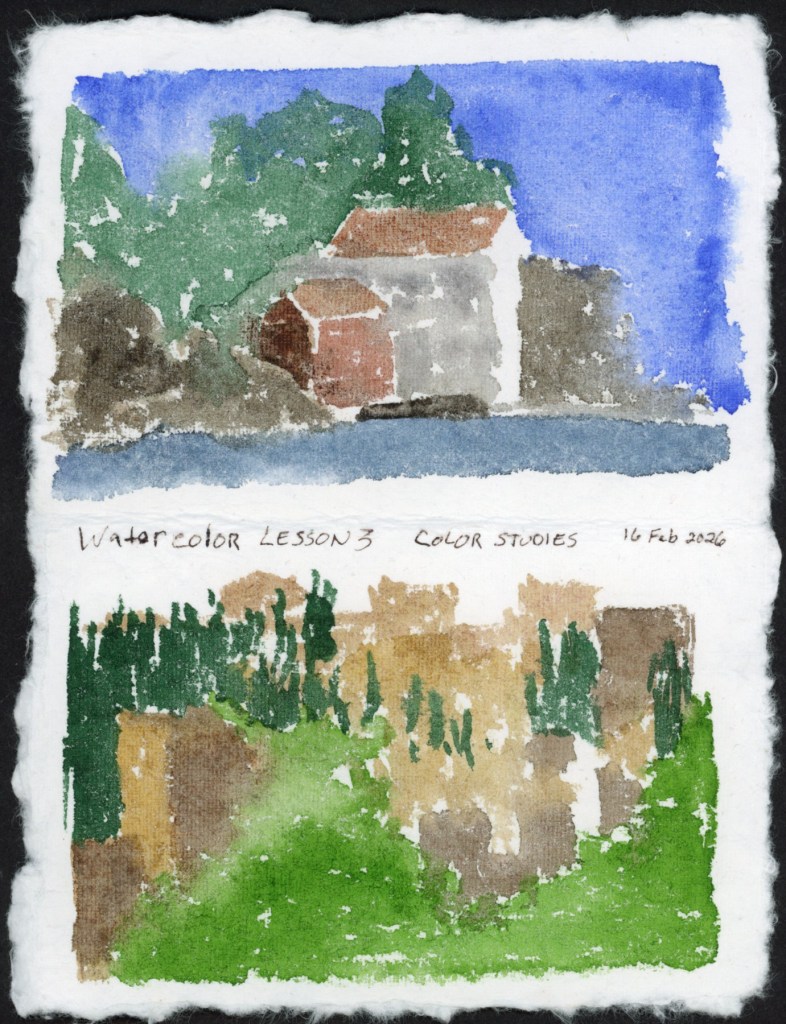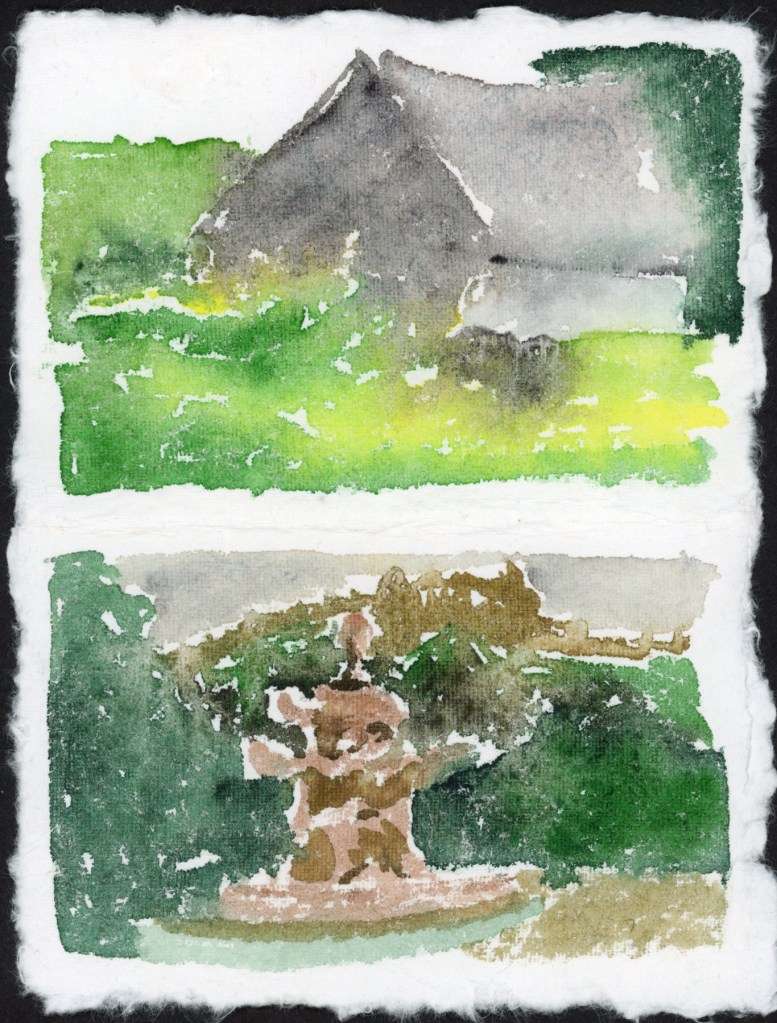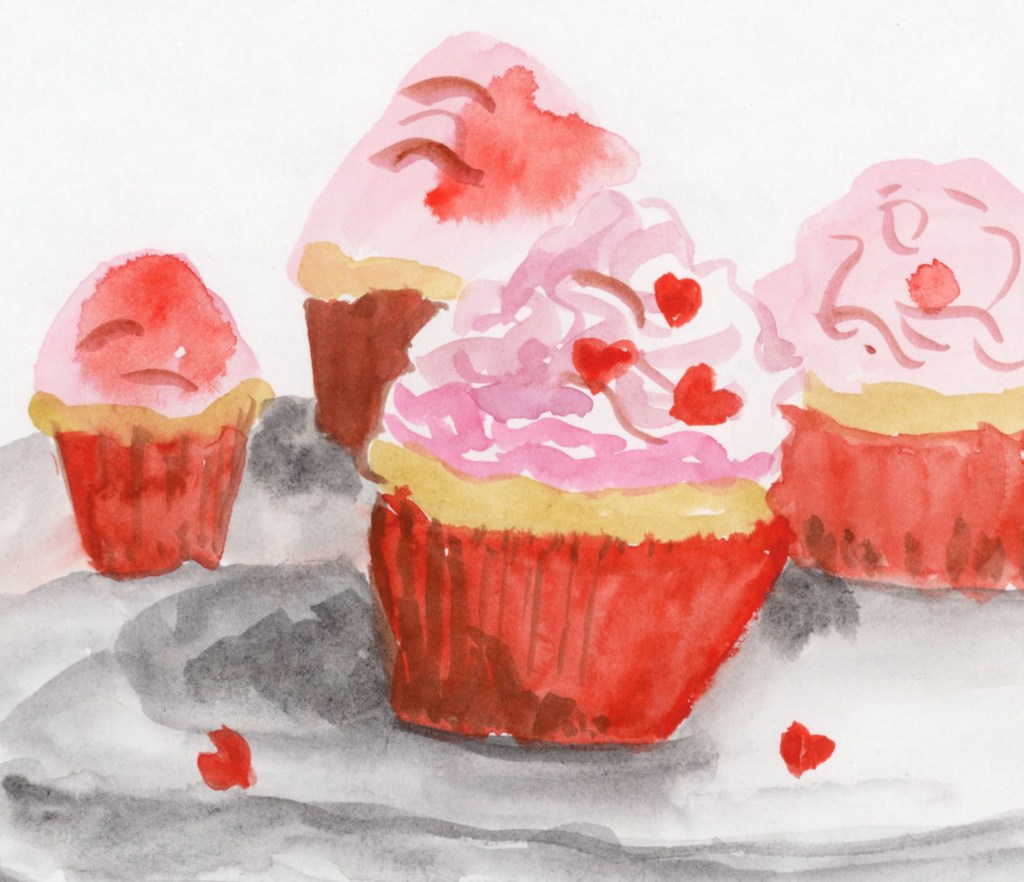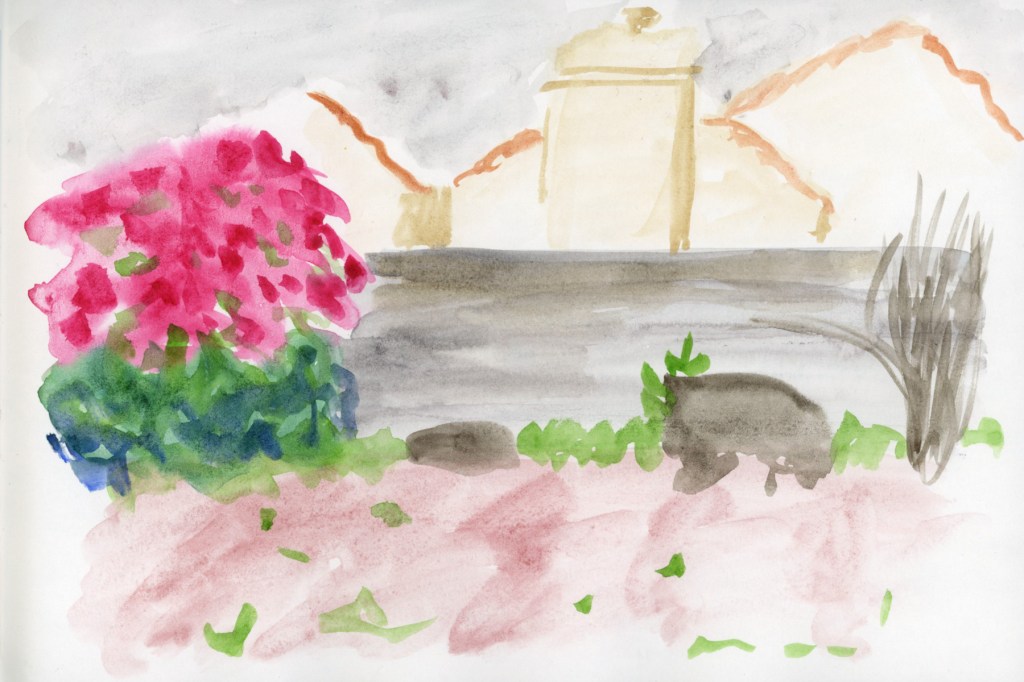
This is my 6th run through this course! Sketching Now Watercolor was my very first Sketching Now course, back in 2018. I also did it in 2021, 2022, 2023, and 2024
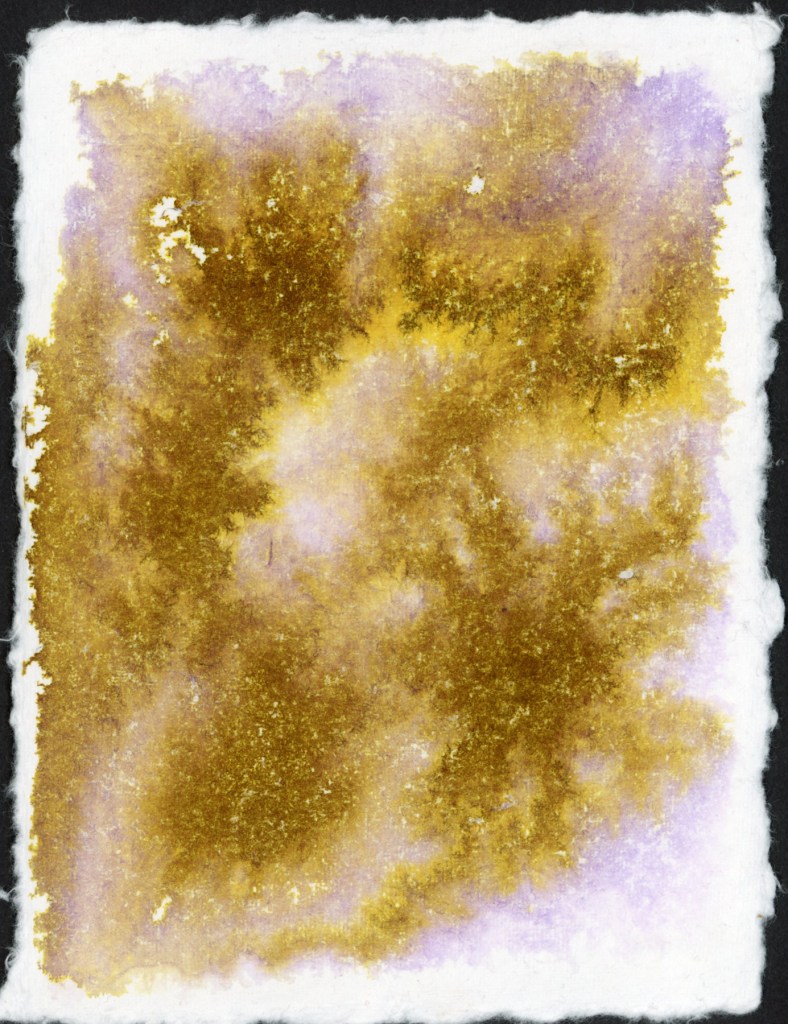
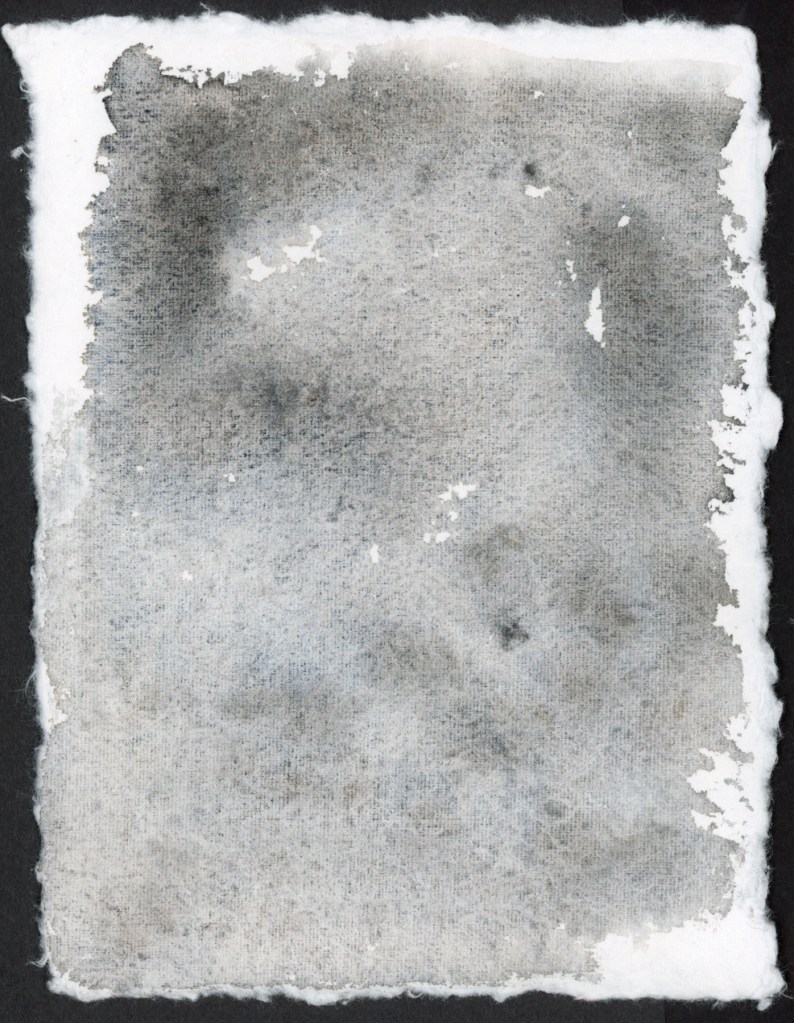
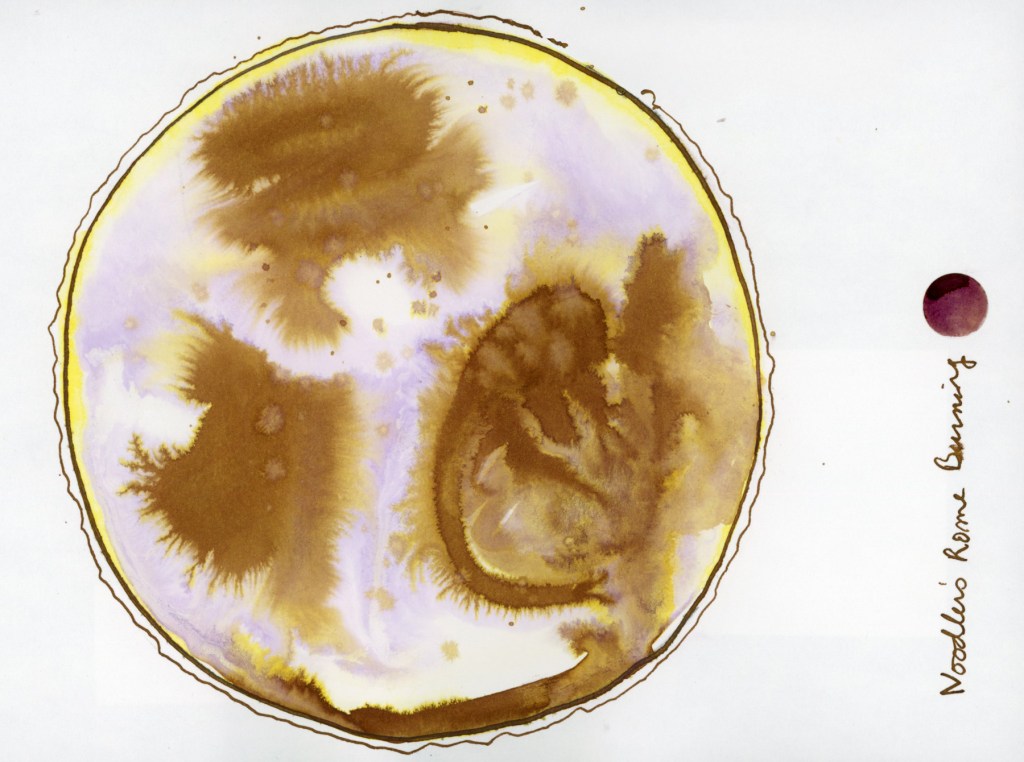
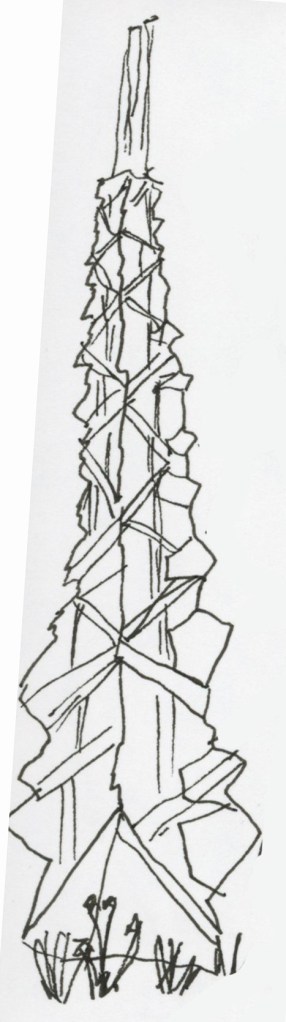
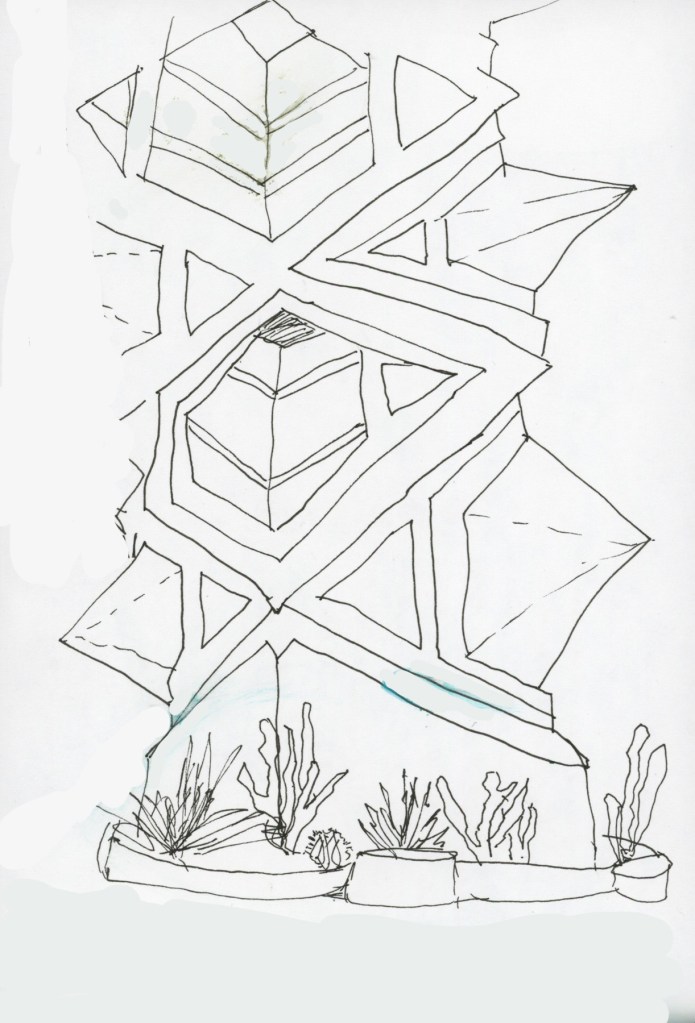
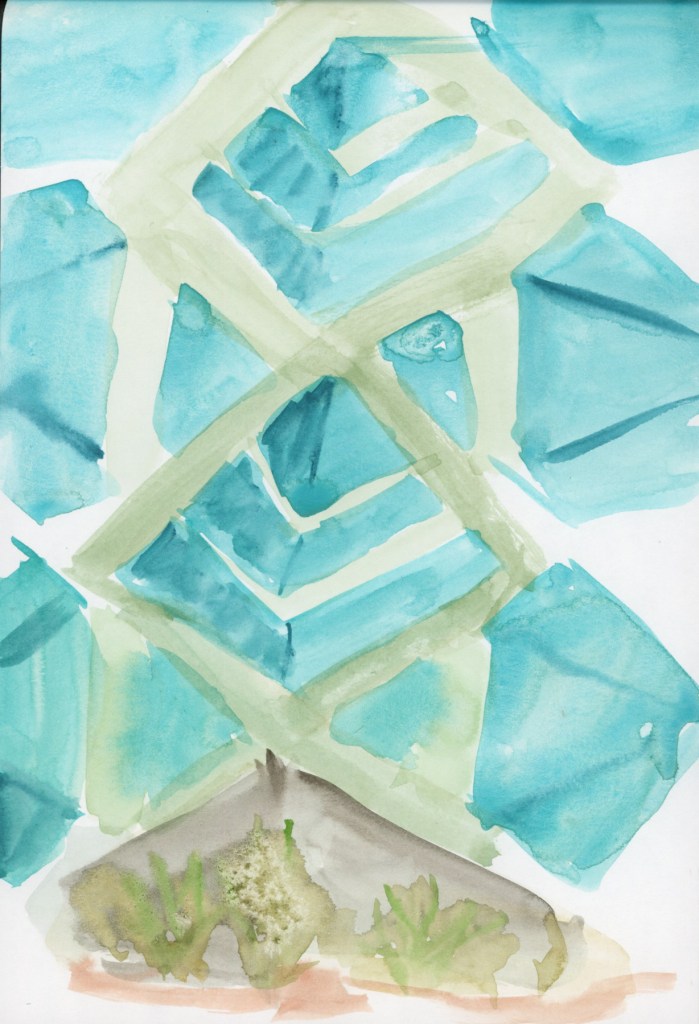
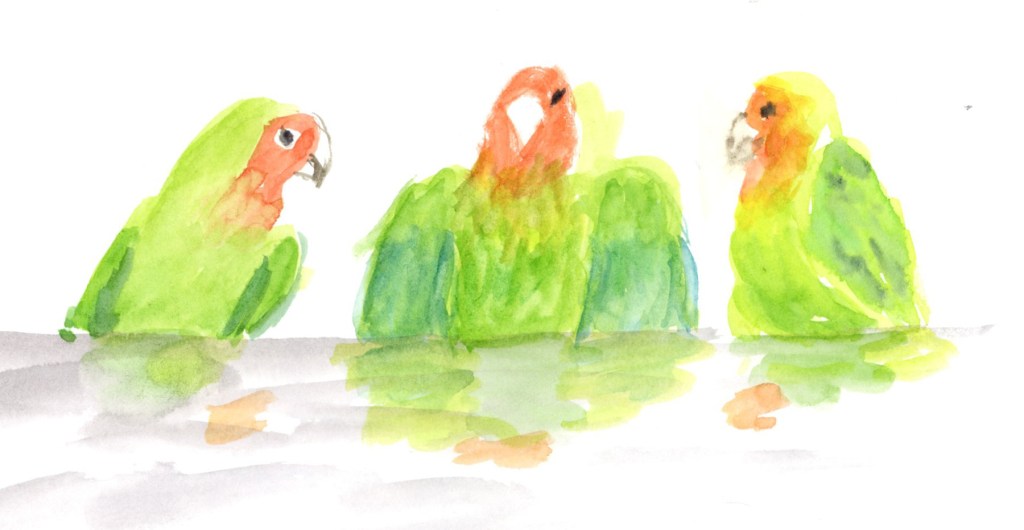
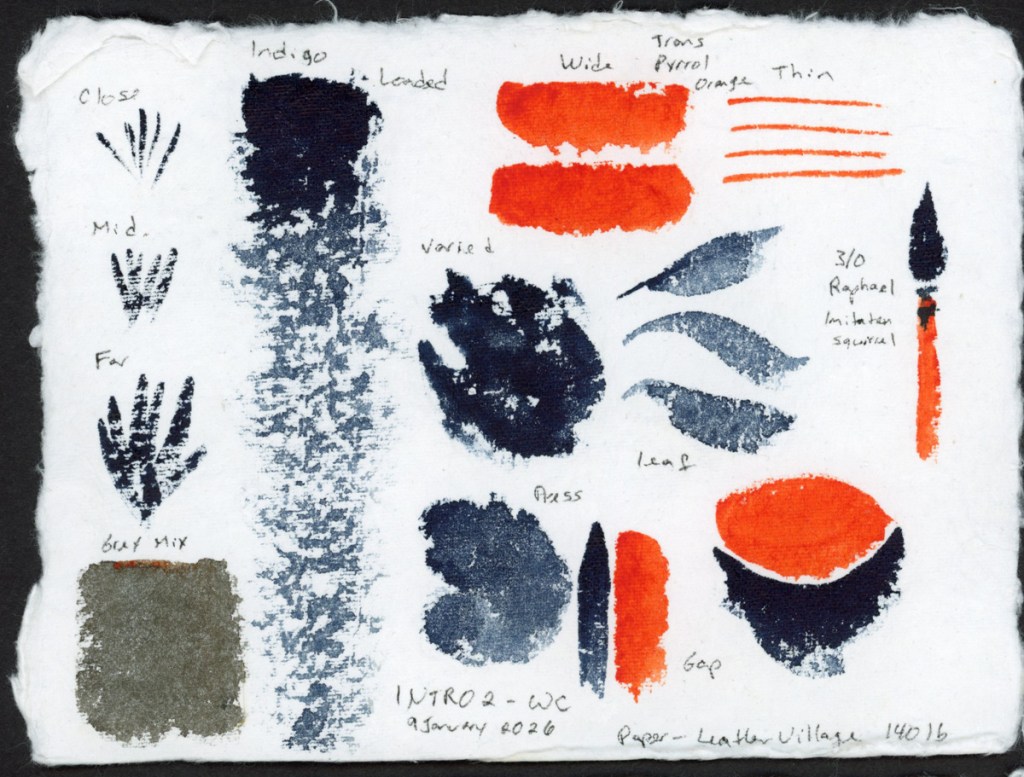
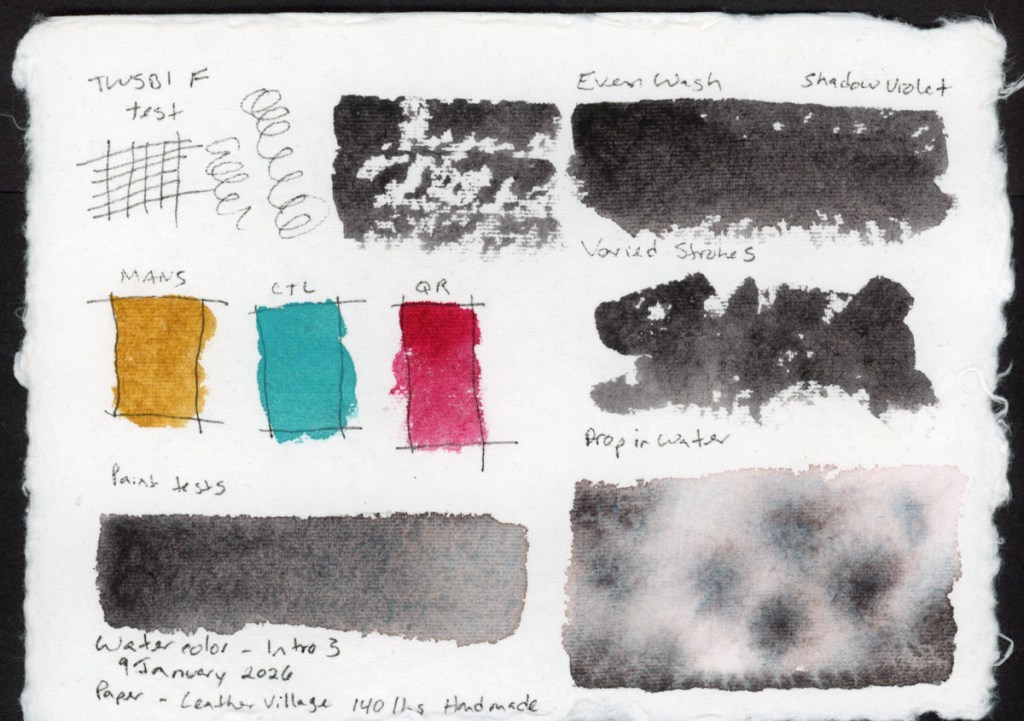
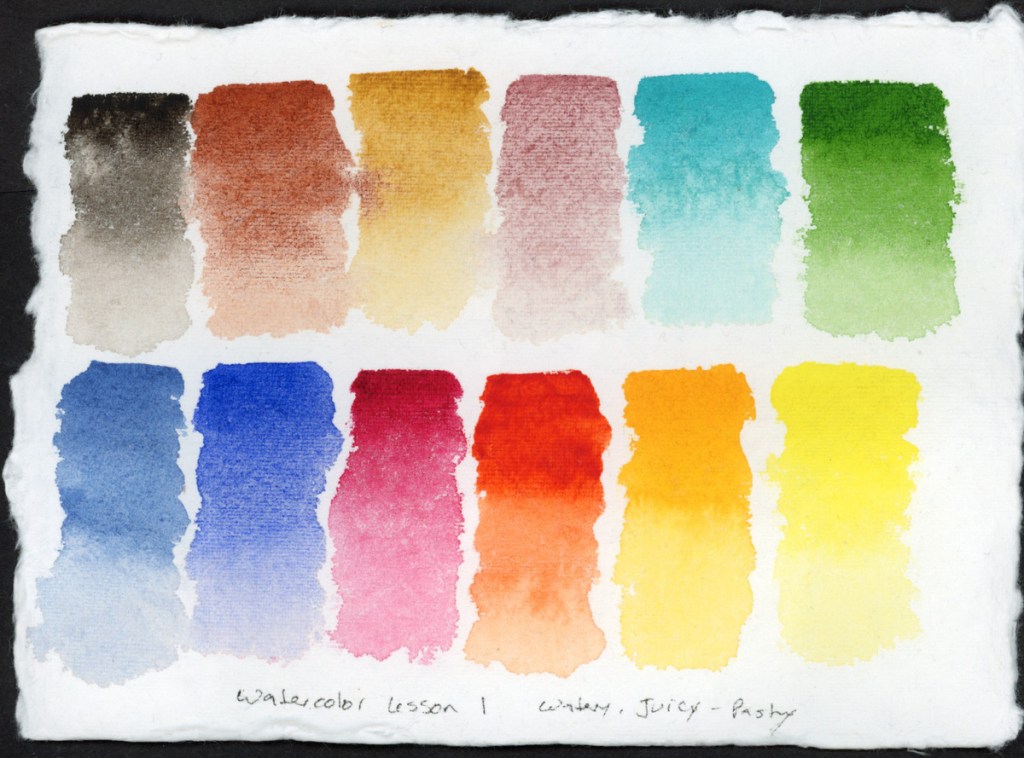
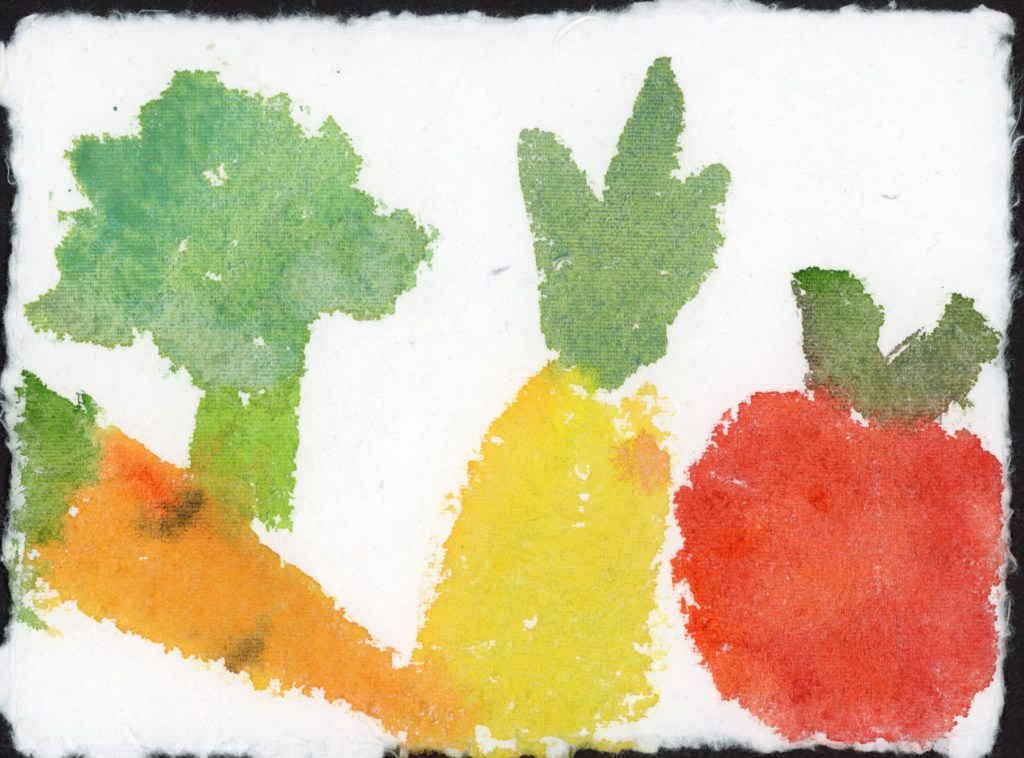
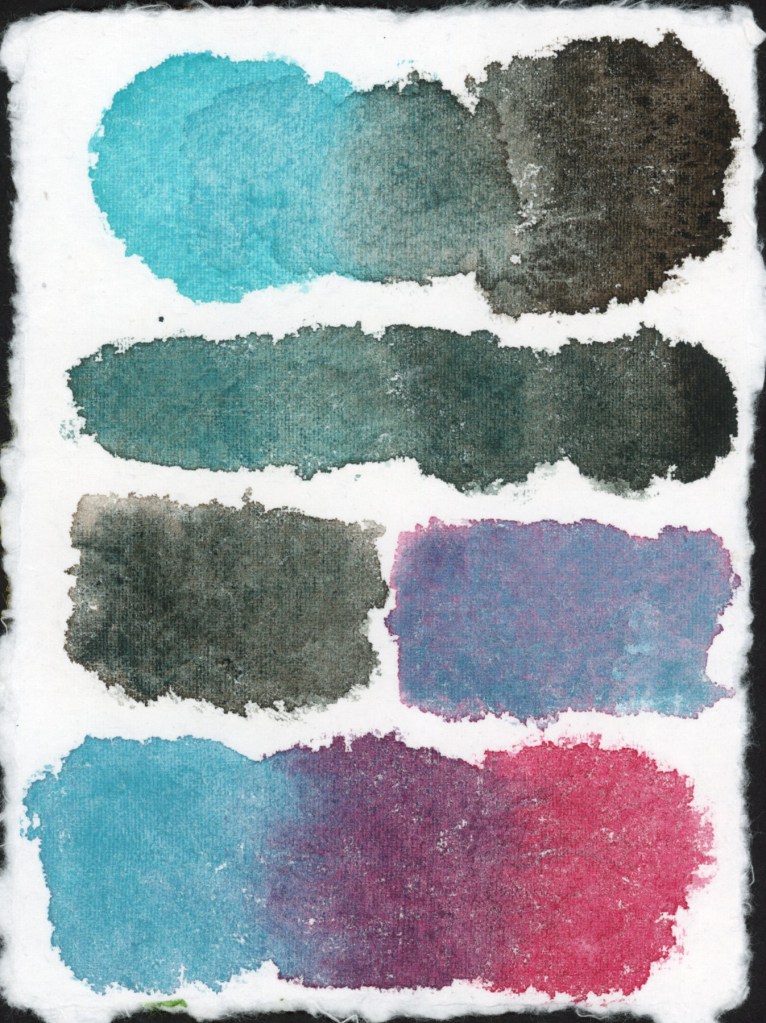
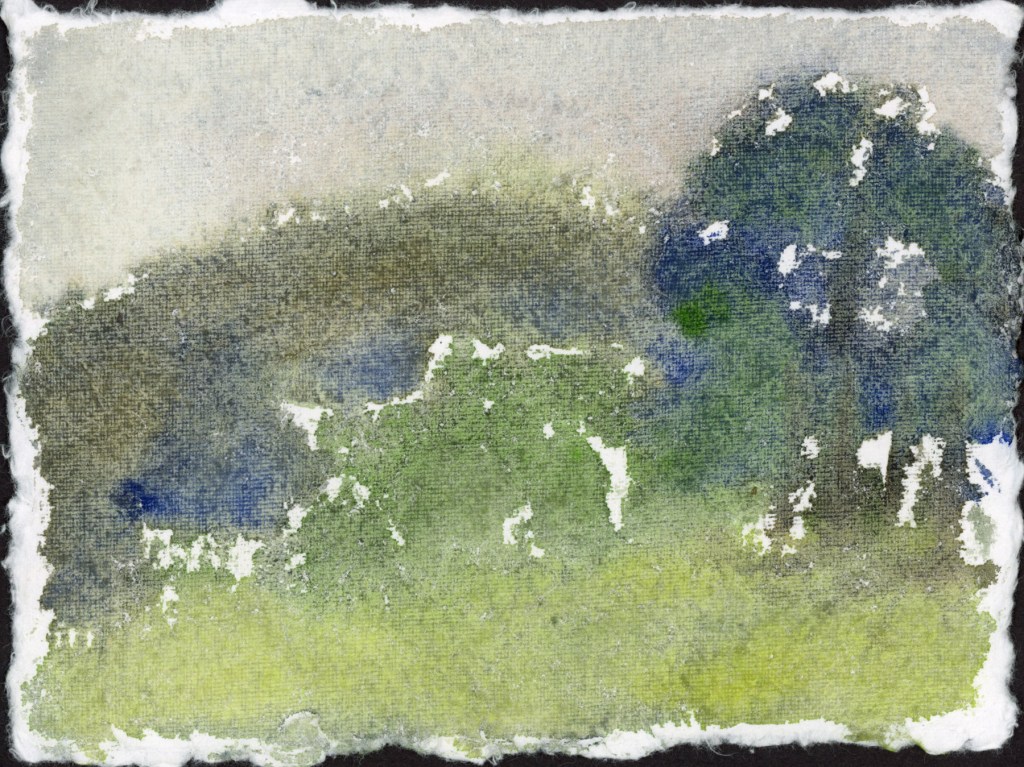
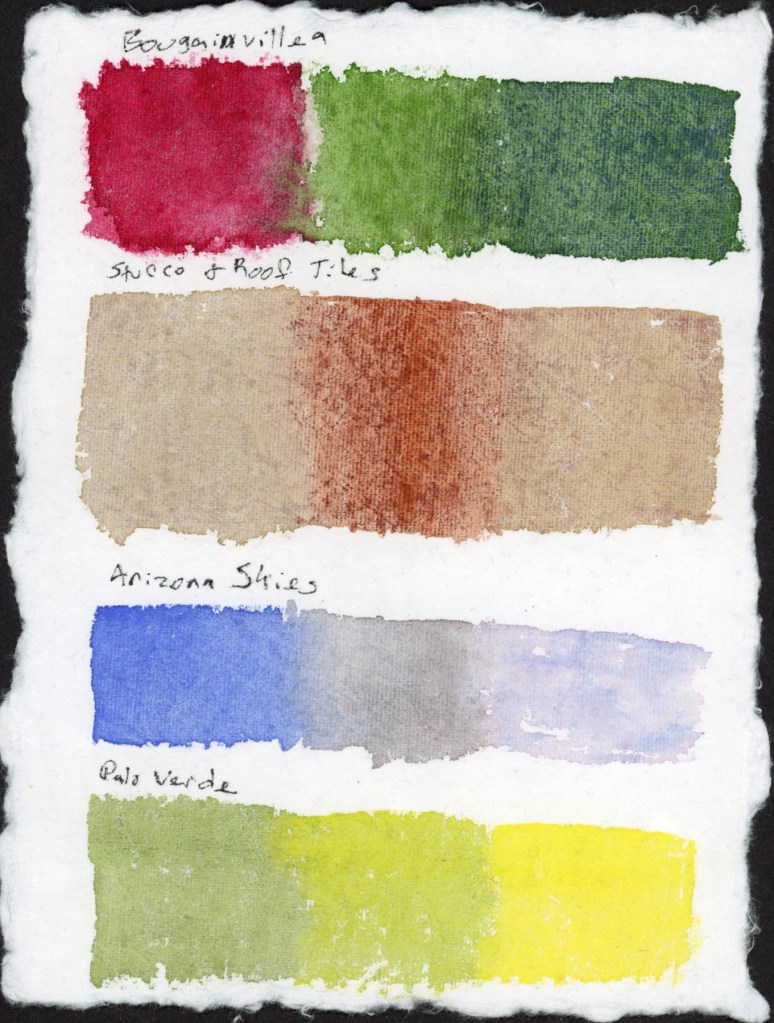
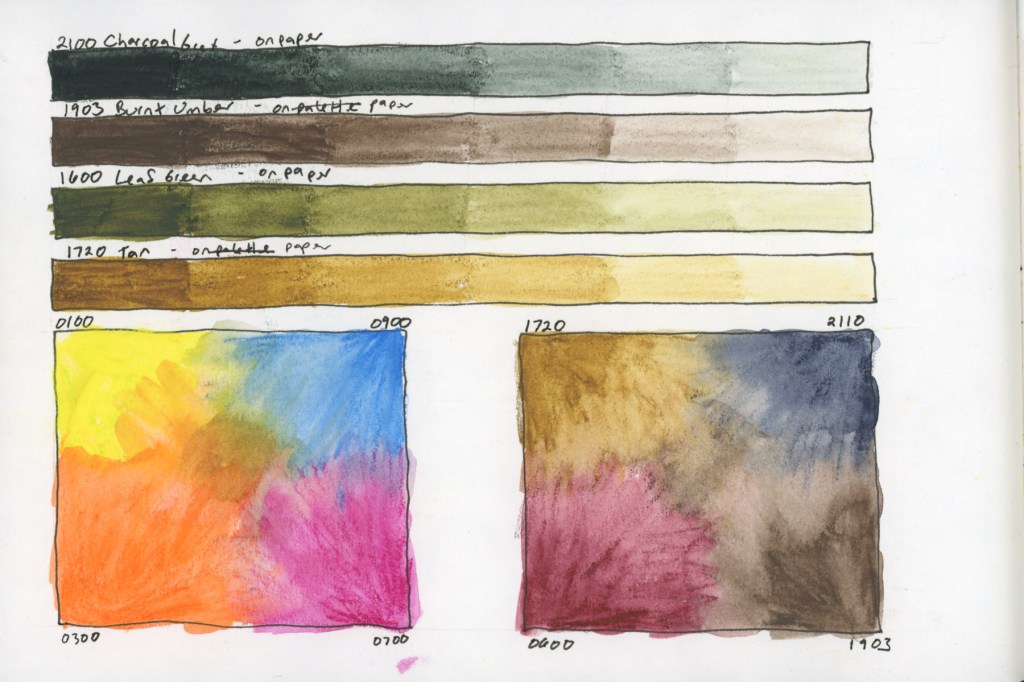
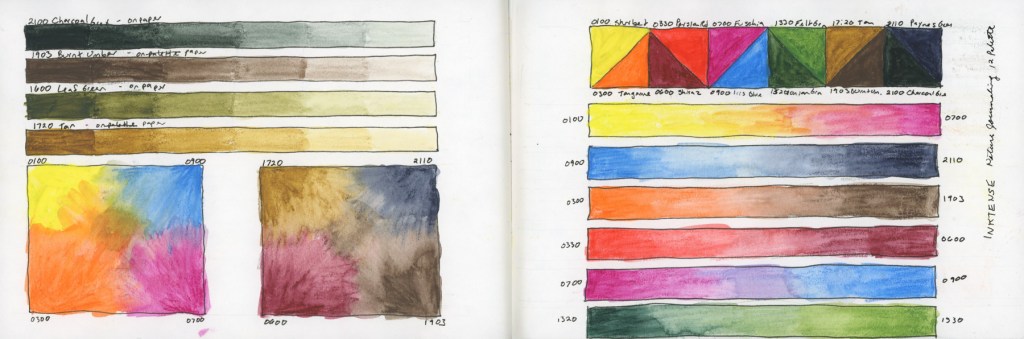
Here are all the exercises I did this year for it. I used a handmade paper for some of the assignments that was so very different to work with. Colors are luminous on it, and it is highly absorbent. It takes forever to dry, and so colors really merge and blend. Detail is lost and I was too impatient to go back and try to add more details after it had dried, so my work has a very soft, and blended look. It has taught me a lot about the paper, and how much of impact paper really does have on watercolor. With each new practice I’m getting better and better at it.
My biggest takeaway this time through was the effect of paper on how watercolor performs. I think if I use that handmade paper my sketches will need some lines to bring out the subjects, but for class, I enjoyed experimenting with direct watercolor, no lines.
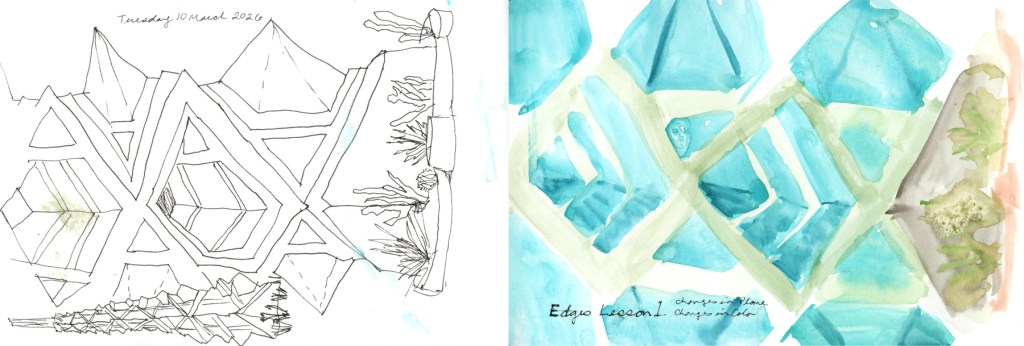
Next up with be Edges and I’ve never done that course. I think I did the first half of lesson one the last time it was run live, in 2021. I’m really looking forward to shifting my focus from watercolor, to line and practicing my drawing.
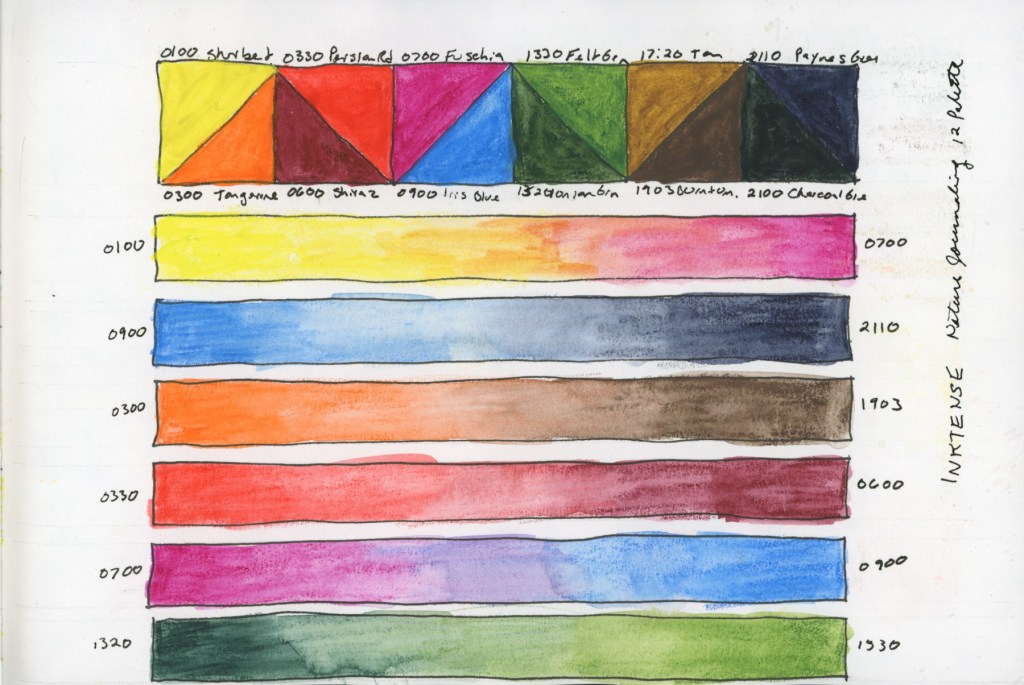
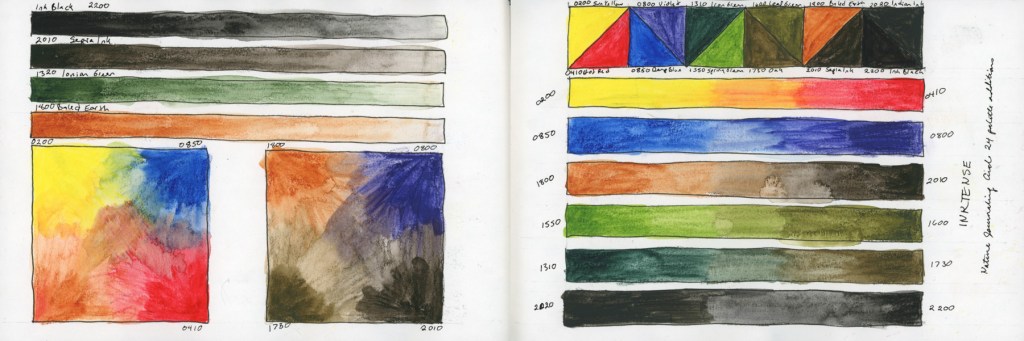
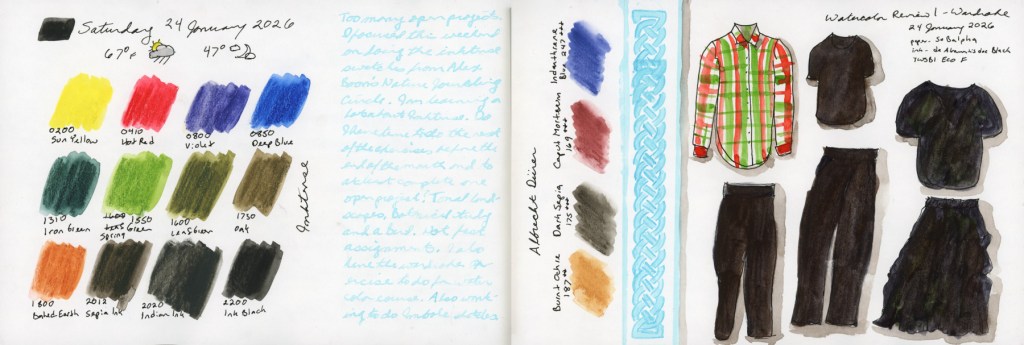
January is moving by so fast! I did work on Alex Boon’s Inktense course in his Nature Journaling Circle. He offers a recommended set of 12, and an optional 12 he recommends to make it 24 set.
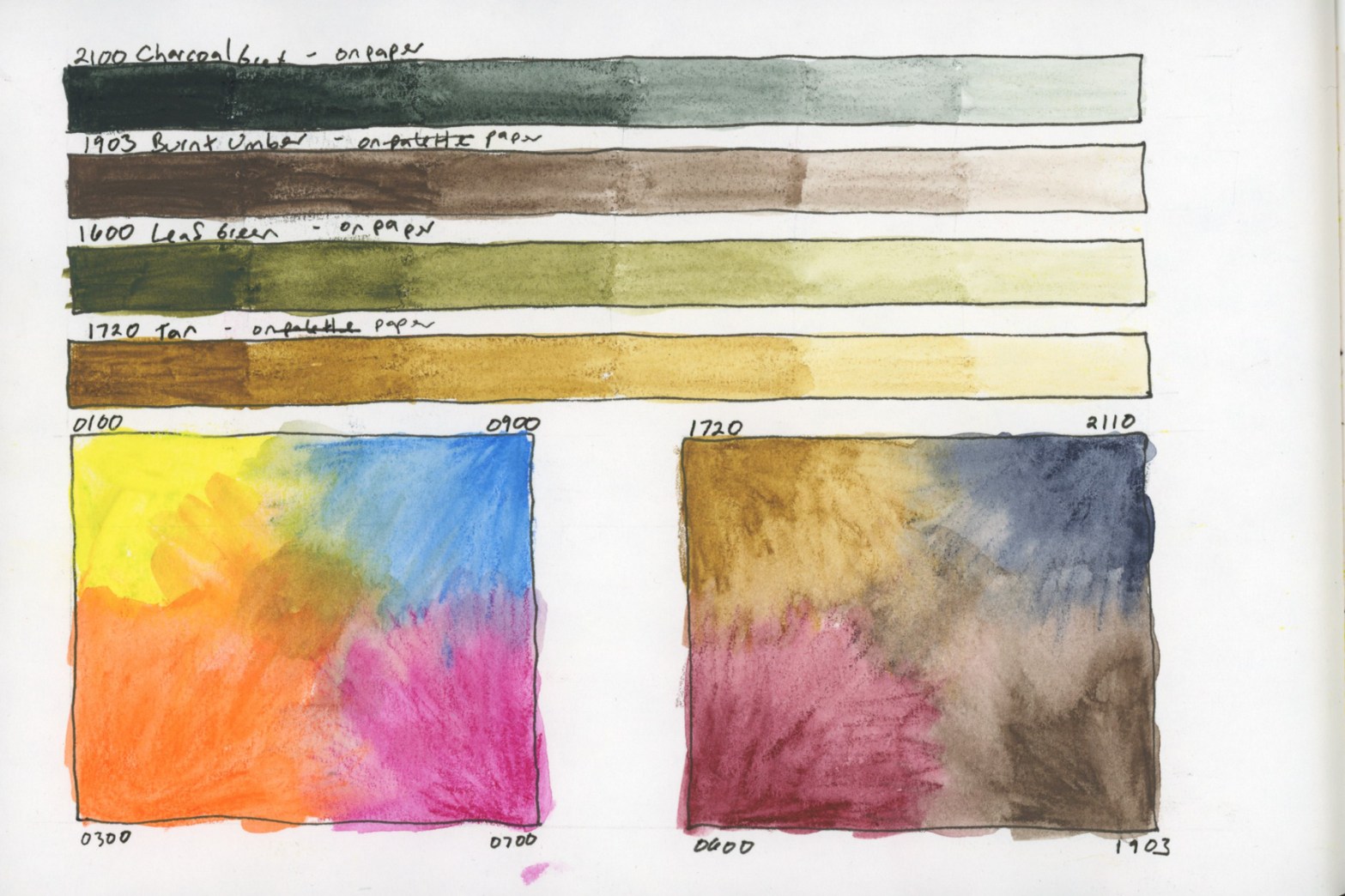
These swatching exercises were extremely helpful in learning how to work with these, and how they color mix.
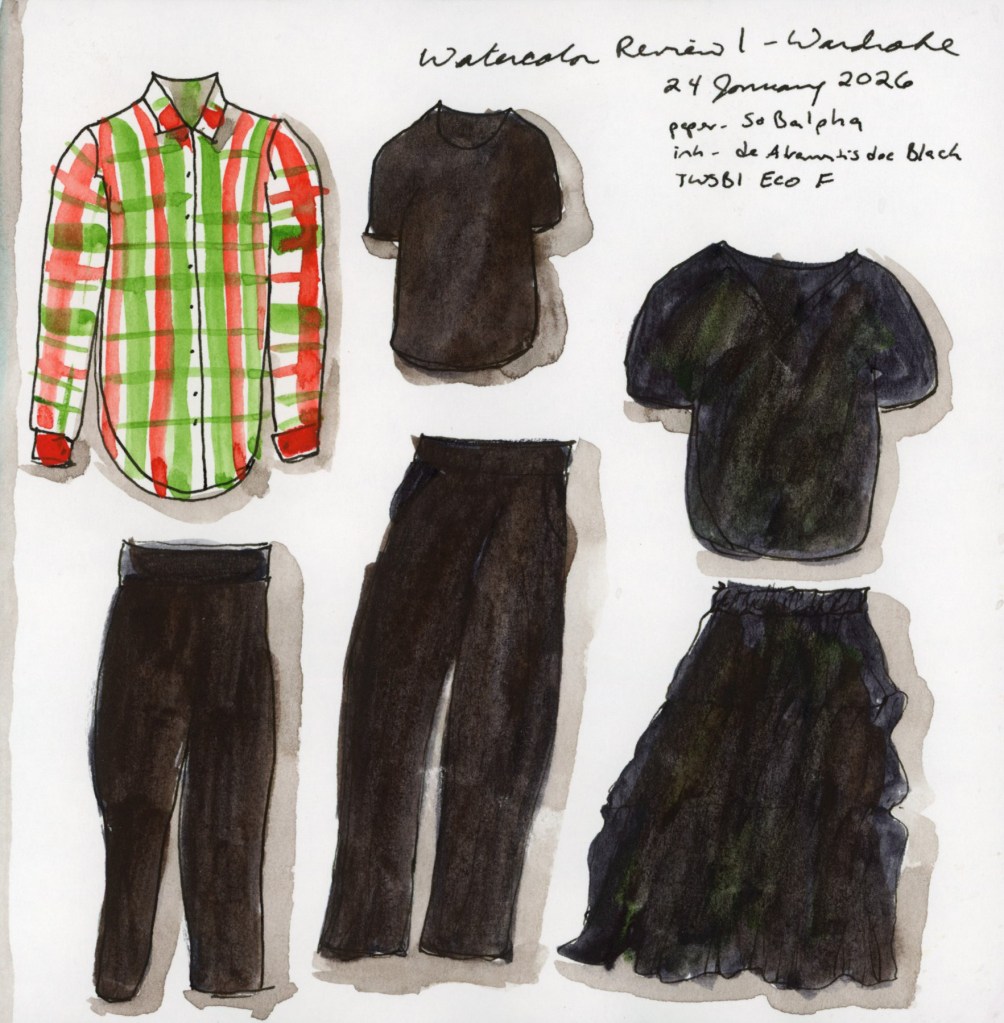
For the watercolor course, I did one of my favorite exercises, the wardrobe. My wardrobe is mostly black, but for this winter I did add this festive plaid shirt that was so fun to paint!
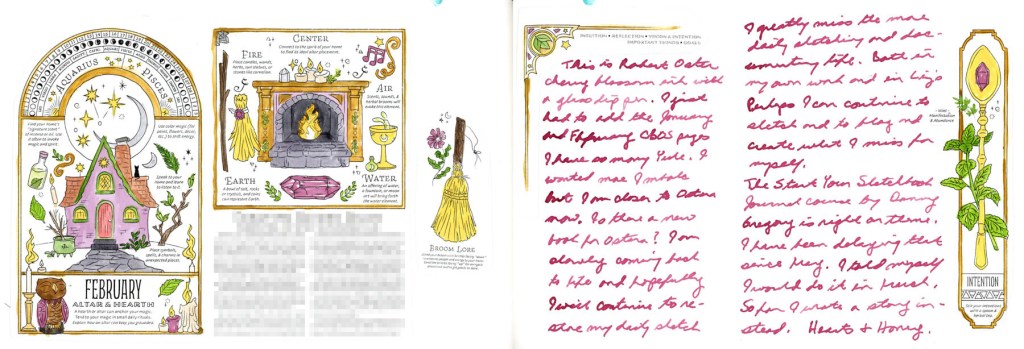
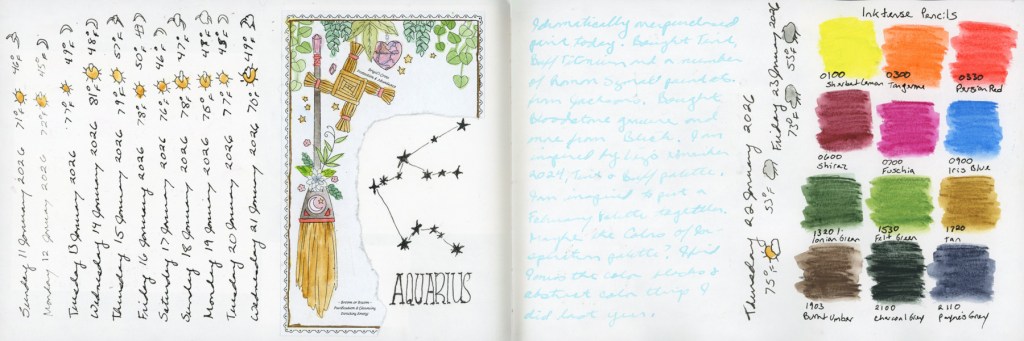
This week I finished Volume 19 of my sketchbook, and started Volume 20. I wrote a bit on these pages in the past few entries.
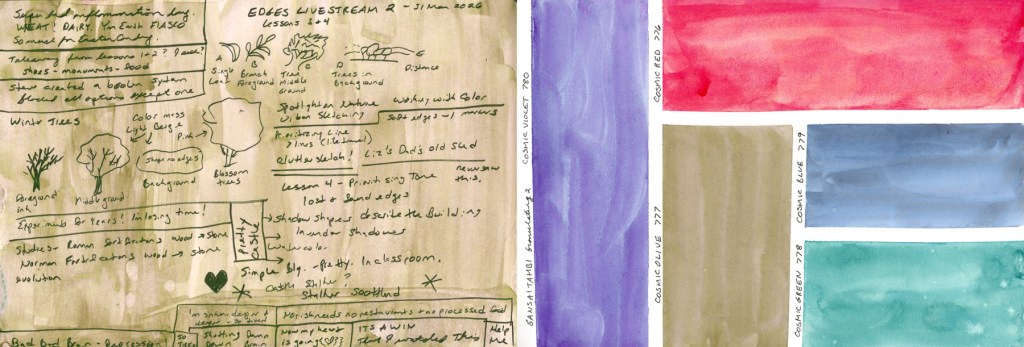
A lot of color explorations in these pages this week. I did not have much time to sketch, what with the leaking pipes in the kitchen (now repaired!) I find that color charts are great for soothing a stressed out brain!
Sketching ruins, and foreshortening, and an exploration into creating abstracts, which I’ve already written about, was very fun.
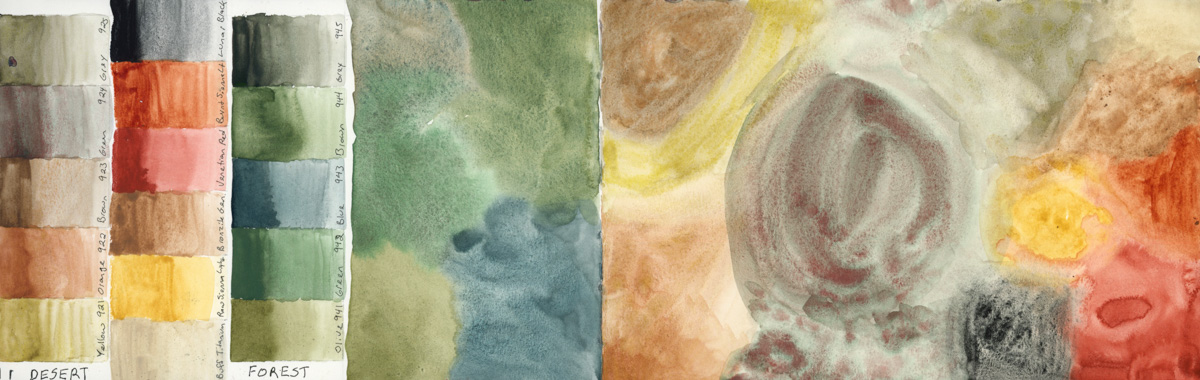
I am going to be traveling with family later in April, so I wanted to test the two desert paint palettes I have to see if I should bring them with me. One is the Schmincke Supergranulating Desert set. The other is Daniel Smith’s Earth Desert to Mountain. Then I decided to test the Schmincke Supergranulating Forest set, as I’ll also be among the pine trees. I haven’t decided what I’ll bring, but I certainly am beginning to feel the vibes here!
Since I had out the Supergranulating box, I noticed I hadn’t filled in the swatch card they provided with it, so naturally I had to begin swatching the rest of the colors! So I did another Haze page, and then Shire.
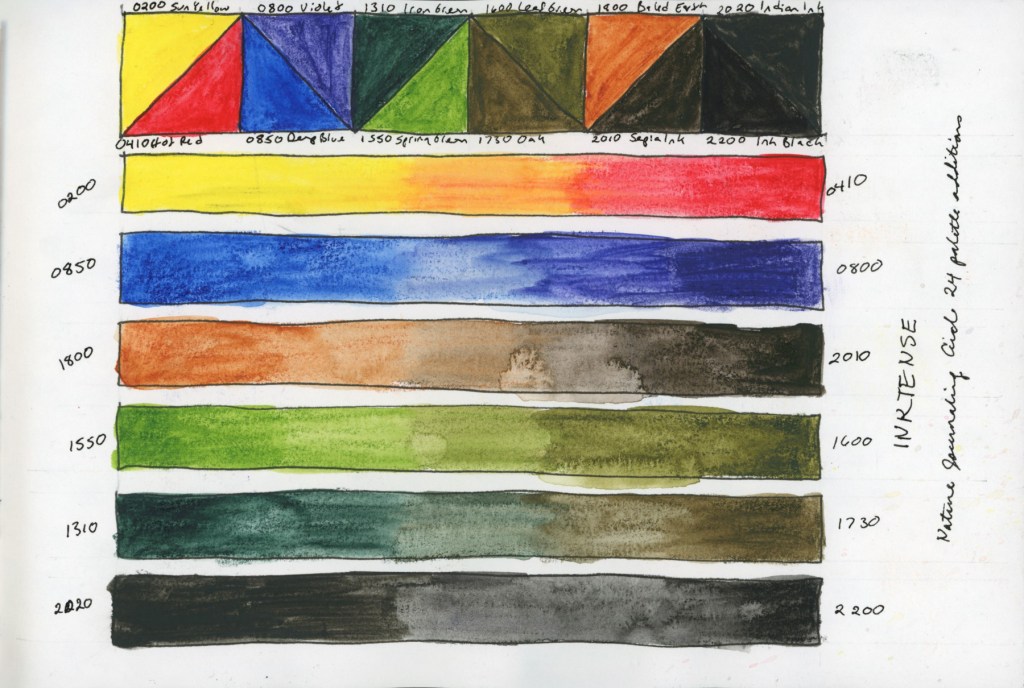
I had some paint left over from the shire tests, so I filled a page with that. I also wanted to put the Alex Boon recommended set of 24 as a reference in this Delta book. I could also test the different paper, which does seem to be surprisingly different for the pencils over the Alpha/Gamma paper.
I may add text to these pages, or line sketches. Though I may not have the time, in which case, I’ll just opt to move on and leave the pages as is, capturing the busy-ness in slightly unfinished pages.
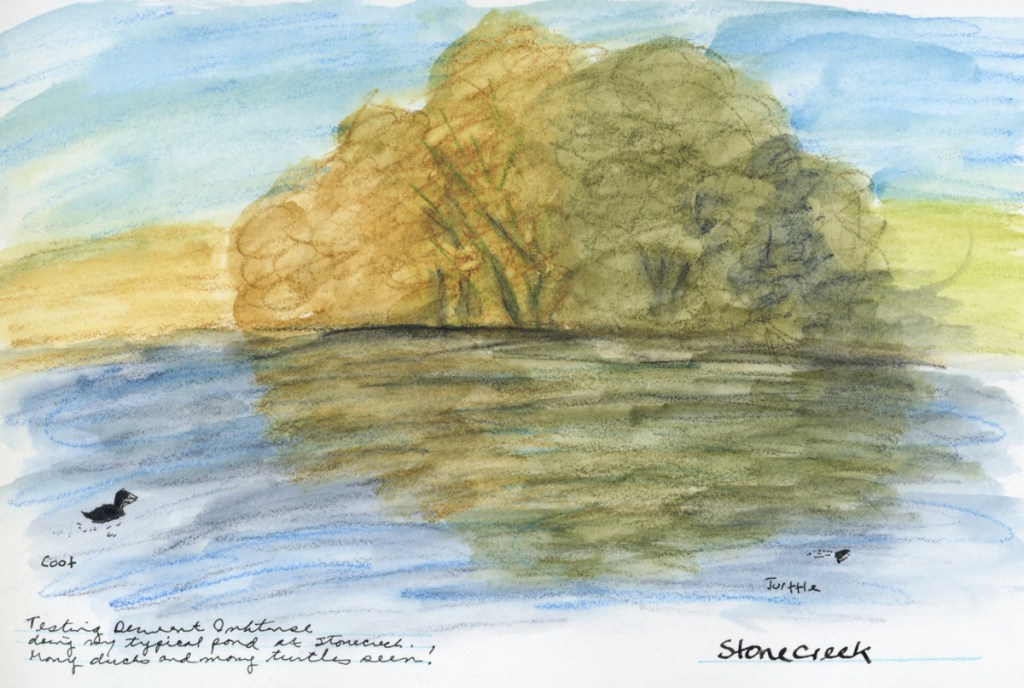
I’ve been in a lot of conversations lately about Inktense, and heard a lot of questions about them, which makes me very curious to learn the answers. I’ve done a couple sketches with them, but my goal has mostly been to compare them with Albrect Durer watercolor pencils. One question I’ve heard is what makes them different from watercolor pencils. This is perhaps the question I seek to answer first.
They lay down like watercolor pencils. The lead is a little softer than Albrect Durer, so sharp tips break off. However, sharpening with a knife or using the sticks could fix that. I find it challenging to find which color I’m looking for in my kit bag, when I’m on location, because the pencils barrels are painted black, and the leads don’t always look like the color they put down. (I’m looking at you Amber and Tan whose leads look green, but they lay down as muted yellows.) The color indicator on the end could help, but I am reluctant to store my pencils tip down, especially with a soft lead. Maybe a roll-up pencil case is the solution?
Because it is a softer lead, it is maybe easier to lay down a thick layer, when I want strong color. Once they are activated, the literature says they are permanent like ink. I haven’t tested that with applications like watercolor over the top. They are vibrant, intense colors with strong pigment, which I like. The pastels I tend to get with watercolor pencils is nice, but I yearn for more color. That might just be my own lack of skill showing, however.
Once the Inktense is activated with water, I find it much easier to put a second layer on top once it is dry, than I do with Albrect Durer. That makes it easier to keep working with them in layers. Especially on location, as I live in the desert, and my pages dry very quickly.
These are my first observations on them. I’ve owned my Inktense pencils for a very long time, and rarely used them, so I’m quite keen to make use of them and learn more.
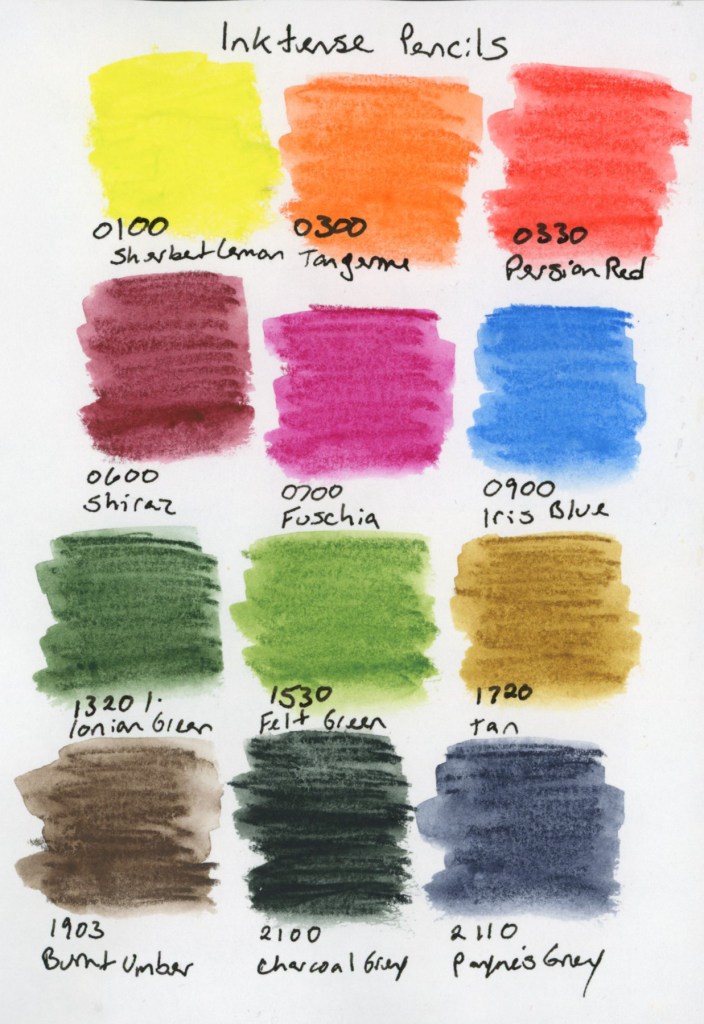
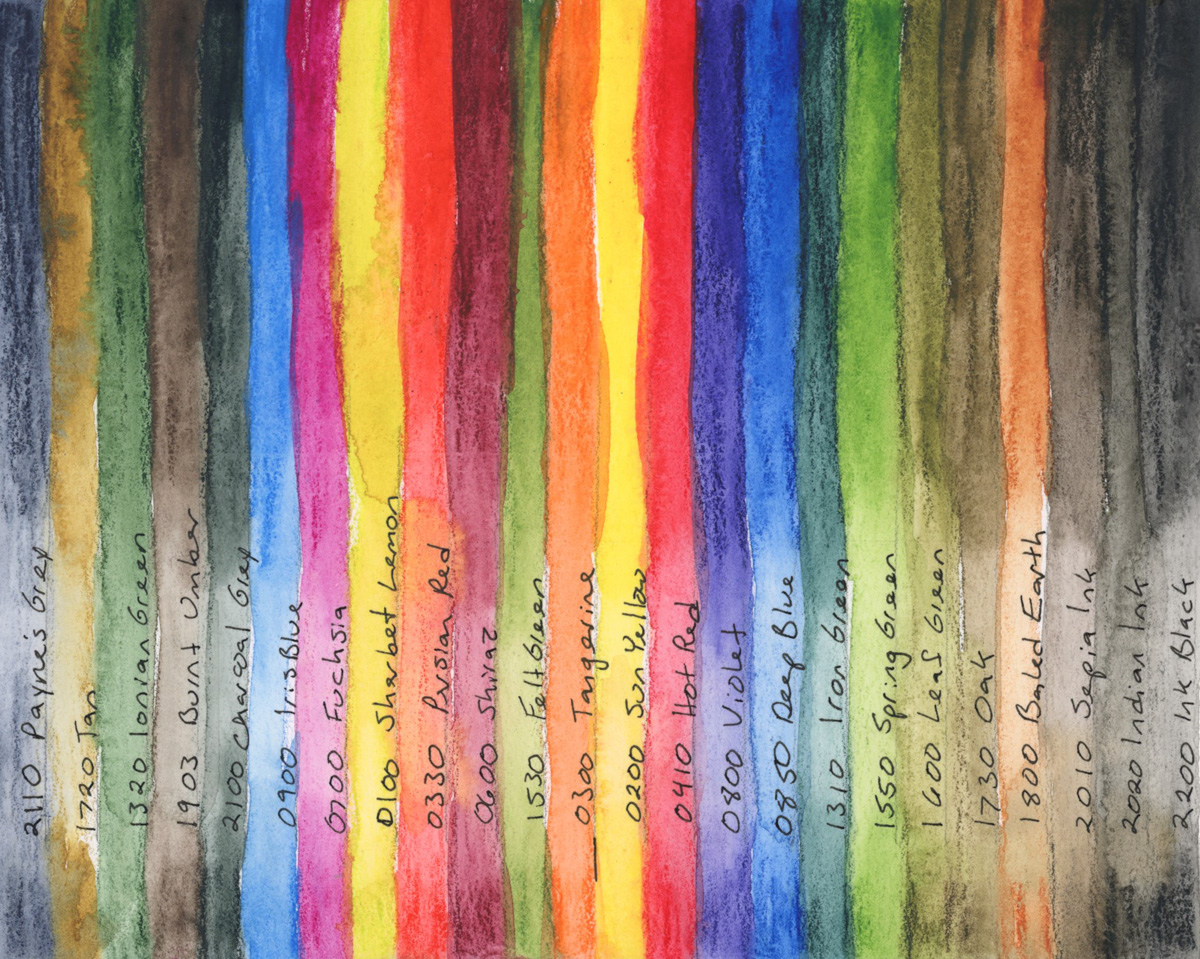
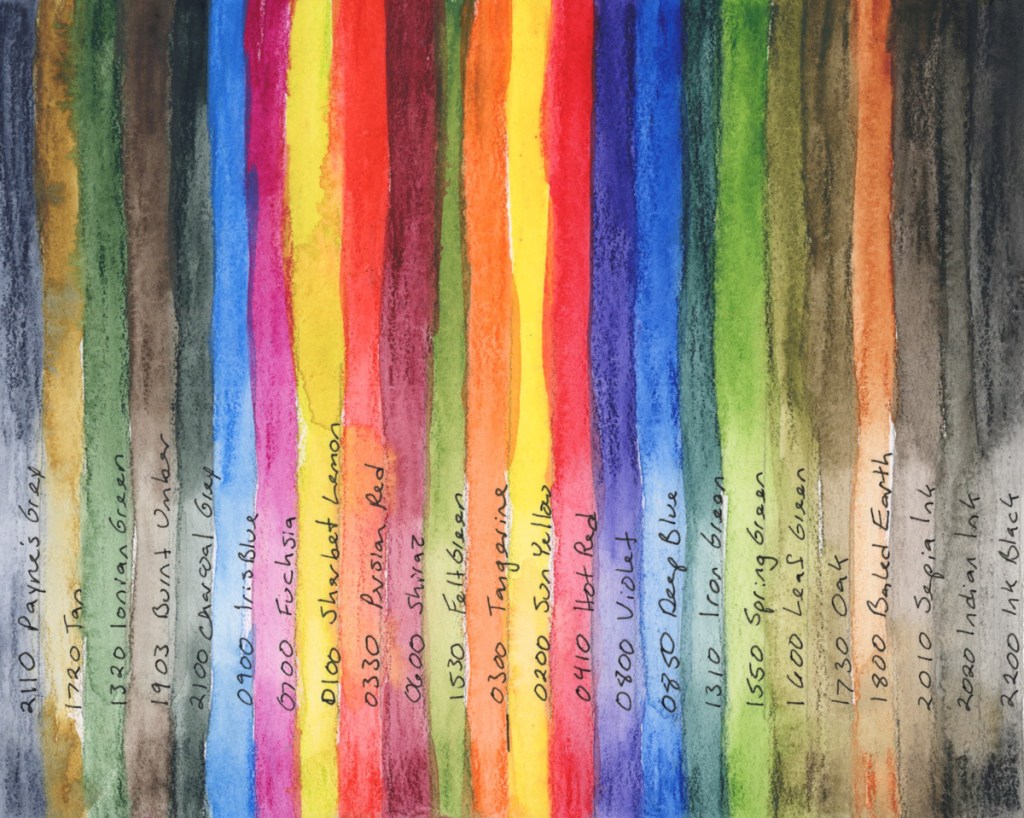
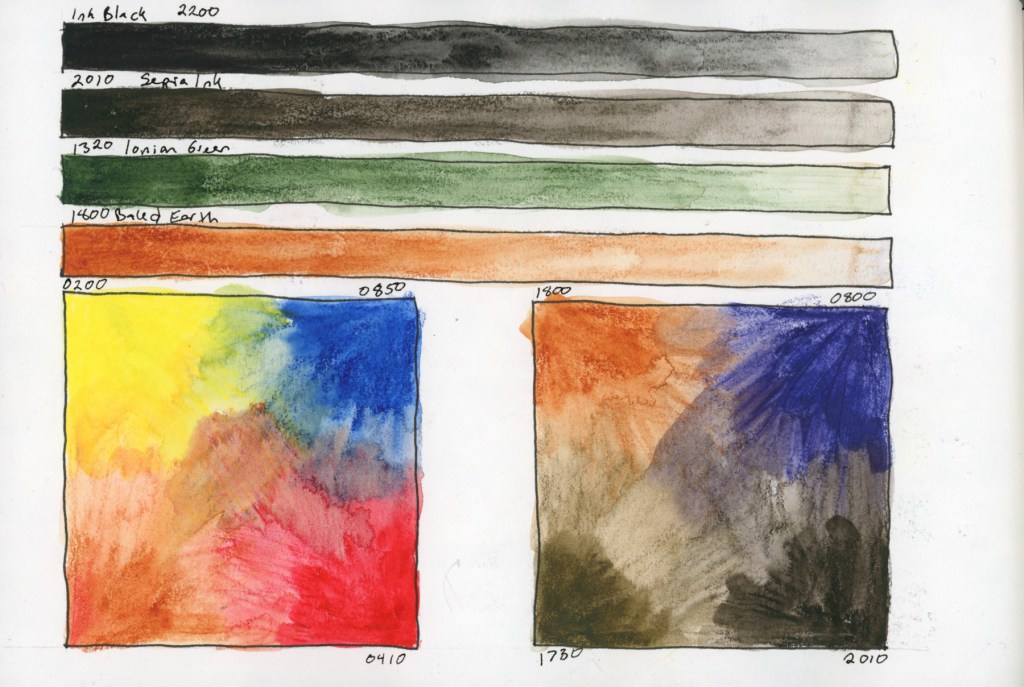
Alex Boon Art on You Tube has been very helpful for me in selecting colors for a palette to carry. He is a Nature Journalist, and he has a few limited palette recommendations. Here are his 12 and 24 color recommendations.
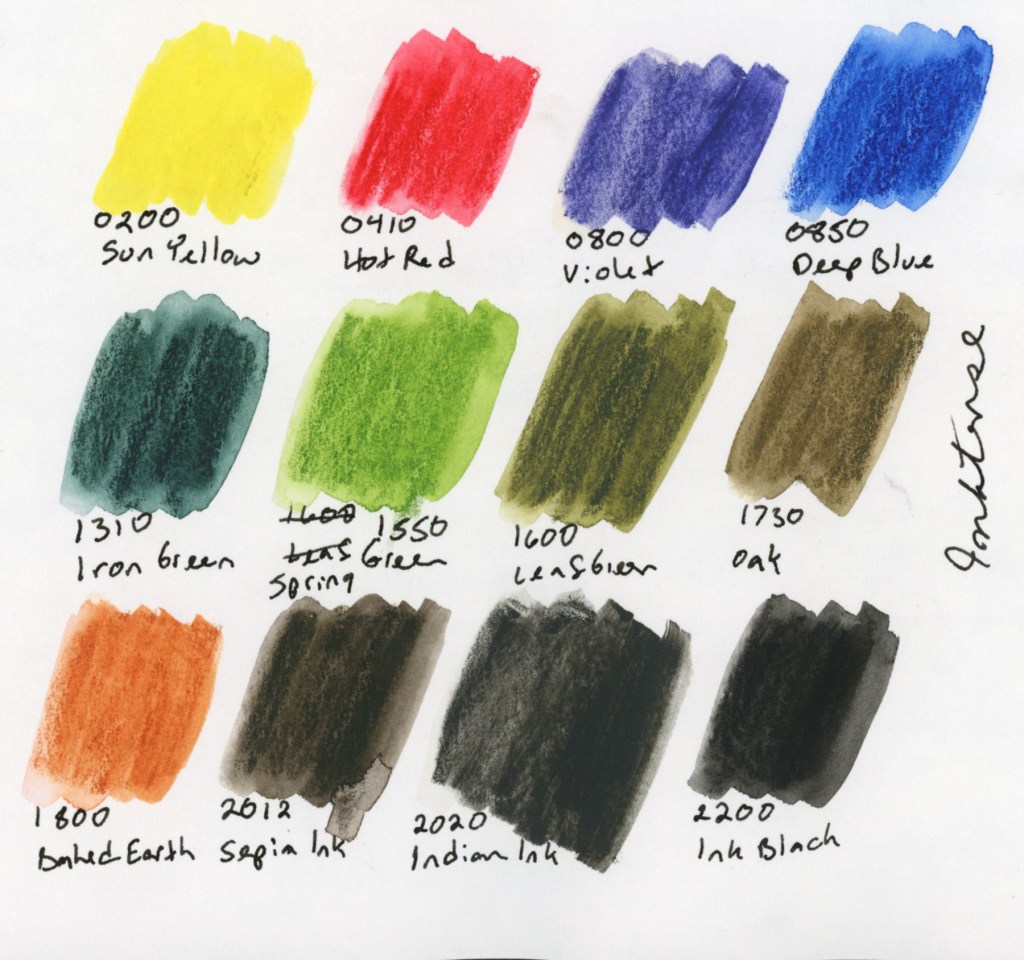
For 24, also add: 0200 Sun Yellow, 0850 Deep Blue, 0410 Hot Red, 0800 Violet, 0850 Deep Blue, 1310 Iron Green, 1550 Spring Green, 1600 Leaf Green, 1730 Oak, 1800 Baked Earth, 2010 Sepia Ink, 2020 Indian Ink, 2200 Ink Black.
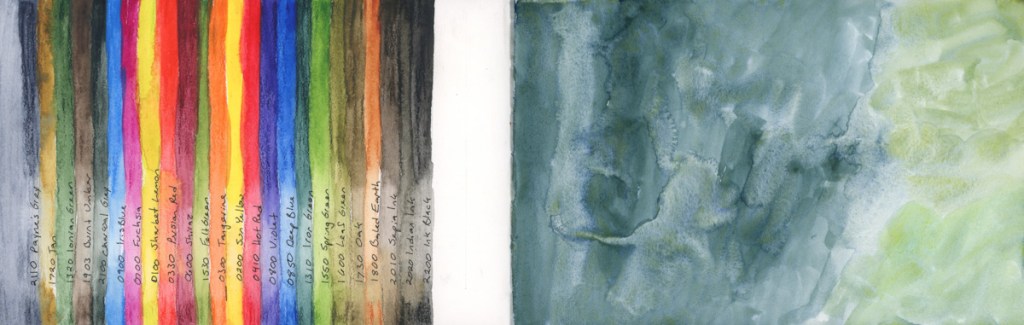
I wanted to see how they work on the Delta paper, so I did another color chart.
I begin to think the Delta paper is working better for the Inktense pencils! The colors seem richer, and they definitely smooth out with water more easily. Interesting.
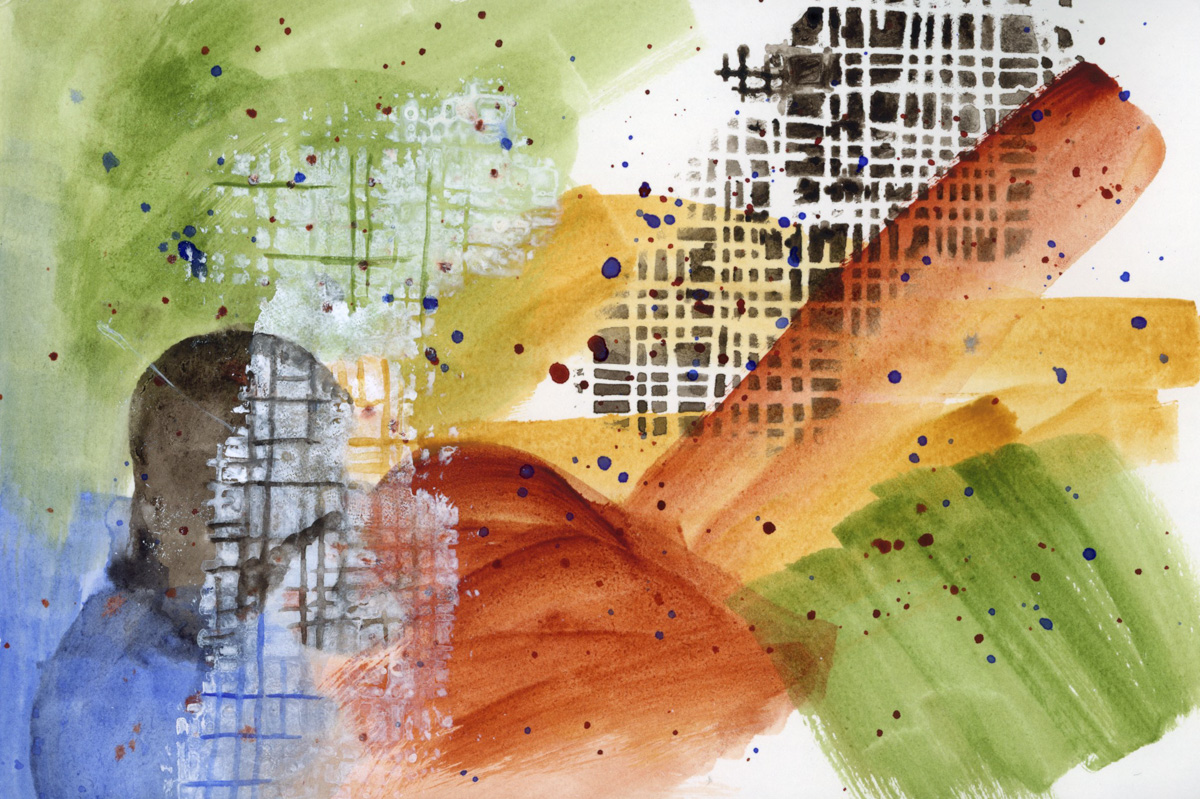
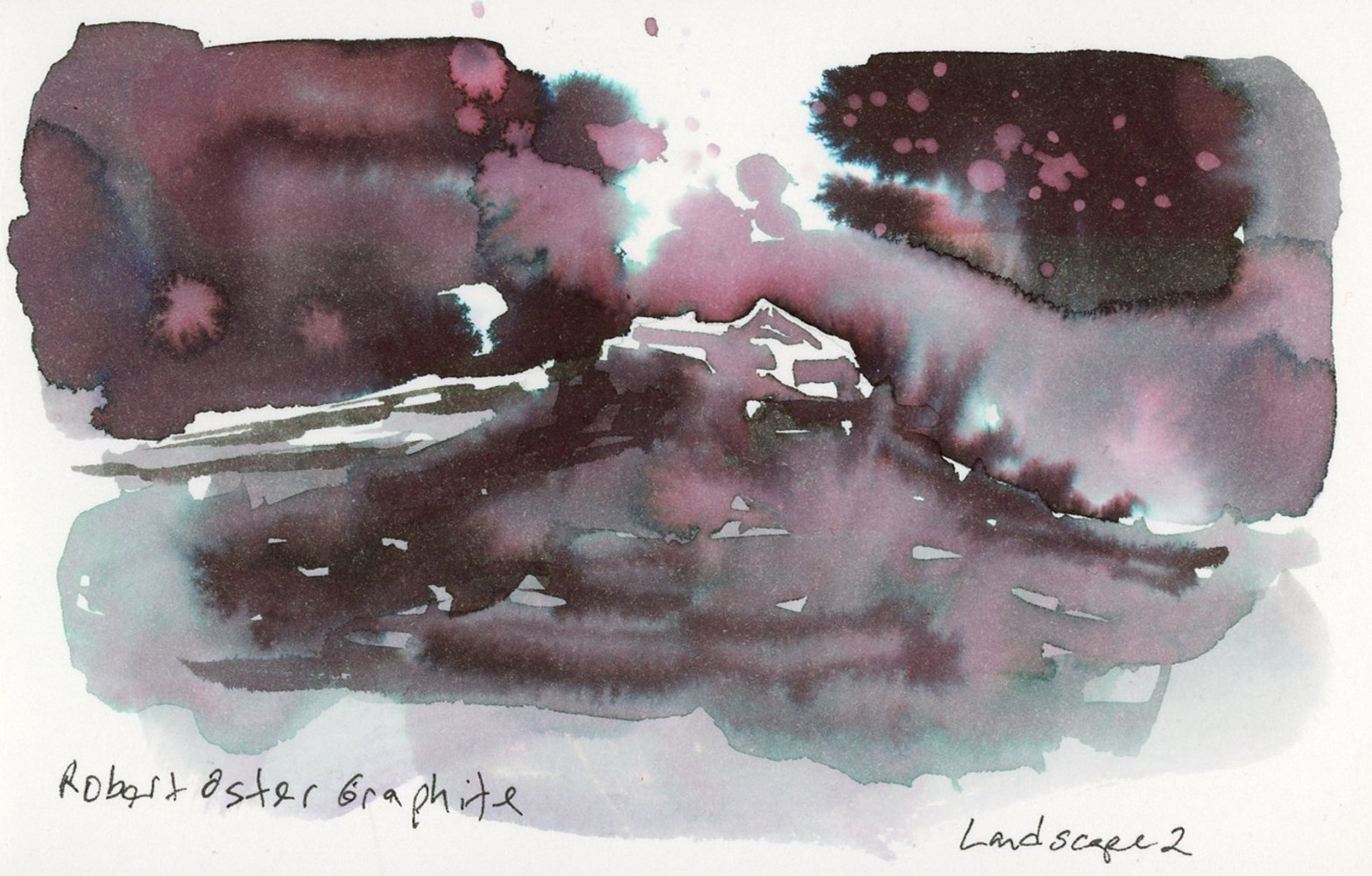
I’ve been working toward increasingly abstract options for my color chart examples. I have read a couple books, and been inspired by a couple artists. So I dove in to attempting a fully abstract, color exploration abstracts. The first was done because I really liked the colors I used for the Tuzigoot sketches, so I wanted to explore the same color combination in an abstract. I really love this one.
I also tried a plastic stencil with watercolor. The first effort, which is the Van Dyke Brown, worked great. I used a dry brush. The second effort was the white Acryla Gouache, which bled more because my brush wasn’t dry enough. I think I can get these stencils to work pretty well, though. I like how they look.
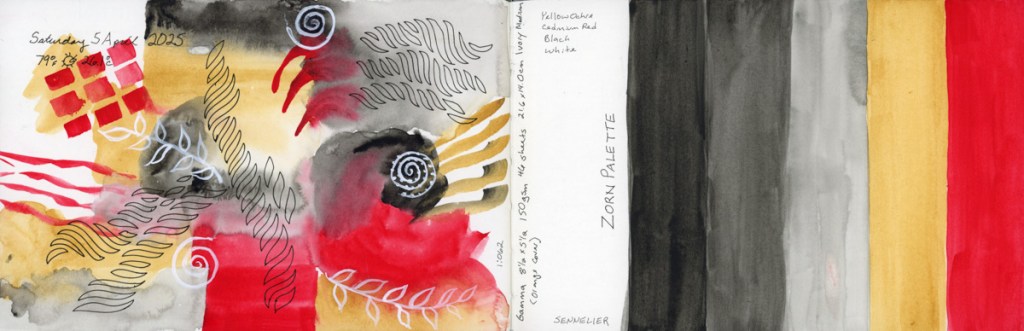
My second abstract attempt was using the Zorn color palette. Anders Zorn, a Swedish painter born in 1860, is attributed with this very limited color palette because he excelled at it. He worked with oil paints, using Yellow, Red, Black, and White.
I used a set of Sennelier paints: Bright Red (NR), Yellow Ochre (PY43), and Ivory Black (PBk9). The white doodles painted on top are done with Acryla Gouache.
Though I did not attempt any color mixing for these abstracts, from my research the Zorn palette is amazing at skin tones, and I’m definitely curious to try that. I do wonder what red pigment he actually used, however. One source said he used yellow ochre, ivory black, vermilion and lead white. Modern substitutions recommended are Cadmium Red Light, and Titanium White. I may have to explore the Zorn palette more fully.
Here are the full page spreads with these abstracts. I painted three values of the Ivory Black, plus the Yellow Ochre, and Bright Red.
I will definitely be doing more of these abstracts.
I read Jean Haines book, Painting Yourself Calm, and I loved it. Eager to try, I did her exercises in yellow. I think I can’t get her results unless I use full cotton paper, but the green streak on yellow really reminded me it was St. Patrick’s day, so I was off painting little shamrocks. Such a nice, festive page.
Sunsets really challenge me in painting them, so this time I went for a looser version just to capture the colors. I tried an exercise from the Paint Yourself Calm, but it seems to have ended up far more abstract that I originally intended. I kinda like it though. Maybe abstracts are a good way to document moods, and moments that don’t otherwise have objects or scenes to sketch? Interesting idea.
Fascinated by this upside tree I was watching in a television show, so I sketched it. I’m working on developing my pen and ink skills, too, and this was a great subject for that.
To celebrate the Spring Equinox, I used watercolor on a plastic stencil just to see what would happen. I did have some bleeding, but I was able to lift much of it, and clean it up. Good thing I used Serpentine Genuine, and not a staining pigment!
Foundations exercises, and a color chart of my kit for April’s Travel Sketching course. I dug out the neocolors I’d bought the last run of the class, in the class palette, but never used. I’m curious about Neocolor II, as they are quite popular.
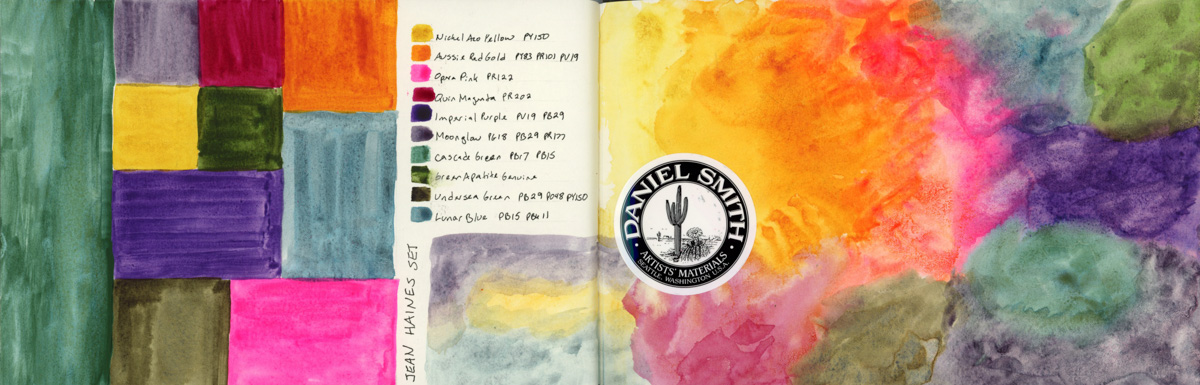
Of course I had to swatch the colors of Jean Haine’s palette. After doing the mosaic style of color sampling, I had to try another organic one, and I’m finally getting the kind of results I had in mind! There is something very cheerful and uplifting about this rainbow page.
More color charts and tests, and mosaic sampling, this time with a bit more gradients within. These are starting to be fun and I love how they look filling the page to the edge, which is the March challenge in the Liz Steel Patreon group.
Finally two color charts using the new Haze supergranualting paints from Schmincke. I have all the other supergranulating colors, so I couldn’t have an incomplete collection, now could I?
My color charts are evolving, and I rather like what’s happening on these pages.
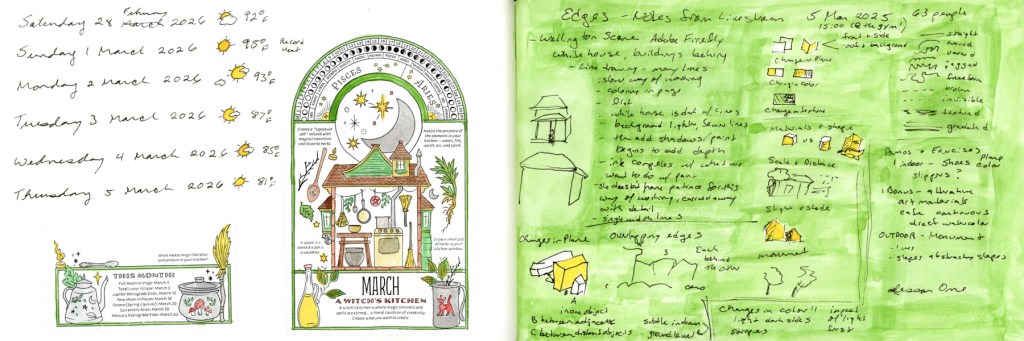
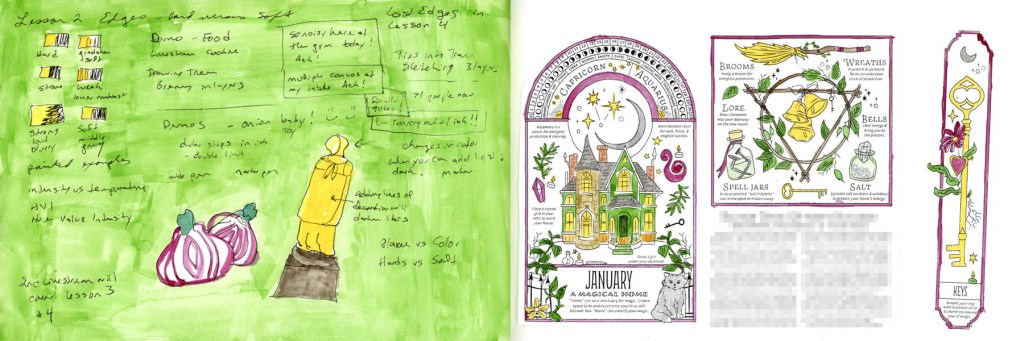
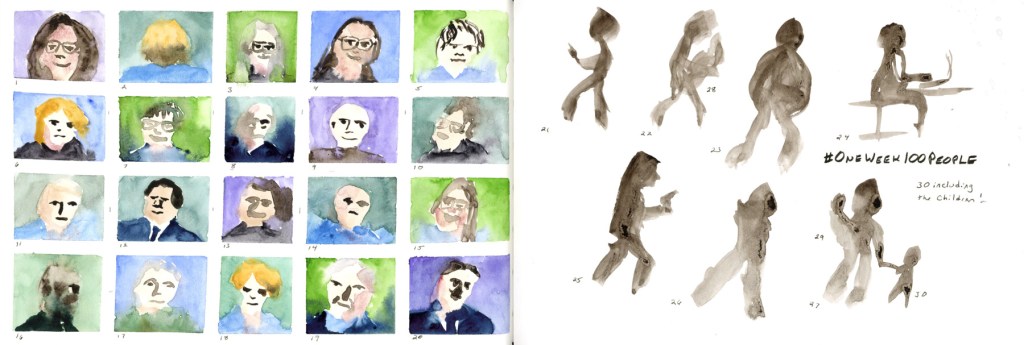
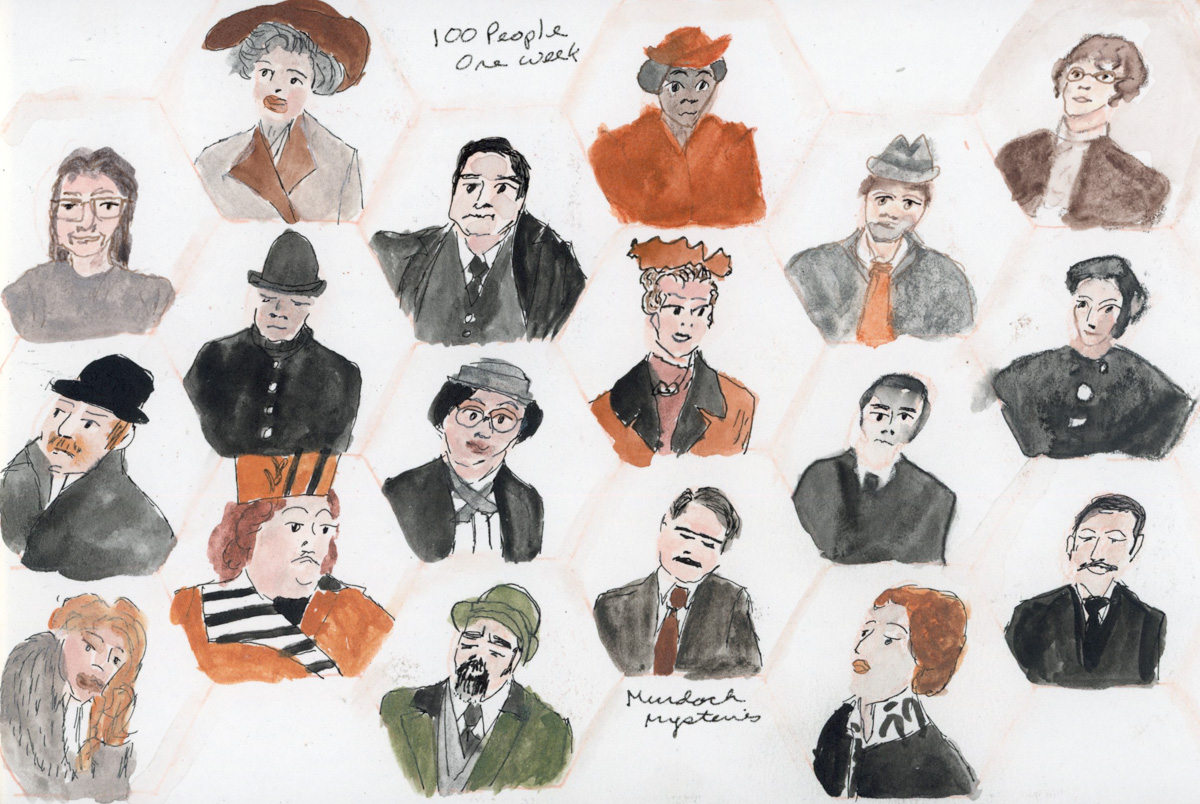
I’m participating in two challenges this month. One is the annual 100 People One Week challenge hosted by Liz Steel and Marc Taro Holmes. Last year I surprised myself by doing better people sketches than I thought I’d be able to, so I have to do it again!
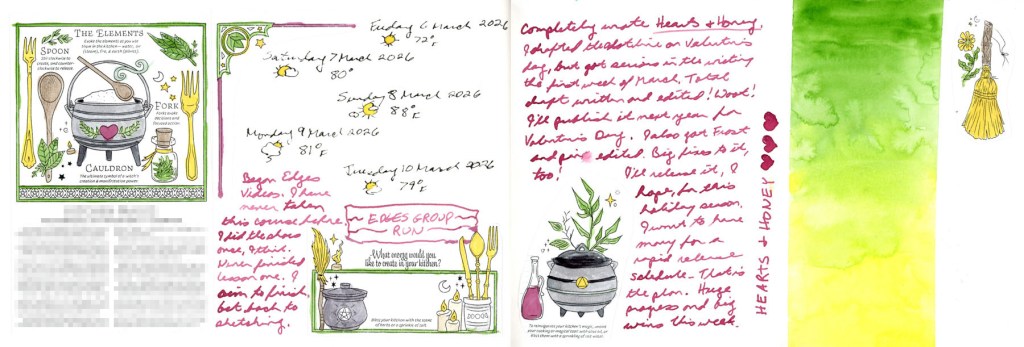
The second challenge is from Liz Steel’s Patreon Community which is To the Edge. Take your sketches to the edge of the page. I’m intrigued by this one, because I do usually keep a border.
Naturally, I started by swatching paints. I decided to swatch the latest purchase of watercolors I made a couple weeks ago. I took the design element to the pages edges and really like the look of that.
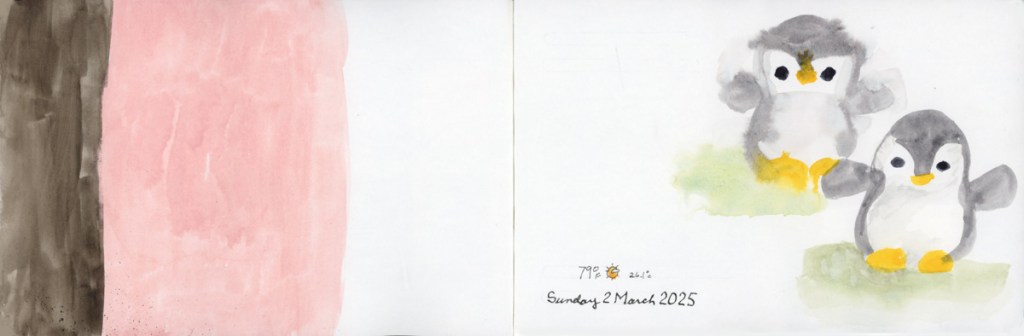
Color blocks to use up left over paint. I was going to sketch a line drawing on the color block, but then I didn’t, and now I’ll just leave as it is. I did paint my cute little penguin. I painted it twice, and I laugh because the wet on wet technique (resulting bleed) to the paint on the head, gives it a more tufted look. Somehow, just that one error, and it looks like I painted an owl! This makes me smile, so I left it.
I color swatched my newest purchase, the Derwent Shades and Tones color palette (it has a combination of inktense paints, tinted charcoal, and more in it.) I wanted to sketch something else with this palette, so what better than the current week’s 100 People One Week challenge? So I set to sketching Murdoch Mysteries, which I was watching. (I also did one self-portrait. I’ll try to do at least one per day.)
Loving these people. This took more time to be so careful, but it was worth it for the first day! I’ll be using speedier techniques and different mediums each day, or each page. We’ll see.
The next day, I put an effort to not only speed up, but test the difference between the two pencils: Derwent Drawing Terracotta, and Faber Castell Pitt Pastel Sanguine. More Murdoch Mysteries portraits (and one self-portrait.) The pastel pencil is chalkier, as expected, but richer in color. To keep these from smudging too badly in the sketchbook when I close it, I use fixative when I’m done drawing.
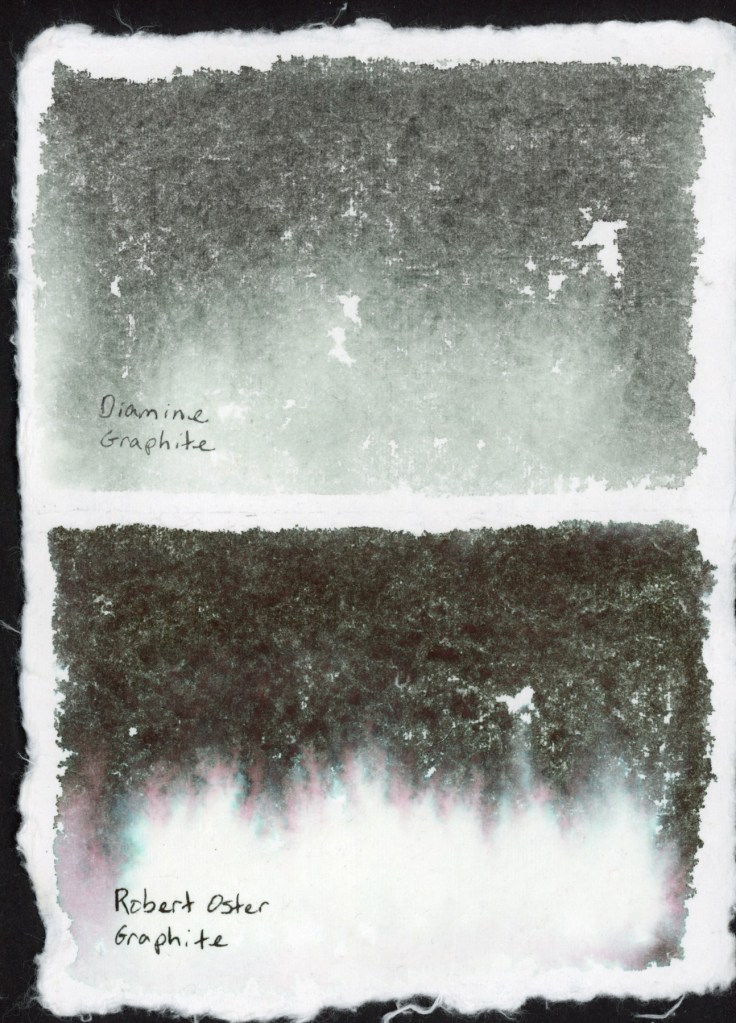
I haven’t used watercolor pencils for travel sketching, so I’m going with the class palette in order to learn the techniques. Using the same watercolor palette I used for the Teacups class. I tend to avoid graphite pencils, so it will be interesting to see how these work out for me. I’m rather intrigued by the graphite aquarelle variety. I do have Neocolor II in a similar palette to the watercolor pencils that I may try out (but are not in this image) because I’m very curious about them.
Watercolor Markers! Okay, I admit, I saw these and they were a total impulse purchase last month. I will also admit, I gleefully squeed when they finally arrived! I have not worked too much with markers, though I have some Copic markers. I’m excited to play with markers that won’t bleed through the paper! The colors are nice and vibrant.
Here brings me through the first half of January. I’m starting to pick up some momentum now, and excited about what it is to come!
I am so very excited about Foundations this year. As I was doing Buildings a lot of the basics really clicked for me in new ways, and thusly I’m quite excited to do Foundations, and focus on those basics, and allow my new depth of understanding to really be explored and practiced!
This is my fourth run through of Foundations! Hard to believe, isn’t it? I’ve never finished, (I say that a lot, don’t I?) but I always learn a lot. Obviously, I’m absolutely planning to complete everything! Naturally, I’m “behind” already. However, I love it no less!
For the first time, I’m using the same kit as Liz Steel for her class. I am particularly excited to stick with the six color palette and practice my color mixing! I’m pretty good with my color mixing, so this will be fun. I also got a set of Faber Castell Albrecht Durer watercolor pencils for Yule. Thusly, for the first time, I have the full set of colors Liz uses in her kit! Woot!
I’ve experimented with the watercolor brands I had previously, and so far the Albrecht Durer are my favorites for color intensity and ease of use. I’m looking forward to getting a feel for how they work and what I can do with them.
My six colors are all Daniel Smith.
Hansa Yellow Medium (HY)
Quincridone Rose (QR)
Ultramarine Blue (UB)
Cerulean Blue Chromium (CBC)
Transparent Red Oxide (TRO)
Monte Amiate Natural Sienna (MANS)
I did a few color bars, aiming for some shades and watercolor magic, as well as capturing which colors were used in the blend. Greens, browns, and grays are all colors that one benefits from knowing how to mix quickly! These are my Lesson 1 Indoor assignments. I always love sketching art materials, and doing color charts! I think we all do!