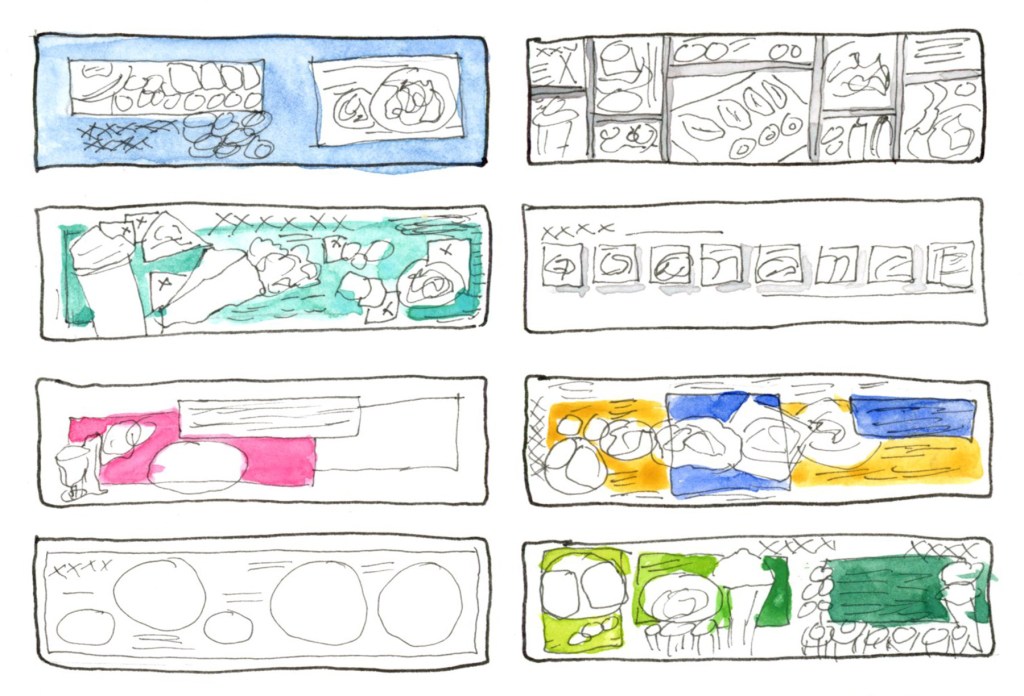
If you’ve been following the Illustrated Food Diary for a while, you know the premise is pretty simple: I sketch what I eat, sometimes with calories, carbs, and cost noted alongside. Same subject, every single day. Plates, bowls, bottles of sparkling water, the occasional bag of chips.
It could get very repetitive very fast. And honestly, without some intentional page design, it does.
I’ve been thinking about page design since taking Liz Steel’s Sketching Now course — Sketchbook Design — and with Sketchbook Volume 24 (my 5th food sketchbook,) I got serious about actually applying it to the food diary. Near the back of the book I filled a few pages with wireframe sketches: little thumbnail layouts exploring different ways to organise a page. What Liz called recipe book in the Sketchbook Design class. Some ideas came from Liz, some from scrapbooking, and some I just made up. The note I wrote on the title spread still holds: design makes it look so much better.
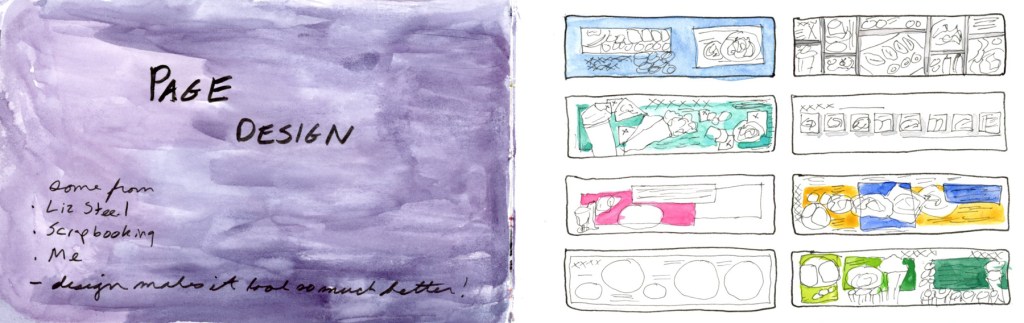
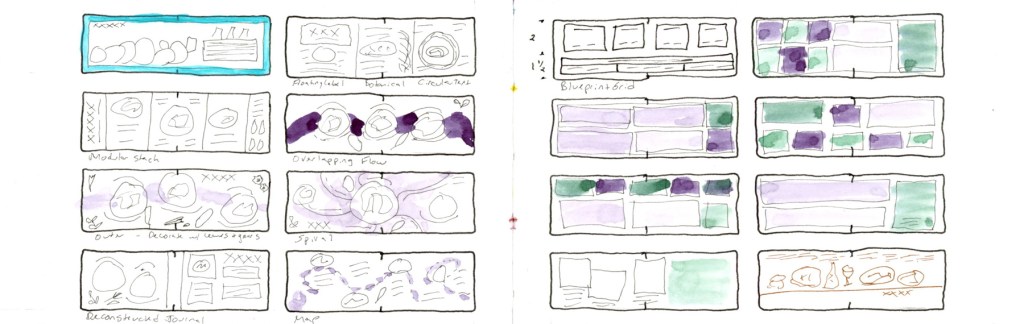
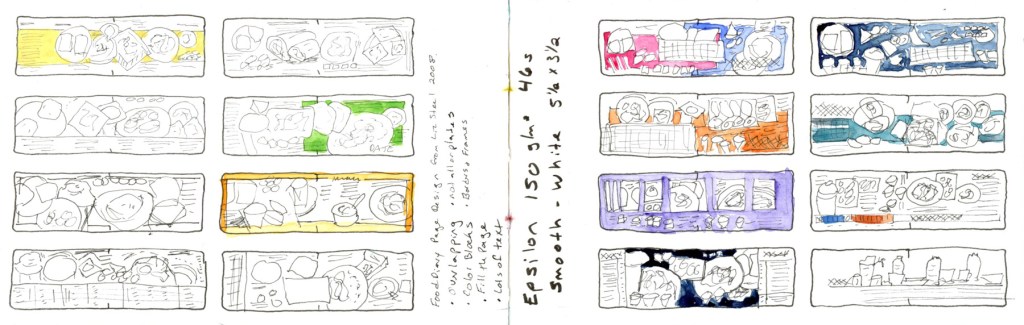
Here’s what I landed on as my toolkit.
Colour blocking is my favourite for making plates really pop. A solid band of colour behind the food — yellow, teal, pink — does something almost magical: suddenly the sketches read as a designed page rather than a collection of doodles.
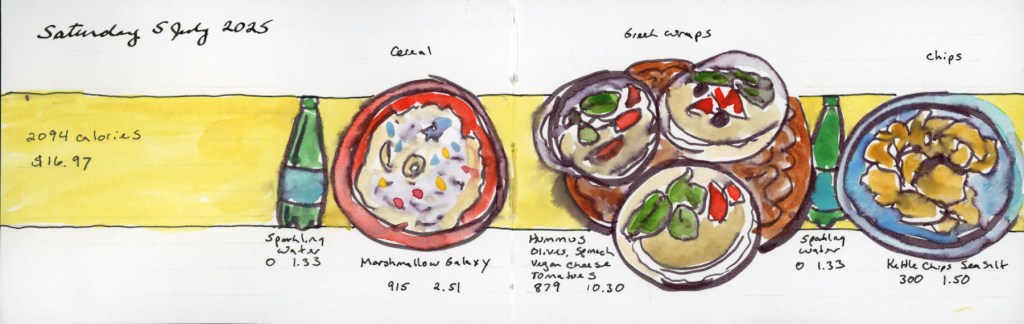
The baseline layout — everything lined up along a common ground line — gives a page a clean, almost theatrical feel, like the food is on a little stage. The variety of shapes along that line (round bowls, wedges of quesadilla, tall bottles) creates a natural rhythm without any extra effort.

Column dividers are great when you have a lot of items and want to create clear sections without things feeling cluttered. Vertical bands separate the day into distinct moments, and it ends up reading almost like a magazine layout.

And then there’s direct watercolour with a simple frame — no planning, just paint. This is what I reach for on a busy day, or when I’m catching up after falling behind. It’s the fastest approach, and even a simple frame lifts a page considerably. That Wednesday the 16th spread — done entirely in one deep plum — is a good reminder that design doesn’t have to mean colour variety. Monochrome with a strong layout is its own kind of striking.
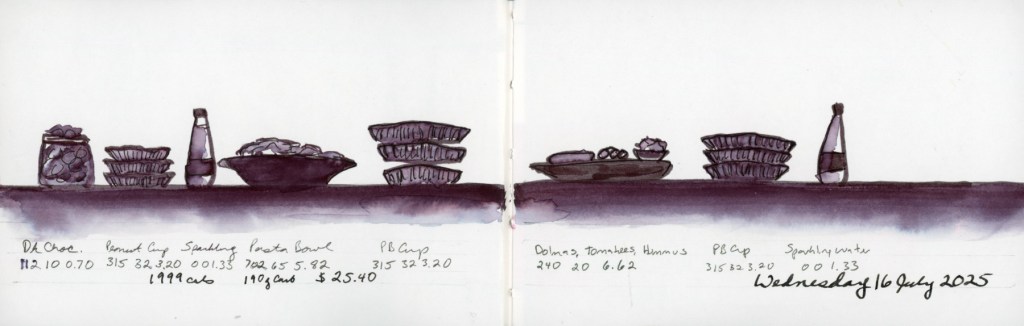
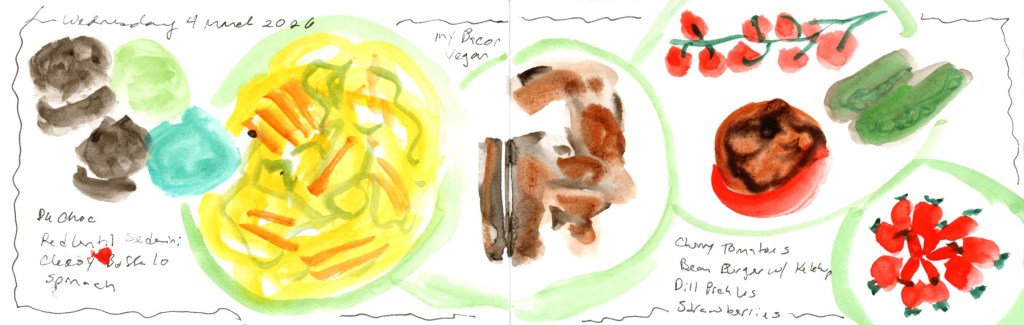
Here are a couple of recent examples from the current volume. Wednesday 4 March is a good fast-day page — loose, direct, just a simple wavy frame holding everything together.
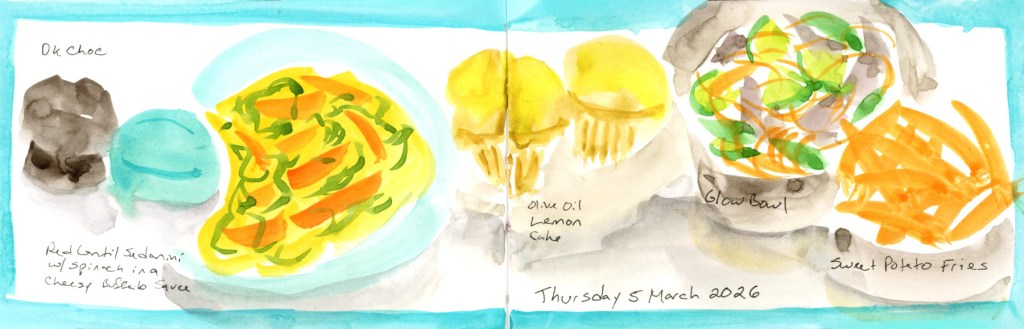
Thursday 5 March captures a dining out day — the teal colour block gives it just enough structure to feel intentional, and it nicely documents that mix of restaurant and home food in one spread.
The wireframe sketches aren’t precious — they’re just a menu I made for myself, so that when I sit down with the book I’m not starting from zero. I can glance at them and think colour block day or baseline day and just get on with it. Variety of layouts keeps it interesting for me, and on days when I just can’t, a simple frame and loose direct watercolour is still a page worth keeping.
If you want the full backstory on how I first approached page design recipes for this sketchbook size, I wrote about it back in Food Sketches Week 27.
You can see all posts of this food sketchbook volume 24 here.
 Jamie's Sketchbook
Leave a comment